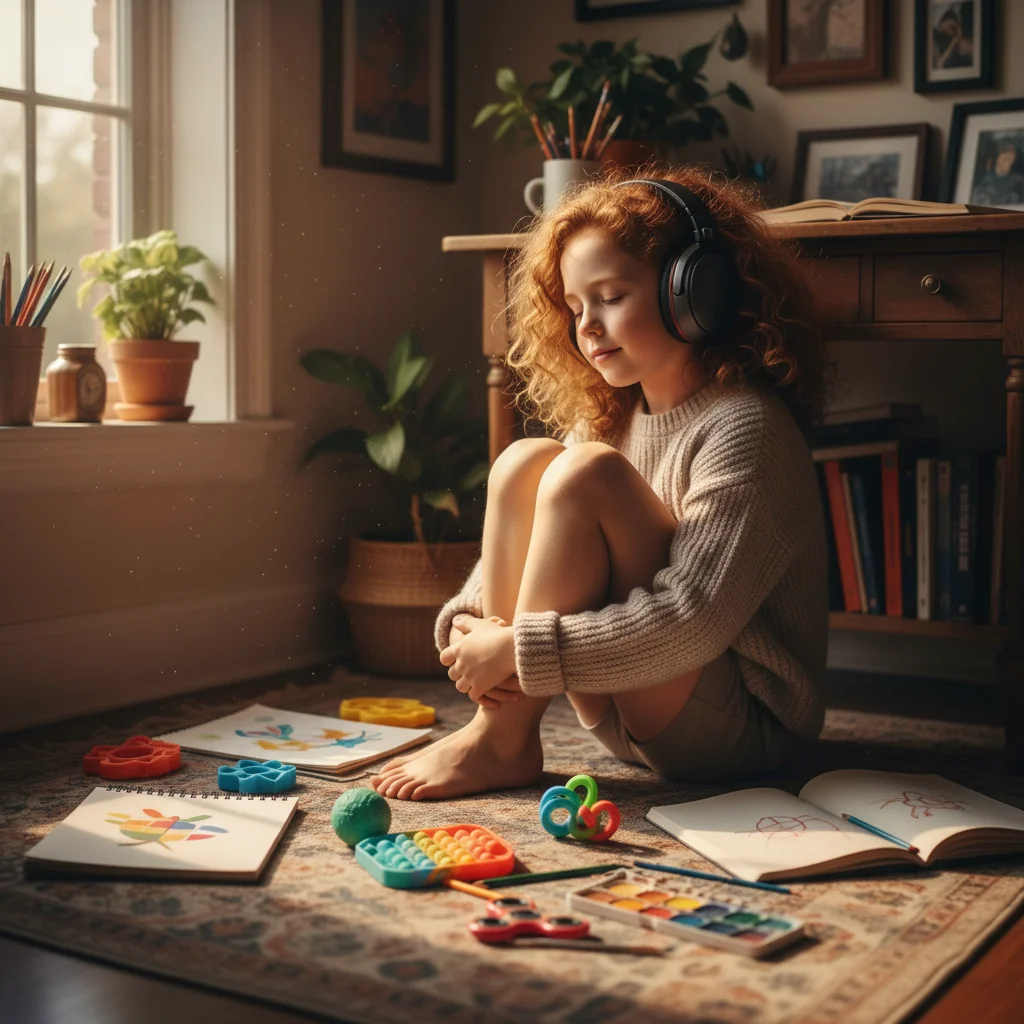
The call came on a Tuesday. "We think Emma might be autistic too."
I stared at my phone, watching the pediatrician's words replay in my mind. Emma already had her ADHD diagnosis — we'd been working on that for two years. But autism? Both?
What I didn't know then was that AuDHD (ADHD and autism together) is far more common than anyone talks about. And that everything I thought I knew about supporting my ADHD daughter was about to change completely.
The Diagnosis That Changed Everything — When ADHD Wasn't the Whole Story
Emma's ADHD symptoms were textbook at first. She couldn't focus during virtual school, had daily meltdowns, and seemed to bounce off the walls constantly.
But there were other things. The way she lined up her dolls in perfect rows. How she'd have violent meltdowns over the "wrong" socks. The fact that she struggled to keep friends in ways that went beyond typical ADHD social challenges.
Her developmental pediatrician finally connected the dots during a routine follow-up. "ADHD rarely travels alone," she explained. "Especially in girls. The autism was there all along — it just got masked by the more obvious ADHD behaviors."
That's when I learned about AuDHD kids — children who have both conditions simultaneously, creating a unique neurological profile that traditional approaches completely miss.
Why AuDHD Kids Fly Under the Radar (Especially Girls)
Here's what nobody tells you: autism in girls often looks nothing like the stereotypes. Emma didn't rock back and forth or avoid eye contact. Instead, she was a master at masking — copying other kids' behaviors so well that her autism was invisible.
The ADHD symptoms were loud and disruptive, demanding immediate attention. The autism symptoms were quieter — the rigid thinking, the sensory overwhelm, the deep need for routine that looked like "being difficult."
Research suggests that up to 50% of autistic children also meet criteria for ADHD, and up to 25% of ADHD kids show significant autistic traits. Yet most parents, teachers, and even doctors are trained to look for one or the other — not both.
Emma's autism was hiding behind her ADHD hyperactivity. Her stimming looked like fidgeting. Her need for sameness looked like ADHD rigidity. Her social struggles looked like typical ADHD difficulty reading facial expressions.
How Autism Masks ADHD Symptoms (And Vice Versa)
This is where it gets complex. ADHD and autism don't just coexist in AuDHD kids — they interact in ways that mask each other's symptoms.
Emma's ADHD hyperactivity actually helped her meet her autism need for movement and sensory input. Her constant motion wasn't just impulsivity — it was also self-regulation.
Her autism masking skills made her ADHD inattention look like she was paying attention when she wasn't. She'd learned to nod at the right times and give appropriate responses, even when her ADHD brain had checked out completely.
The result? Both conditions were undertreated because neither looked quite right on its own.

The Sensory Processing Double Whammy That Creates Daily Chaos
If you think ADHD sensory processing issues are challenging, try adding autism to the mix.
Emma's ADHD brain craved intense sensory input — she needed to move, touch, and experience the world intensely. But her autistic brain found that same input overwhelming and painful.
She'd seek out sensory experiences that her autism couldn't tolerate. She'd crave the noise and chaos of a playground, then have a complete meltdown from sensory overload five minutes later.
Getting dressed became a nightmare — her ADHD brain was too distracted to notice clothing textures until her autistic brain suddenly couldn't tolerate them.
Traditional sensory strategies designed for one condition often backfired. Weighted blankets that should have helped her ADHD hyperactivity felt too restrictive for her autism need for movement freedom.
Social Struggles That Go Beyond Typical ADHD Friendship Issues
Emma's social challenges weren't just about ADHD impulsivity or difficulty waiting her turn. The autism added layers of complexity that ADHD-focused social skills training couldn't touch.
She'd interrupt conversations (ADHD), but also couldn't understand when topics changed naturally (autism). She'd hyperfocus on her special interests (autism) while simultaneously being distracted by every sound in the room (ADHD).
By age 8, she had zero close friends. Playdates were exhausting for her — too much social masking combined with ADHD overwhelm created perfect storm meltdowns.
She desperately wanted friendships (autism need for connection) but found the social energy required completely draining (ADHD emotional regulation issues).
Why Traditional ADHD Strategies Fail for AuDHD Kids
Here's what broke my heart: every ADHD strategy I tried either didn't work or made things worse.
Reward charts failed because her autism brain needed intrinsic motivation, not external rewards. Breaking tasks into smaller chunks overwhelmed her autism need to see the complete picture first.
Even morning routine strategies that work for ADHD kids fell apart when her autism demanded exact sameness while her ADHD needed variety to stay engaged.
The worst part? Her teachers kept suggesting she wasn't trying hard enough. They saw a bright kid who could mask well, so her struggles looked like defiance rather than neurological overwhelm.
"ADHD strategies assume flexibility. Autism strategies assume predictability. AuDHD kids need both simultaneously — which feels impossible until you understand the brain science."
The 4-Pathway Approach That Actually Works for Dual Diagnosis
Everything changed when I learned about the neurological pathways behind both conditions.
ADHD and autism both involve dysregulation in the same four brain pathways: dopamine (motivation and reward), serotonin (mood and routine), GABA (calming and anxiety), and norepinephrine (alertness and executive function).
But they dysregulate differently. Emma's ADHD brain had low baseline dopamine, making her seek intense stimulation. Her autistic brain had hypersensitive serotonin pathways, making change feel threatening.
Traditional supplements like magnesium only address one pathway, which explains why single-ingredient approaches failed her completely.
Research on saffron showed promise because it's the only natural compound that supports all four pathways simultaneously — potentially addressing both the ADHD need for dopamine regulation and the autism need for serotonin stability.
Finding the Right Support When Your Child Doesn't Fit the Boxes
The hardest part about AuDHD isn't the symptoms — it's finding professionals who understand the intersection.
Most therapists specialize in either ADHD or autism, not both. School support plans assume your child fits neatly into one category. Even support groups often focus on single diagnoses.
I learned to become Emma's translator — explaining to her ADHD therapist why autism masking made her look more capable than she was, and helping her autism specialist understand why ADHD impulsivity disrupted her carefully taught coping strategies.
The breakthrough came when we found providers who understood that AuDHD kids need approaches that honor both neurotypes simultaneously. Rigid enough to feel safe (autism), flexible enough to stay engaging (ADHD).
Emma is thriving now, two years after her dual diagnosis. She still has challenges, but we finally have strategies that work with her unique brain instead of against it.
If you're reading this because your child's ADHD symptoms don't quite fit the typical pattern, trust your instincts. AuDHD is real, it's common, and with the right support, these kids can absolutely flourish.
Is your ADHD child struggling in ways that don't quite fit the typical patterns?
Many AuDHD kids are misunderstood because their dual diagnosis creates unique challenges. Our free assessment can help identify if your child might benefit from approaches that support both neurotypes.
TAKE THE FREE ASSESSMENT →

