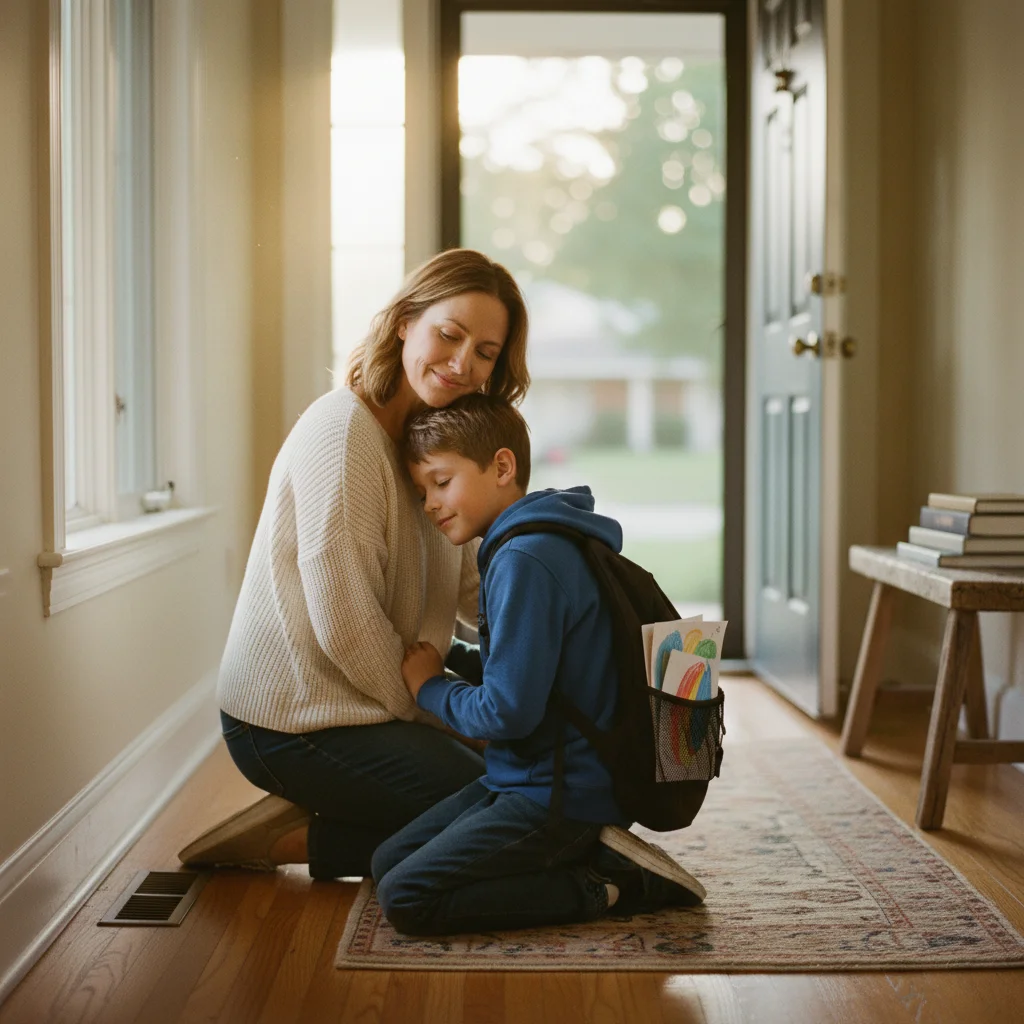
For a long time, I thought I was doing something wrong every single afternoon.
Oliver would walk through the front door — backpack still on, shoes still tied — and within sixty seconds, he was on the floor screaming because his snack was in the wrong bowl. This wasn't a discipline problem. This wasn't a parenting failure. And if your ADHD child falls apart the moment they come home from school, it's not yours either.
What I eventually learned — after a lot of research and a lot of trial and error — is that the after-school meltdown isn't about the bowl, or the snack, or you. It's about what happens in a child's brain after seven hours of white-knuckling it.
Why the Moment the Front Door Opens Is the Most Dangerous Time of Day
School demands an enormous amount of regulation from kids with ADHD. They are constantly fighting their own neurology — sitting still, staying quiet, waiting their turn, tracking instructions, suppressing impulses. Every hour of the school day costs them something.
By 3 PM, the tank is empty.
The front door isn't just a door. For an ADHD child, it's the release valve. They've been holding it together all day for teachers, peers, and the institution of school itself. The moment they see you — the safest person in their world — everything they've been suppressing comes flooding out at once.
This is sometimes called after-school restraint collapse, and it's one of the most misunderstood patterns in ADHD parenting. The explosion isn't directed at you. You're just the person they finally trust enough to fall apart in front of.
That's actually a sign of secure attachment. It just doesn't feel that way when someone is screaming at you about a bowl.
What's Happening in Their Brain — and Why the First 20 Minutes Are Everything
When Oliver was 7, his occupational therapist explained it to me this way: a child with ADHD coming home from school is essentially in a stress response. Their nervous system has been in a low-grade fight-or-flight state all day, and it needs time to downregulate before it can handle any new demands — homework, siblings, questions, even conversation.
The first 20 minutes home is what I now call the decompression window. What happens in that window determines whether the rest of the evening is survivable.
Most parents — me included, for years — blow this window immediately. We ask how school was. We hand them a snack while simultaneously asking about homework. We give instructions. We expect them to transition seamlessly from "school mode" to "home mode."
Their nervous system literally cannot do that yet. And the harder we push during that window, the worse the eventual explosion.
This isn't about why ADHD kids save their worst behavior for home — though that's a real pattern worth understanding too. It's specifically about what to do during those first critical minutes to prevent the crash entirely.
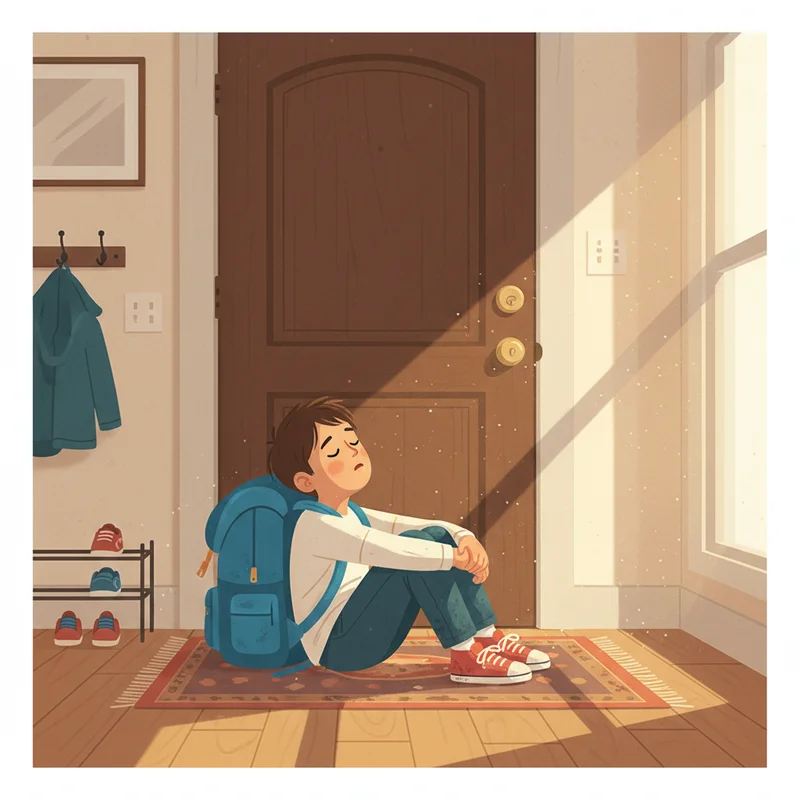
The 5-Step After-School Transition Routine That Actually Works
I've tried a lot of versions of this. Here's what finally stuck for us, and what I've seen work for dozens of other ADHD families:
- Silent greeting. When they walk in, no questions. No instructions. Just a calm, warm presence — a hug if they want one, a simple "glad you're home" if they don't. Nothing that requires a verbal response.
- Sensory reset first. Give them something physical immediately — a weighted lap pad, a quick outdoor run, jumping on a trampoline, or even just letting them crash on the couch with a blanket. Movement or deep pressure helps the nervous system shift out of hyperarousal faster than anything else. Deep pressure techniques take five minutes and make a noticeable difference.
- Snack before everything. Blood sugar crashes make dysregulation dramatically worse. Have the snack ready before they walk in — not presented with questions, just there. Protein plus something crunchy works best neurologically.
- 20 minutes of nothing. No homework talk, no chore reminders, no sibling disputes to mediate. This window is sacred. Let them decompress in whatever way works for them — even screens, if that's what resets them. The homework battle you're dreading will be 80% shorter if you protect this window.
- Re-entry conversation. After the 20 minutes, that's when you can gently ask about their day — but start with something specific and low-stakes: "Did Mr. Peterson do that thing with the whiteboard again?" Not "How was school?" which is too open-ended for a dysregulated brain.
The order matters. Snack before conversation. Movement before demands. Decompression before homework. Every time I've skipped a step because we were in a hurry, we paid for it.
If your child struggles specifically with homework battles or the homework meltdown spiral, protecting the decompression window is the single highest-leverage thing you can do upstream of those problems.
When They Arrive Already Mid-Meltdown — and Scripts for the Chaos
Sometimes the decompression window doesn't exist. Sometimes they're already crying in the car, or they explode the second the door opens, or siblings immediately trigger a brawl before you've even put down your keys.
A few things that help:
When they arrive already dysregulated: Don't try to talk them down. Don't ask what happened. Don't problem-solve. Just say: "I can see you're having a really hard time. I'm right here." Then go quiet. Trying to reason with a child in full dysregulation is like trying to have a conversation with someone who's drowning — the nervous system isn't available for language yet. Stopping talking during meltdowns was one of the hardest things I learned to do, and one of the most effective.
When homework, siblings, and chaos collide at once: Triage. The only thing that matters in that first 20 minutes is getting your ADHD child's nervous system regulated. Siblings can wait. Homework can wait. Everything can wait. If you try to manage four things at once, you will manage zero things at once.
A script that works: "We're going to handle one thing at a time. First, let's get you a snack and five minutes to breathe. Then we'll figure out the rest together."
For middle schoolers: The decompression window becomes even more critical at this age, but the form changes. Older kids often need physical space rather than physical comfort — their room, headphones, a walk. Don't interpret withdrawal as defiance. It's self-regulation. Give them 30 minutes instead of 20, and check in with a text rather than walking in. The middle school transition brings an entirely new layer of complexity to this pattern.
For elementary age, the snack-and-movement combination is usually the fastest path to regulated. Short, active breaks before any sitting-required activity make a real difference.
If evenings are a consistent battleground beyond just the transition, it's worth looking at the full picture — everything from the evening routine to why ADHD brains seem to turn on at bedtime. The after-school crash and the bedtime explosion are often connected, and fixing the first one helps the second.
One more thing: if you're reading this exhausted and wondering how much longer you can keep doing this — that feeling is real and valid. ADHD parent burnout is its own crisis. Taking care of your own nervous system isn't optional. It's the prerequisite for everything else on this list.
Parent Training — Limited Spots
Stop Dreading the 3 PM Knock at the Door
If after-school meltdowns are swallowing your evenings whole, the Unbreakable ADHD parent training walks you through the exact regulation tools and transition strategies that actually hold up in real life — not just in theory.
87 of 100 spots taken · 9 video modules · $9.99 trial
START YOUR $9.99 TRIAL →Is the after-school crash a brain chemistry problem, not a routine problem?
A free 2-minute assessment can help identify which brain pathways are most depleted for your child — and what kind of support might actually address the root cause.
TAKE THE FREE ASSESSMENT →

