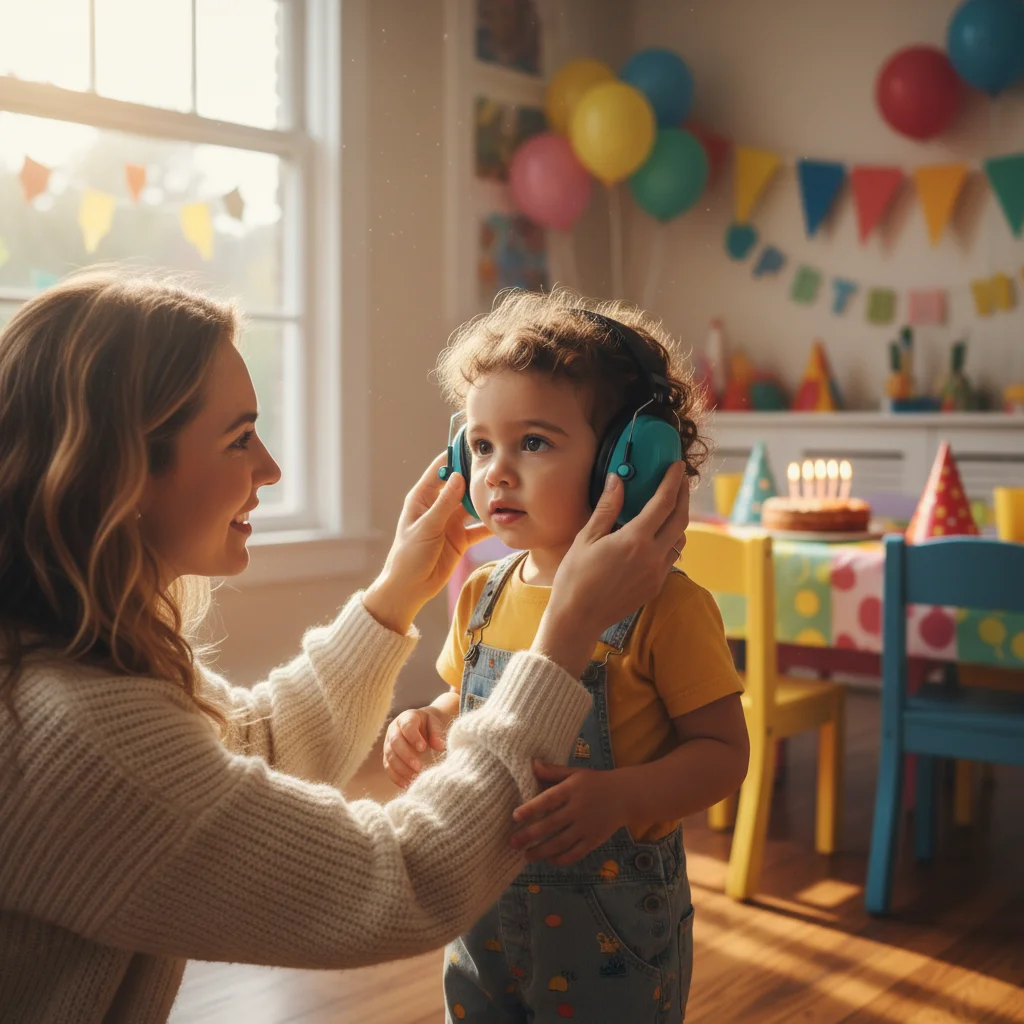
I still remember the sound of my 7-year-old son screaming from inside the Chuck E. Cheese bathroom while twenty other kids sang "Happy Birthday" just outside the door.
It was the third birthday party meltdown in two months. Same pattern every time: excitement in the car, overstimulation within 30 minutes, complete breakdown, and me carrying a kicking, crying child to the parking lot while other parents watched with that mix of pity and judgment I'd grown to hate.
If you're reading this, you've probably been there too. The good news? This isn't your fault, and it's not a parenting problem. ADHD brains process social and sensory input differently, and birthday parties are basically sensory overload boot camp for these kids.
After years of trial and error (and a lot of research into brain chemistry), I finally cracked the code. My son went from party disasters to actually enjoying celebrations — and I'm going to share exactly how we did it.
The Birthday Party Disaster That Changed Everything
The Chuck E. Cheese incident was my wake-up call. As I sat in my car afterward, watching my son finally calm down in his car seat, I realized something: I'd been approaching this all wrong.
I'd been trying to "toughen him up" for parties instead of understanding what his brain actually needed. I'd been focusing on his behavior instead of the neurological storm happening inside his head.
That night, I started researching. What I discovered changed everything about how I approached not just parties, but any high-stimulation social event.
Why ADHD Brains Struggle With Birthday Parties
Birthday parties are perfect storms for ADHD kids because they overwhelm multiple brain pathways simultaneously:
Dopamine overload: The constant stimulation — games, prizes, sugar, excitement — floods the reward pathway faster than an ADHD brain can process it. It's like trying to drink from a fire hose.
GABA depletion: All that noise, activity, and unpredictability depletes the brain's natural calming system. Without enough GABA function, your child can't self-soothe when things get overwhelming.
Sensory processing chaos: Loud music, flashing lights, kids screaming, sticky surfaces — it's sensory input on steroids. The norepinephrine system, which helps regulate arousal and attention, gets completely overwhelmed.
Social pressure: Add in the unspoken expectations to "be good," "have fun," and "play nice," and you've got a recipe for what looks like a behavioral meltdown but is actually a neurological system crash.
Understanding this was my first breakthrough: my son wasn't being "difficult" at parties. His brain was literally short-circuiting from overstimulation.
The Party Prep Strategies That Actually Work
Once I understood the brain chemistry piece, I developed a pre-party protocol that works about 80% of the time (and I'll tell you what to do with that other 20% later).
The 24-hour prep window: I start preparing his nervous system a full day before any party. This includes ensuring he gets excellent sleep, limiting other stimulation, and focusing on activities that support his GABA and serotonin systems.
Visual scheduling: We map out the party timeline together. When we'll arrive, what activities will happen, when we might take breaks, and — crucially — when we'll leave. ADHD kids do better with predictable endpoints.
Energy management: If it's an afternoon party, we have a quiet morning. If it's evening, we build in downtime after school. The goal is to arrive with a regulated nervous system, not an already-overwhelmed one.
Protein before sugar: I always feed him a protein-rich snack before we go. This helps stabilize blood sugar and supports sustained dopamine production, rather than the spike-and-crash pattern that party food creates.
The game-changer was realizing that preparing his brain chemistry was just as important as picking out a gift.
How to Create an Exit Strategy Without Drama
This might be the most important section of this entire article: you need an exit plan that preserves everyone's dignity.
The "party length rule": For my son, 90 minutes is the sweet spot. Long enough to enjoy himself, short enough to leave before the system crash. I've learned that leaving during a high moment is infinitely better than staying until meltdown.
Code words: We have a simple signal system. When he needs a break, he can come to me and say "I need some air." No questions, no negotiating — we step outside for 5 minutes of quiet.
The Irish goodbye: Sometimes the best exit is a quiet one. If I can see he's reaching his limit, we slip out during an activity. I text the host parent later to explain and thank them.
Reframe for your child: Instead of "we have to leave because you're having a hard time," I say "we had such a great time, and now we're going to end on a high note." This preserves his sense of success rather than failure.
The goal isn't to stay for the entire party. The goal is for your child to have a positive social experience within their nervous system's capacity.

What to Tell Other Parents
This part used to stress me out almost as much as the actual party management. I felt like I owed everyone an explanation for why we left early or why my child needed accommodations.
Here's what I've learned works:
Keep it simple: "Jake does better with shorter parties" or "We're working on building up his party stamina" are perfectly adequate explanations. You don't owe anyone your child's full neurological profile.
Focus on the positive: "He had such a great time! Thanks for including him" shifts the conversation away from any perceived problems and toward gratitude.
Educate when appropriate: With close friends, I'll sometimes explain that ADHD affects how his brain processes stimulation, and that we're learning to work with his wiring rather than against it.
Set boundaries kindly: If another parent suggests he just needs to "get used to it" or "toughen up," I smile and say, "We're taking the approach our pediatrician recommended." It's a conversation ender that maintains respect for everyone involved.
Supporting Your Child's Brain Chemistry Before High-Stimulation Events
This is where my background in pediatric occupational therapy really helped me understand what was happening neurologically. ADHD kids don't just need behavioral strategies for parties — they need neurochemical support.
GABA support activities: Deep pressure activities like weighted blankets, bear hugs, or even 10 minutes of wall pushes can help activate the calming neurotransmitter system before you leave for the party.
Dopamine preparation: Instead of letting the party be his first dopamine hit of the day, I make sure he's had some appropriate stimulation first — maybe 20 minutes of his favorite music or a quick bike ride around the block.
Serotonin stability: Mood regulation is crucial for social success. We focus on connection before correction — extra snuggles, reading together, or just talking about what he's excited about at the party.
The nutrition piece: Research suggests that certain nutrients can support these neurotransmitter pathways naturally. I learned about this when I was researching why magnesium alone wasn't helping with his meltdowns — it turns out supporting just one pathway isn't enough for most ADHD kids.
The breakthrough for us was understanding that we needed to support all four of these brain pathways, not just focus on calming him down or getting him excited.
The Birthday Party Survival Kit I Never Leave Home Without
After enough party disasters, I developed a standard kit that lives in my car. Here's what's in it:
- Noise-reducing headphones: Not full noise-canceling (he needs to hear safety cues), but enough to take the edge off overwhelming sound
- Fidget tools: Something he can do with his hands when sitting still becomes impossible
- Protein snacks: Cheese sticks, nuts, or whatever he'll actually eat to stabilize blood sugar
- A comfort item: Usually just a small toy or stone that fits in his pocket
- Water bottle: Dehydration makes everything harder for ADHD kids
- Change of clothes: Because party activities can be messy, and sensory issues with wet or dirty clothes can trigger meltdowns
The key is that he knows these things are available without having to ask. It gives him a sense of control in an unpredictable environment.
When to Skip the Party Entirely
Sometimes the kindest thing you can do for your child (and yourself) is to politely decline the invitation. Here are the situations where I've learned to say no:
Back-to-back social events: If there's been a playdate, school performance, or other stimulating event in the past 24-48 hours, we pass. His nervous system needs recovery time.
When he's already dysregulated: Bad day at school, poor sleep the night before, or any kind of emotional stress means his capacity is already compromised.
Venue considerations: Some locations are just too much. Laser tag, arcade parties, or venues with lots of flashing lights and loud noises are automatic nos for us.
Large parties: More than 10-12 kids usually pushes him over the edge. It's not personal — it's neurological.
I explain it to him this way: "Your brain needs to be in a good place to have fun at parties. Right now it needs rest more than it needs a party, and that's okay."
We always do something special at home instead — his choice of movie, a special snack, or extra time doing something he loves. The goal is to maintain the specialness of the occasion without the overwhelm.
The hardest lesson I learned: saying no to a party isn't giving up on your child's social development. It's protecting their capacity for future positive social experiences.
Two years later, my son still has party limits, but he also has party successes. He's learned to recognize his own signals, ask for breaks when he needs them, and — most importantly — he's not afraid of social events anymore.
Last month, he made it through an entire 2-hour party and told me on the way home, "Mom, I think my brain is getting stronger." And honestly? I think mine is too.
If you're still in the thick of party disasters, please know this: you're not failing your child. You're learning to work with their beautiful, complex brain instead of against it. And that? That's exactly the kind of parent they need.
Does your ADHD child struggle with overstimulation and meltdowns?
Take our free 2-minute assessment to discover what might be happening in your child's brain and get personalized strategies that actually work.
TAKE THE FREE ASSESSMENT →

