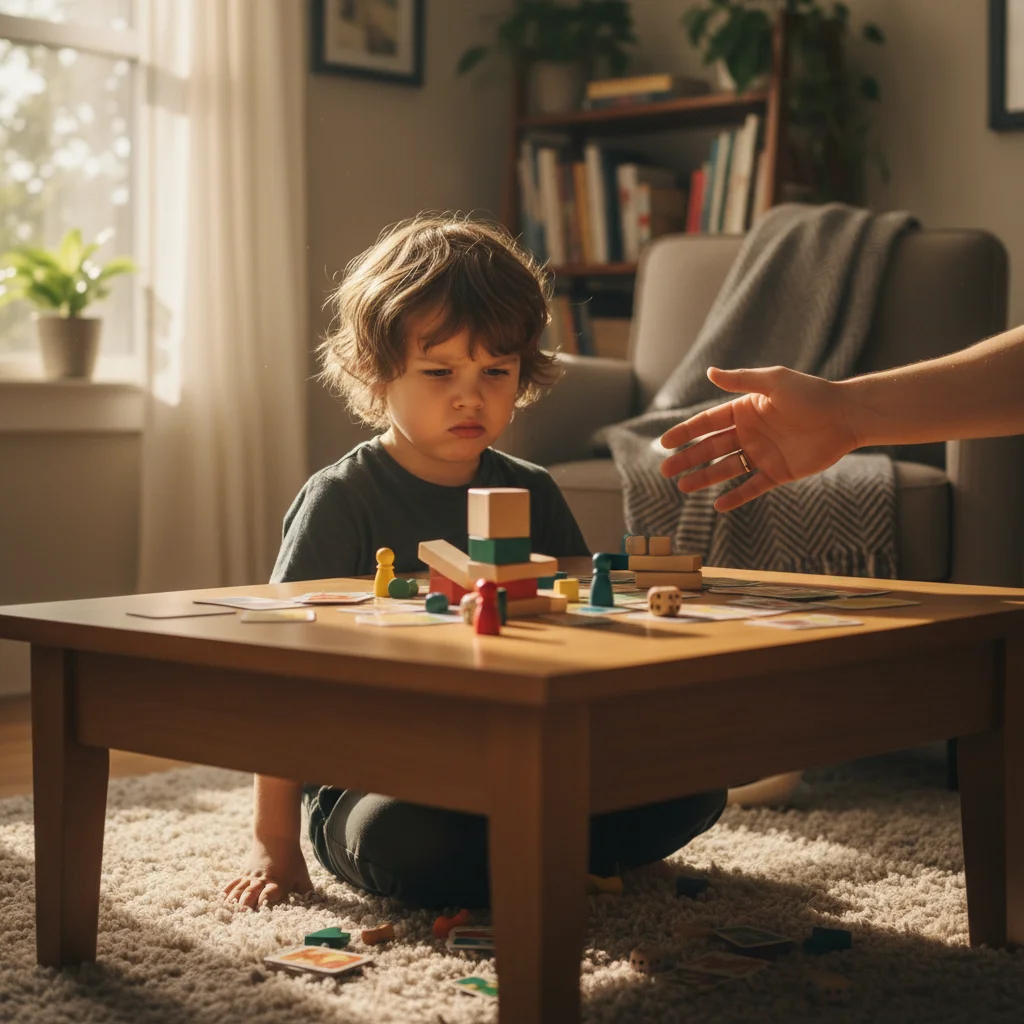
You're twenty minutes into what should be a fun family game night when your ADHD child loses their turn at Monopoly. The screaming starts. The board gets flipped. They storm off calling themselves "stupid" and "the worst at everything."
Before you spiral into wondering if you're raising a poor sport, let me stop you right there. This isn't about character flaws or your parenting. What you're seeing is rejection sensitive dysphoria — and it's as neurological as their need for glasses.
When Game Night Becomes a Battlefield (Again)
If your ADHD child melts down every time they lose a game, you're not alone. It happens with board games, video games, sports — any situation where there's a winner and loser. The reaction is so intense it leaves everyone walking on eggshells.
Here's what makes it confusing: they want to play. They ask for game night. They seem excited... until the moment they realize they're not winning. Then it's like watching Jekyll and Hyde.
The difference between typical disappointment and what your child experiences is like comparing a papercut to a broken bone. Both hurt, but one is manageable while the other requires immediate attention.
Why Losing Feels Like Life-or-Death Rejection to ADHD Brains
Rejection Sensitive Dysphoria isn't just sensitivity to criticism. It's an intense emotional response to perceived rejection or failure that feels physically painful to kids with ADHD.
When your child loses a game, their brain doesn't process it as "I didn't win this time." It processes it as "I'm a failure" or "Everyone thinks I'm stupid." The emotional pain is real and overwhelming.
This connects directly to ADHD brain chemistry differences. The same dopamine system that makes it hard for them to focus also makes them crave positive feedback more intensely — and makes negative experiences feel catastrophic.
"It's not that they can't handle losing. It's that their brain interprets losing as rejection, and rejection triggers a fight-or-flight response."
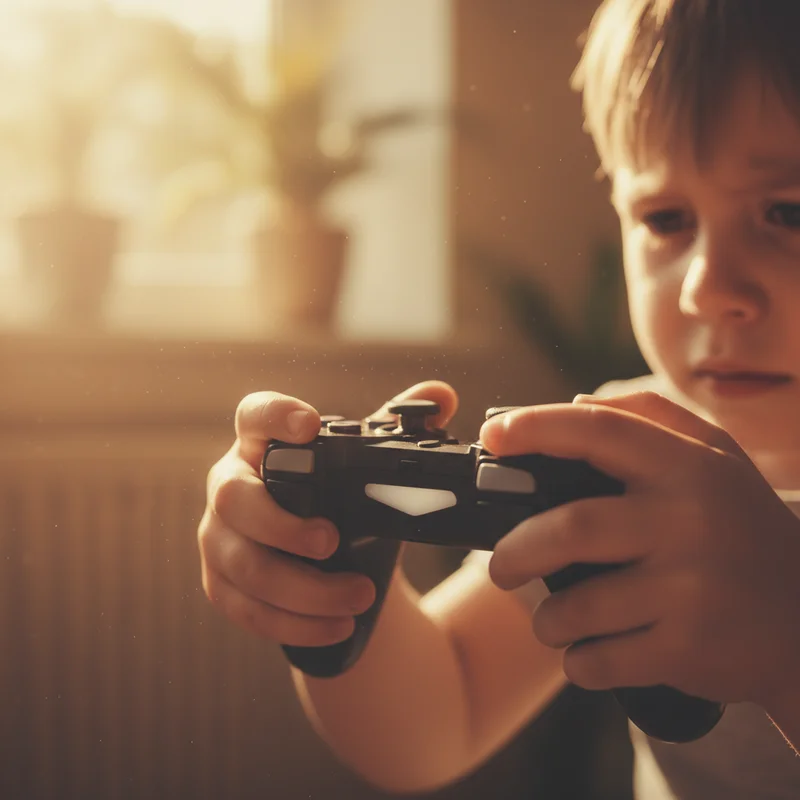
The Neuroscience of Rejection Sensitive Dysphoria in Children
Here's what's happening in your child's brain during these gaming meltdowns. The ADHD brain has differences in four key neurotransmitter pathways that make rejection feel unbearable:
Dopamine: Already struggling to maintain reward motivation, losing a game creates a massive dopamine crash. What should be minor disappointment becomes overwhelming despair.
Serotonin: Poor emotional regulation means they can't bounce back from negative feelings quickly. The sadness and frustration get stuck in their system.
GABA: Without enough calming neurotransmitter activity, they can't self-soothe when upset. The emotional storm has no natural brake system.
Norepinephrine: Hyperarousal means their nervous system treats losing as a genuine threat, triggering fight-or-flight responses to what should be minor setbacks.
Understanding this helped me stop taking my son's reactions personally. When he throws cards across the room after losing Go Fish, it's not defiance — it's his nervous system in crisis mode.
How Dopamine Crashes Amplify Losing Experiences
ADHD brains are already running on lower baseline dopamine. Games provide a temporary boost through anticipation and possibility of winning. But when they lose, the dopamine doesn't just return to baseline — it crashes below it.
This is why your child might be fine one moment and completely dysregulated the next. The biochemical shift is dramatic and happens faster than their emotional regulation skills can handle.
It's similar to what happens with dopamine crashes when they're told "no" — the neurological response is disproportionate to the trigger because their brain chemistry amplifies the experience.
The Difference Between Poor Sportsmanship and Neurological Overwhelm
Poor sportsmanship is a choice. Neurological overwhelm is not. Here's how to tell the difference:
Poor sportsmanship: Strategic behavior used to get attention or avoid consequences. The child can usually stop when faced with firm boundaries.
RSD meltdown: Genuine distress that the child cannot control in the moment. They often feel ashamed after and don't understand why they reacted so strongly.
If your child seems as surprised by their own reaction as you are, you're likely dealing with RSD, not character issues. They're not choosing this response — their nervous system is hijacking their behavior.
This is why traditional consequences don't work for these situations. You can't punish someone out of a neurological state any more than you can punish them out of having poor eyesight.
Games That Build Frustration Tolerance Without Triggering RSD
The goal isn't to avoid all competitive situations — it's to build their tolerance gradually. Start with games where "losing" doesn't feel personal:
Cooperative games: Everyone wins or loses together. Try Forbidden Island or Pandemic Junior.
Games with multiple ways to succeed: Ticket to Ride has different scoring paths, so not completing routes doesn't feel like failure.
Short games: Less investment means less disappointment. Skip Monopoly for quick card games.
Skill-building games: Focus on improvement over winning. "You remembered three more cards than last time!"
We also learned to modify rules temporarily. My son played Uno with an open hand until he built confidence. Some parents might call this "letting them win," but I call it scaffolding their emotional development.
GABA and Serotonin Support for Emotional Regulation
While building coping skills is crucial, supporting the underlying brain chemistry can make the difference between manageable disappointment and complete meltdowns.
Research suggests that supporting GABA and serotonin pathways naturally may help with emotional regulation. Magnesium alone targets primarily GABA, which is why many parents find it helps with sleep but not emotional reactivity.
The most promising research involves compounds that support multiple neurotransmitter pathways simultaneously. A 2019 clinical study found that saffron, which affects dopamine, serotonin, GABA, and norepinephrine, showed comparable efficacy to methylphenidate for ADHD symptoms — including emotional regulation.
This makes sense when you understand that single-pathway supplements often fall short because they're trying to fix a multi-system problem with a single-system solution.
Teaching Your ADHD Child to Reframe 'Failure' Experiences
Once the acute emotional response settles, you can work on reframing. But timing is everything — trying to teach during a meltdown is like trying to teach someone to swim while they're drowning.
Wait until they're calm, then try these approaches:
"Games are practice for real life." Just like we practice piano scales to get better at music, we practice losing games to get better at handling disappointment.
"Your brain felt like losing was dangerous, but it wasn't." Help them understand that their big feelings were their brain trying to protect them from something that wasn't actually threatening.
"Everyone's brain works differently." Some people find losing easy to shrug off. Your brain feels things more intensely, which can actually be a superpower in the right situations.
The key is validation first, education second. "That felt really scary when you started losing" acknowledges their reality before trying to change their perspective.
Is your child's emotional intensity affecting your whole family?
This quick assessment helps identify which brain pathways might need support for better emotional regulation and fewer daily meltdowns.
TAKE THE FREE ASSESSMENT →

