Your ADHD child suddenly bolts from the vacuum cleaner like it's chasing them. They cover their ears and meltdown when the blender starts. The school calls because they "can't handle" the fire drill.
Before you think they're being dramatic or oppositional, let me tell you what's really happening: your child's ADHD brain is experiencing genuine neurological overwhelm from sounds that don't bother neurotypical kids. This isn't defiance — it's brain chemistry.
When Your ADHD Child Runs From the Vacuum Cleaner
Here's what most parents don't realize: ADHD children have heightened sensory processing differences that make everyday sounds feel like emergency alerts to their nervous system.
The vacuum cleaner isn't just loud to your child — it triggers their fight-or-flight response. Their amygdala (the brain's alarm center) interprets that sudden motor sound as danger, flooding their system with stress hormones.
Other signs you might miss:
- Covering ears when the dishwasher runs
- Hiding during thunderstorms (even mild ones)
- Refusing to go to restaurants because they're "too loud"
- Having meltdowns during birthday party singing
- Getting aggressive when siblings play loudly nearby
This noise sensitivity isn't about volume alone — it's about how their ADHD brain processes sensory information differently.
The Difference Between ADHD Noise Sensitivity and Hearing Problems
Parents often worry their child has hearing issues, but ADHD auditory sensitivity is completely different from hearing loss or ear infections.
With hearing problems, your child can't hear quiet sounds well. With ADHD sensory processing issues, they hear TOO much. Every sound hits their nervous system at full intensity because their brain can't filter what's important from background noise.
It's like trying to have a conversation at a rock concert — except for your ADHD child, normal household sounds feel that overwhelming.
As a pediatric OT, I saw this constantly misunderstood. Teachers would say "he hears fine when he wants to," not realizing that being distracted by everything isn't selective hearing — it's sensory overwhelm.

How Dopamine Deficiency Amplifies Sensory Processing Issues
Here's the brain science that changes everything: ADHD involves imbalances in four key neurotransmitter pathways — dopamine, serotonin, GABA, and norepinephrine. When these systems aren't working optimally, sensory processing goes haywire.
Dopamine deficiency makes your child's brain constantly seek stimulation, but it also makes them hypersensitive to unexpected stimuli. They're simultaneously under-stimulated (craving input) and over-reactive (overwhelmed by sudden sounds).
Low GABA means their nervous system can't calm down after a noise trigger. Where a typical child recovers from a startle in seconds, your ADHD child stays in high alert mode.
Norepinephrine imbalances keep their fight-or-flight system on a hair trigger, so even moderate sounds feel like emergency signals.
This is why ADHD isn't bad behavior — it's brain chemistry. Your child isn't choosing to overreact to noises. Their neurological system genuinely experiences them as threats.
Why Noise Sensitivity Gets Worse With ADHD Medication Crashes
If your child takes stimulant medication, you've probably noticed their noise sensitivity spikes in the afternoon when the medication wears off. This isn't coincidence.
Stimulants temporarily boost dopamine levels, which helps with focus and sensory regulation. But when they crash, dopamine plummets below baseline. Your child's already sensitive nervous system becomes even more reactive.
That's why the 4 PM vacuum cleaner session triggers a meltdown, but the 10 AM one doesn't. Their brain's ability to process sensory information fluctuates with their neurochemical levels.
Parents dealing with the 4 PM crash often tell me, "It's like my child becomes a completely different kid." That's because their sensory processing capacity literally changes throughout the day.
The Hidden Classroom Noise Triggers Sabotaging Your Child's Focus
Schools are sensory minefields for ADHD children. The fluorescent light buzz, pencil sharpener, chair scraping, hallway conversations — sounds most kids filter out become major distractions.
Your child isn't "not paying attention." They're paying attention to EVERYTHING. Their brain can't prioritize the teacher's voice over the HVAC system humming or someone tapping their pencil three desks away.
Common classroom triggers:
- Sudden PA announcements
- Fire drill alarms (even practice ones)
- Cafeteria noise during lunch
- Gym echo and whistle sounds
- Construction or maintenance sounds
This explains why teachers say your child is "spacing out" — they're not lazy, they're overwhelmed by competing sensory inputs.
Auditory Processing Solutions That Work With ADHD Brain Chemistry
Traditional "just ignore the noise" advice doesn't work for ADHD children because their nervous system literally can't filter it out. You need strategies that support their unique neurological needs.
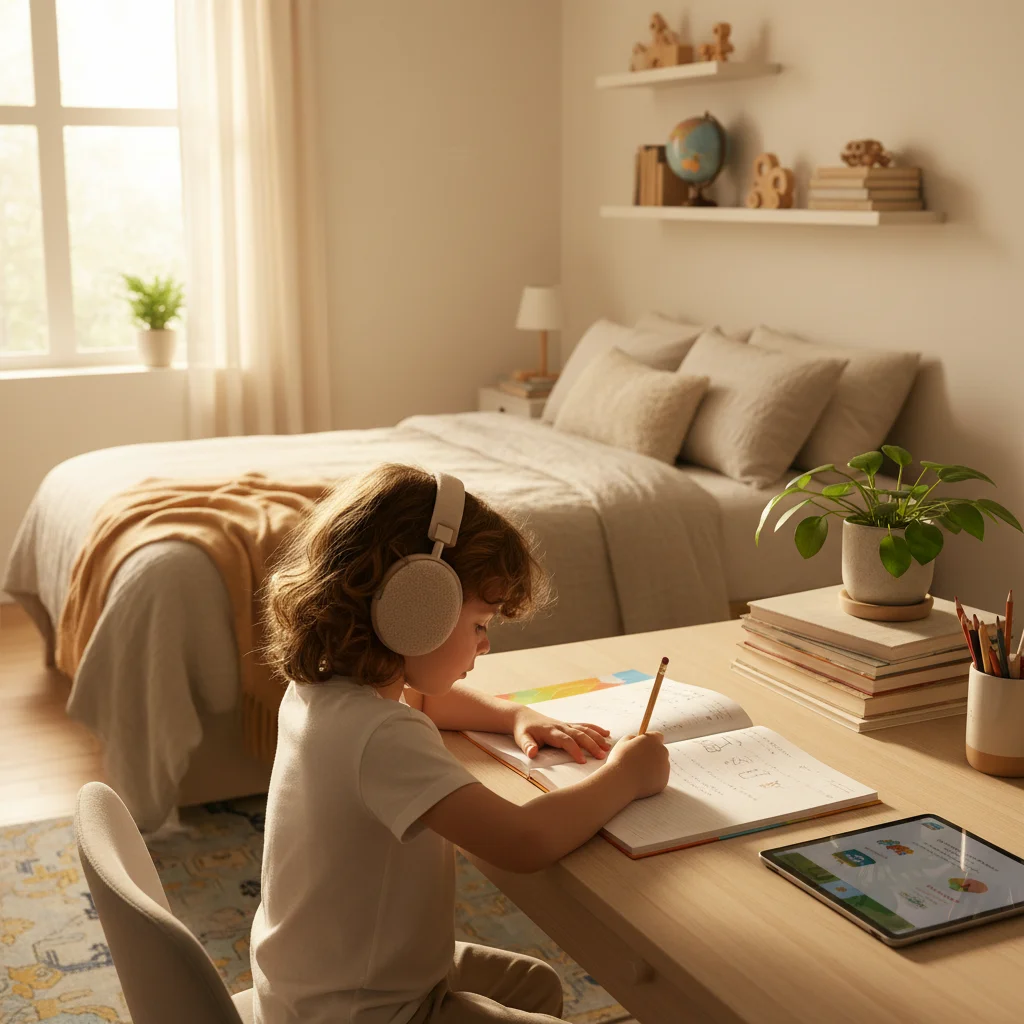
Noise-canceling headphones aren't just for airplanes — they're lifesavers for household chores. Let your child wear them during vacuuming, dishwashing, or blender use.
Preparation scripts help their nervous system gear up: "In two minutes, I'm starting the dishwasher. It will run for one hour. You can go to your room or wear headphones."
White noise machines create consistent background sound that masks sudden audio triggers. The predictable hum actually calms the ADHD nervous system.
Sensory breaks before noisy activities help reset their system. Five minutes of deep pressure therapy can reduce noise sensitivity for hours.
Supporting All 4 Neurotransmitter Pathways to Reduce Sensory Overwhelm
Here's what I wish more parents understood: addressing noise sensitivity means supporting the underlying neurochemical imbalances that create the problem.
When dopamine, serotonin, GABA, and norepinephrine are better balanced, your child's sensory processing naturally improves. Their nervous system becomes less reactive, their recovery time speeds up, and their ability to filter important sounds from background noise gets stronger.
Research suggests that compounds like saffron may support multiple neurotransmitter pathways simultaneously. A 2019 clinical study in the Journal of Child and Adolescent Psychopharmacology found saffron showed comparable efficacy to methylphenidate for ADHD symptoms — including sensory regulation.
But the key insight is this: single-pathway approaches often fall short. Magnesium alone won't fix your child's meltdowns because it primarily supports GABA. Your child needs comprehensive support for all four neurochemical systems.
Creating a Sensory-Smart Home Environment for ADHD Success
Small environmental changes can dramatically reduce your child's noise sensitivity triggers:
Soft furnishings absorb sound better than hard surfaces. Rugs, curtains, and upholstered furniture reduce echo and harsh acoustics.
Designated quiet spaces give your child somewhere to retreat when overwhelmed. A reading corner with pillows and soft lighting becomes their sensory reset zone.
Volume limits on devices protect their sensitive hearing while still allowing normal use. Most tablets and phones have parental volume controls.
Routine timing helps their nervous system prepare. Run loud appliances at consistent times so their brain can anticipate and adapt.
Remember: your ADHD child isn't being difficult about noise — their brain is genuinely processing sound differently. When we support their neurological needs instead of fighting their responses, everyone's stress decreases.
Parent Training — Limited Spots
Want a Step-by-Step Plan for Your ADHD Child?
The Unbreakable ADHD program gives parents a complete framework for managing meltdowns, building routines, and connecting with their ADHD child. 9 video modules by licensed therapist Anneliese.
87 of 100 spots taken · 9 video modules · $9.99 trial
START YOUR $9.99 TRIAL →Is your child's noise sensitivity part of a bigger ADHD picture?
Take our free 2-minute assessment to understand what's really happening in your child's brain and get personalized support strategies.
TAKE THE FREE ASSESSMENT →
