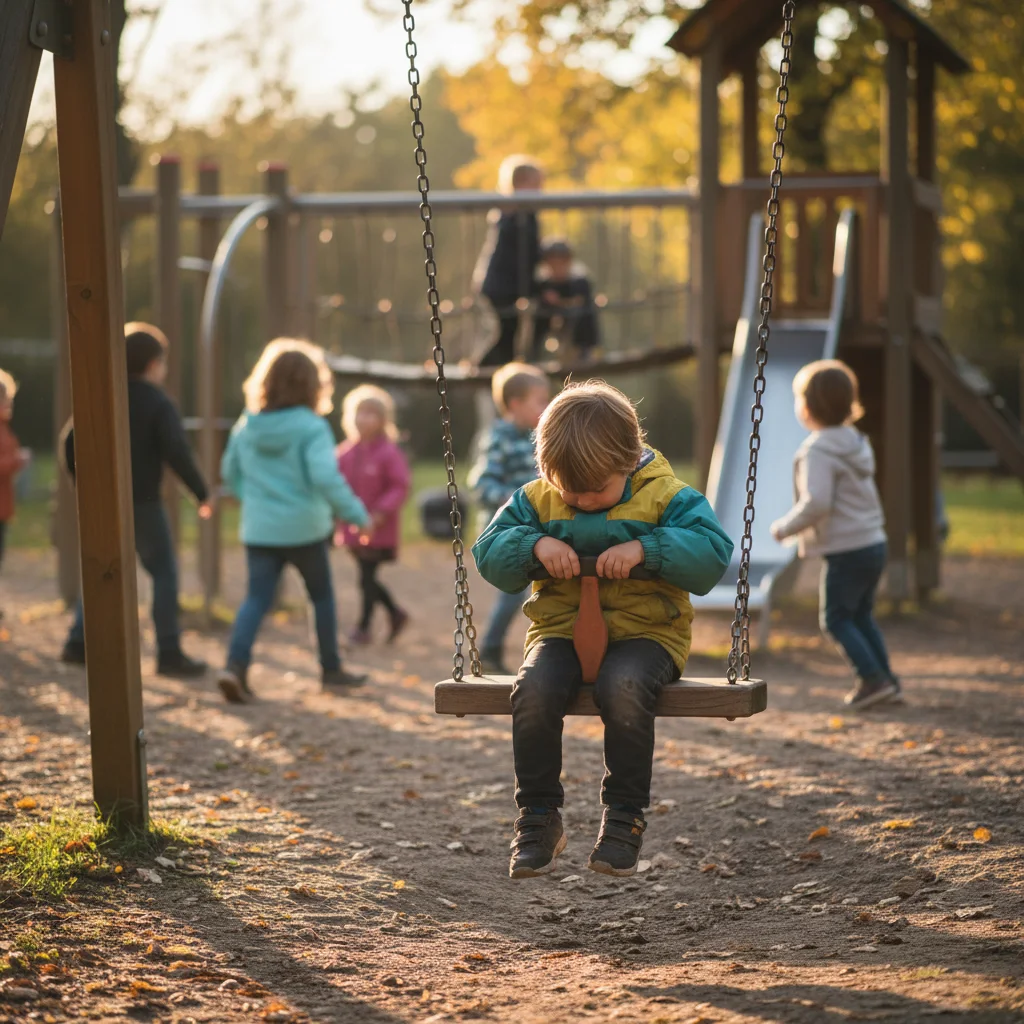
The birthday party invitation that never came was my breaking point. I watched my 8-year-old son Jake scroll through his classmates' Instagram stories, seeing all the kids from his class at Tommy's birthday party — the party he wasn't invited to. Again.
"Mom, why don't they like me?" he asked, and I felt my heart shatter into a million pieces. Because here's the thing — it wasn't his fault. It wasn't bad parenting. And it definitely wasn't because he's not a wonderful kid.
If your ADHD child struggles with friendships, can't seem to keep friends, or gets excluded from social activities, I want you to know something right up front: this is not a reflection of your parenting or your child's worth. ADHD brains are wired differently, and that includes how they navigate social situations.
The Birthday Party Invitation That Never Came
It started in first grade. Jake would come home excited about new friends, talking about kids he'd played with at recess. But then the playdates would happen, and something always seemed to go wrong.
There was the time he accidentally broke another kid's Lego creation because he got so excited he knocked it over. The playdate where he couldn't stop talking about his current obsession with dinosaurs, not letting the other child get a word in. The birthday party where he had a complete meltdown because they changed the activity schedule.
As his former pediatric OT training kicked in, I started recognizing the pattern. But as his mom, it was devastating to watch him experience rejection after rejection.
The hardest part wasn't even Jake's disappointment — it was the way other parents started looking at me. Like I wasn't teaching him basic social skills. Like I was somehow failing as a mother because my child couldn't sit still during story time or wait his turn in games.
Why ADHD Brains Struggle With Friendship Skills
Here's what I wish I'd understood earlier: ADHD social skills problems aren't behavioral issues — they're neurological differences. When your child interrupts constantly, has trouble reading social cues, or struggles with emotional regulation around peers, it's because their brain is processing social information differently.
The ADHD brain has differences in four key neurotransmitter pathways that directly impact social skills:
- Dopamine regulation affects their ability to gauge social rewards and consequences
- Serotonin balance impacts mood stability and impulse control during social interactions
- GABA function influences their ability to self-regulate when excited or overstimulated
- Norepinephrine levels affect their executive function during complex social situations
When I finally understood this, it changed everything. Jake wasn't being "naughty" or "difficult." His brain was working overtime trying to process social information while also managing attention, impulse control, and emotional regulation all at once.
The Dopamine Connection to Social Rejection
One of the most heartbreaking aspects of ADHD social struggles is how dopamine dysregulation affects their ability to learn from social experiences. Neurotypical children get a dopamine reward from successful social interactions — they feel good when they make a friend laugh or when they're included in a game.
But ADHD children often have a harder time accessing this natural social reward system. They might not pick up on the subtle social cues that indicate someone enjoyed their company. Or they might hyper-focus on the one negative interaction and miss all the positive ones.
Jake would come home from a playdate convinced the other child "hated" him because of one moment of conflict, completely overlooking the two hours of fun they'd had together.
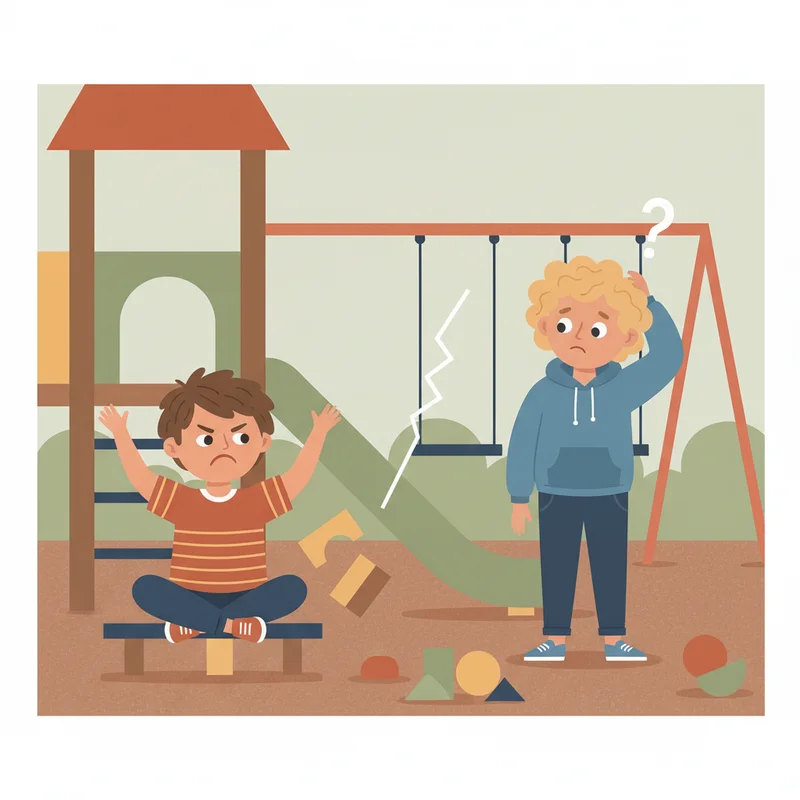
This creates a devastating cycle: they struggle to read social rewards, so they don't learn what works in friendships, so they keep making the same social mistakes, leading to more rejection, which makes them even more anxious and reactive in social situations.
How Impulsivity Sabotages Playdates
If you've ever watched your ADHD child lose a friend in real-time during a playdate, you know how crushing it can be. Jake's impulsivity would kick in at the worst possible moments.
He'd interrupt his friend's story because something reminded him of his own experience. He'd change the game rules mid-way through because he had a "better" idea. He'd grab toys or interrupt activities because his brain was moving faster than his social awareness.
The other children, understandably, would get frustrated. They didn't understand that Jake wasn't trying to be rude or controlling — he was just struggling to regulate his impulses while also trying to connect and have fun.
I learned that punishment doesn't work for ADHD kids in these situations because the behavior isn't intentional. His serotonin and GABA pathways were struggling to provide the brakes he needed to think before acting.
Instead of punishing him for these social mishaps, I started teaching him specific scripts and strategies to use when his impulses kicked in. "Can I add an idea?" instead of just interrupting. "Let's finish your game first, then try mine" instead of changing rules mid-game.
Teaching Emotional Regulation for Better Friendships
The biggest breakthrough came when I realized that most of Jake's friendship difficulties stemmed from emotional dysregulation during social stress. When something didn't go as expected during a playdate, he'd have a meltdown. When he felt excluded or misunderstood, he'd either shut down completely or become hyperactive and silly.
I started teaching him what I call "social regulation strategies" — specific tools he could use when he felt overwhelmed during peer interactions.
We practiced the "pause and breathe" technique: when he felt his emotions escalating, he'd excuse himself to use the bathroom or get a drink of water, giving himself 30 seconds to regulate before rejoining the activity.
We role-played different social scenarios at home, letting him practice how to respond when someone said "no" to his game idea, or when he felt left out of a conversation. This helped strengthen his social executive function in a low-pressure environment.
But honestly, the regulation strategies only went so far. His brain was still working against him, struggling with the neurochemical balance he needed to stay regulated during social challenges.
The Supplement Approach That Helped Us
After months of trying different behavioral approaches, I started researching whether there were ways to support Jake's brain chemistry naturally. I'd tried the usual suspects — magnesium for regulation, omega-3s for brain health — but magnesium alone wasn't enough for his complex social and emotional needs.
That's when I discovered research on saffron and its effects on multiple neurotransmitter pathways simultaneously. Unlike single-pathway supplements that only target one aspect of ADHD symptoms, saffron research suggested it could support the same four pathways that impact both ADHD symptoms and social functioning: dopamine, serotonin, GABA, and norepinephrine.
The turning point for us came from a 2019 clinical study published in the Journal of Child and Adolescent Psychopharmacology. Researchers found that saffron showed comparable efficacy to methylphenidate (Ritalin) in supporting attention and behavioral regulation in children with ADHD.
What caught my attention wasn't just the attention benefits — it was that parents in the study reported improvements in their children's emotional regulation and social interactions as secondary benefits.

Within about three weeks of adding a high-quality saffron supplement to Jake's routine, I started noticing subtle but important changes. He was less reactive when playdates didn't go exactly as planned. He seemed better able to read when other kids were getting frustrated with his behavior and would actually adjust accordingly.
Most importantly, he started having positive social experiences that he could actually recognize and remember, which helped build his confidence for future interactions.
Rebuilding Confidence After Social Setbacks
Even with better neurochemical support, Jake had years of social rejection to overcome. His confidence was shattered, and he'd developed protective behaviors that actually pushed other kids away — like showing off excessively or withdrawing completely.
The key was helping him rewrite his social story. Instead of "I'm bad at making friends," we practiced "I'm learning how friendships work." Instead of "Nobody likes me," we'd review evidence of positive interactions: "Marcus asked you to sit with him at lunch" or "Emma laughed at your joke yesterday."
We also had to address the social anxiety that had developed from repeated negative experiences. Jake had started avoiding social situations entirely because he was so afraid of messing up again.
I started arranging very short, structured playdates — maybe 90 minutes max — with activities that played to his strengths. If he was obsessed with Pokemon, I'd find another Pokemon-loving kid for a Pokemon card trading session. Success bred success.
We celebrated small wins: "You noticed when Tyler looked bored and asked what he wanted to do instead." "You took turns choosing activities without me reminding you." These micro-successes helped rebuild his faith in his ability to connect with peers.
What Worked (And What Didn't) for Lasting Friendships
After two years of trial and error, here's what actually made a lasting difference for Jake's ability to build and maintain friendships:
What worked:
- Supporting his brain chemistry with a multi-pathway approach, not just single supplements
- Teaching specific social scripts for common challenging situations
- Shorter, more structured social interactions rather than long, unstructured playdates
- Finding friends who shared his interests and intensity level
- Helping him recognize and celebrate small social successes
- Addressing underlying social anxiety, not just the behavioral symptoms
What didn't work:
- Trying to change his personality or make him "less intense"
- Forcing friendships with kids who weren't a good match for his energy level
- Focusing only on behavioral modifications without addressing brain chemistry
- Long lectures about social skills after failed interactions
- Avoiding social situations entirely to prevent meltdowns
The most important thing I learned was that Jake didn't need to become someone else to have friends — he needed to find his people and have the neurochemical support to show up as his best self.
Today, Jake has three close friends who "get" him. They appreciate his creativity, his passion for his interests, and his loyalty. Yes, he still has social challenges sometimes, but now he has the confidence and skills to navigate them without falling apart.
And the best part? Last month, he got invited to not one but two birthday parties in the same weekend. He was so excited he could barely contain himself — and for once, that excitement felt like pure joy instead of anxiety.
If your ADHD child is struggling with friendships, please know that it's not hopeless. With the right combination of understanding, support, and patience, they can absolutely develop meaningful peer relationships. It just might look different than what you initially imagined — and that's perfectly okay.
Parent Training — Limited Spots
Helping Your ADHD Child Build Real Connections
Social skills, self-esteem, and emotional regulation — the Unbreakable ADHD program covers the strategies that help ADHD kids thrive. 9 video modules from licensed therapist Anneliese.
87 of 100 spots taken · 9 video modules · $9.99 trial
START YOUR $9.99 TRIAL →Is your ADHD child struggling with social challenges too?
Take our free 2-minute assessment to identify which brain pathways might need support for better emotional regulation and social skills.
TAKE THE FREE ASSESSMENT →

