
The meltdown started the instant I suggested we take a different route to school. Not a dramatic change — just avoiding construction on our usual street. But my 8-year-old son went from calm to screaming in seconds, throwing his backpack and refusing to get in the car.
I stood there completely bewildered. We were talking about a two-minute detour, not moving to another planet. But to his ADHD brain, this tiny deviation felt catastrophic.
If you're dealing with explosive reactions to minor routine changes, know this: this isn't defiance, and it's not your fault. Your child's need for predictability runs deeper than simple preference — it's neurological.
The Dopamine Connection: Why ADHD Brains Crave Predictability
ADHD brains operate with a dopamine deficit. They need more stimulation to feel regulated and focused. When routines are established, they become a reliable source of dopamine — your child knows what to expect and when.
But here's what I wish I'd understood sooner: unexpected changes create a dopamine crash. The brain was anticipating that familiar reward pattern, and suddenly it's gone. The result? Immediate dysregulation.
Think of it like this: imagine someone promising you your favorite coffee every morning for months, then randomly switching to decaf without warning. The disappointment would be intense. Now multiply that feeling by ten — that's what routine changes feel like to an ADHD brain.
This explains why your child might handle big planned changes (like vacation) better than tiny unexpected ones. The anticipation and preparation help the dopamine system adjust gradually.
The Hidden Anxiety Behind Routine Rigidity
What looks like controlling behavior is often anxiety masquerading as inflexibility. ADHD children frequently develop anxiety as a secondary condition because their brains struggle to predict and control their environment.
Routines become their safety net. When you suggest changing the bedtime story or taking a different route home, you're not just altering a plan — you're removing a crucial coping mechanism.
I learned this the hard way when my son started having explosive meltdowns after school. The unpredictability of his school day left him desperate for control at home. Our evening routines weren't just preferences — they were his way of regulating overwhelming emotions.
How Norepinephrine Spikes Fuel Explosive Reactions
When an unexpected change hits, the ADHD brain doesn't just experience disappointment — it triggers a fight-or-flight response. Norepinephrine (the brain's stress hormone) floods the system, creating that explosive, seemingly irrational reaction.
This is why gentle reasoning doesn't work in the moment. Your child isn't choosing to be difficult — their nervous system is literally in survival mode. The thinking brain goes offline, and the emotional brain takes over.
Understanding this transformed how I responded to my son's meltdowns. Instead of trying to logic him through it ("it's just a different street!"), I learned to address the nervous system first.
Building Flexibility Without Breaking Your Child
The goal isn't to eliminate all routines — that would be cruel to an ADHD brain. Instead, you want to gradually build tolerance for flexibility within a structured framework.
Start small. Introduce tiny variations during calm moments, not when you're rushed or stressed. Maybe it's a different breakfast plate or brushing teeth before getting dressed instead of after. Let your child know in advance: "Tomorrow we're going to try something a little different."
I started calling these "flex practices" with my son. We'd deliberately plan mini-changes so he could experience that his world wouldn't fall apart. Over time, his nervous system learned that small variations were safe.
The key is making flexibility feel like a choice, not a threat. "Would you like to try the blue route or the green route to school today?" gives control back to the child while still introducing variation.
GABA-Supporting Strategies That Actually Help
GABA is your child's calming neurotransmitter. When it's functioning well, transitions feel manageable. When it's not, every change feels overwhelming. Supporting GABA naturally can make a dramatic difference in flexibility.
Deep pressure helps activate the GABA system. Before announcing any routine changes, try a few minutes of deep pressure therapy — firm hugs, weighted blankets, or even wall push-ups.
Breathing exercises work too, but they need to be taught during calm moments, not mid-meltdown. We practiced "balloon breathing" every night at bedtime so the skill was available when needed.
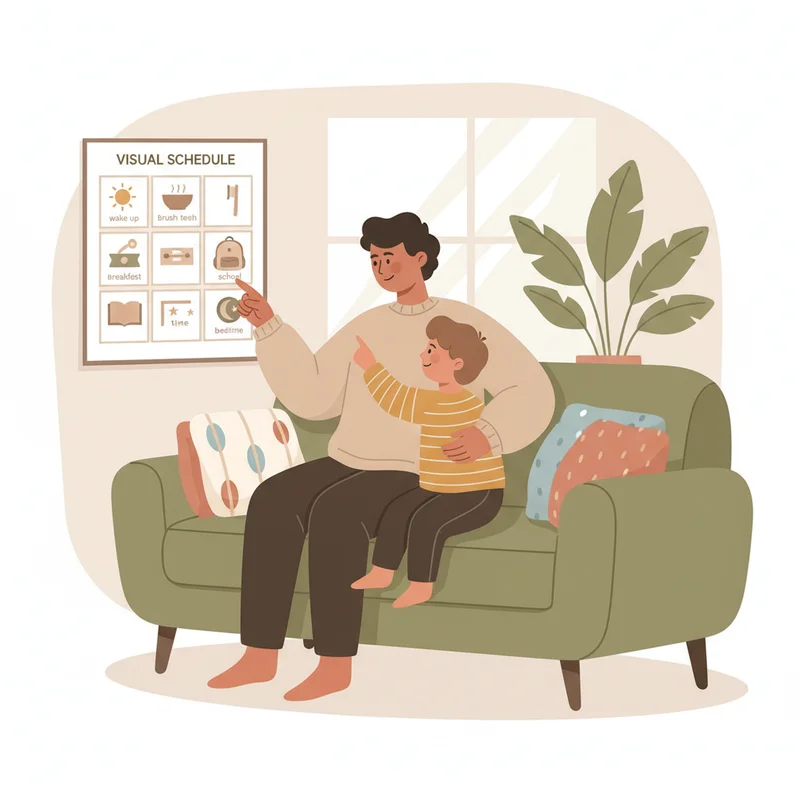
Visual schedules become crucial tools. When changes are necessary, show them on the schedule. Cross out the original plan and draw in the new one. This helps the ADHD brain process the shift visually rather than just verbally.
When Routine Rigidity Might Signal Co-Occurring Autism
Sometimes extreme inflexibility points to autism alongside ADHD. If your child's need for sameness extends beyond typical ADHD patterns — like requiring identical food presentation, specific clothing textures, or meltdowns over invisible changes — consider an autism evaluation.
About 30-50% of children with ADHD also have autism traits. This doesn't change your parenting approach dramatically, but it might explain why flexibility strategies aren't working as expected.
The key difference: ADHD routine preferences usually stem from dopamine and anxiety management. Autistic routine needs often center on sensory processing and neurological organization. Both are valid, but they require slightly different approaches.
Creating 'Change Practice' That Actually Works
The most effective way to build flexibility is through planned practice during low-stress times. Make it a game rather than a challenge.
We started "Adventure Wednesdays" where the whole family would try something new together — a different park, unusual breakfast, or rearranged furniture. Making it family-wide removed the feeling that he was being singled out for fixing.
Celebrate small wins. When your child handles any unexpected change without a meltdown, acknowledge it specifically: "You were so flexible when the store was closed and we had to go to a different one. That showed real brain growth."
Remember that building flexibility is like strengthening a muscle — it takes time, consistency, and patience. Some days will be better than others, and that's completely normal.
The goal isn't a perfectly flexible child. It's a child who feels safe enough in their routines to occasionally step outside them without their world falling apart.
Your child's need for routine isn't something to eliminate — it's something to work with. This isn't bad behavior; it's brain chemistry trying to create safety and regulation in an unpredictable world.
With understanding, patience, and the right strategies, you can help your child develop the flexibility they'll need while still honoring their neurological needs. It's not about changing who they are — it's about giving them tools to navigate a world that doesn't always follow their preferred script.
Parent Training — Limited Spots
Tired of Walking on Eggshells Around Meltdowns?
Licensed therapist Anneliese teaches a step-by-step framework for managing ADHD meltdowns, building connection, and ending the daily battles. 9 video modules parents are calling life-changing.
87 of 100 spots taken · 9 video modules · $9.99 trial
START YOUR $9.99 TRIAL →Is your child's inflexibility part of a bigger ADHD pattern?
Take our free assessment to understand what's driving your child's routine needs and get personalized strategies that work with their unique brain chemistry.
TAKE THE FREE ASSESSMENT →

