
My heart sank when I picked up Emma from school last Tuesday. She was crying — not the dramatic, exhausted meltdown kind of crying. The quiet, defeated kind that breaks your heart.
"Mrs. Johnson had to help me with my math again," she whispered. "I'm the only one who can't do it by myself."
This isn't about poor teaching or lack of caring — Emma's teacher genuinely wants to help. But somewhere along the way, that help became a crutch. And now my daughter believes she's fundamentally incapable of learning without constant assistance.
The Red Flag Moment When She Stopped Trying
The turning point happened in November. Emma's teacher mentioned that she'd started waiting for help before even attempting her work. Not struggling through a few problems first — just sitting there, hand raised, waiting.
When your ADHD child's brain is already wired to seek immediate dopamine rewards, constant rescue can hijack their motivation system entirely. The dopamine pathway that should activate from effort and problem-solving gets redirected to dependency instead.
Emma learned that struggle equals failure, rather than struggle equals learning. This neurological pattern becomes deeply embedded when we consistently remove the discomfort of challenge.
How Well-Meaning Accommodations Can Backfire
The IEP meeting felt like a victory initially. Extra time, preferential seating, check-ins with the aide. All research-backed accommodations that absolutely work for many ADHD kids.
But here's what they don't tell you: accommodations work best when they level the playing field, not when they remove the game entirely.
When an aide sits next to your child for every assignment, their brain stops activating the norepinephrine pathways responsible for sustained attention. When someone else manages their materials, the executive function networks don't get the practice they desperately need to develop.
It's like having someone else do push-ups for you and wondering why you're not getting stronger.
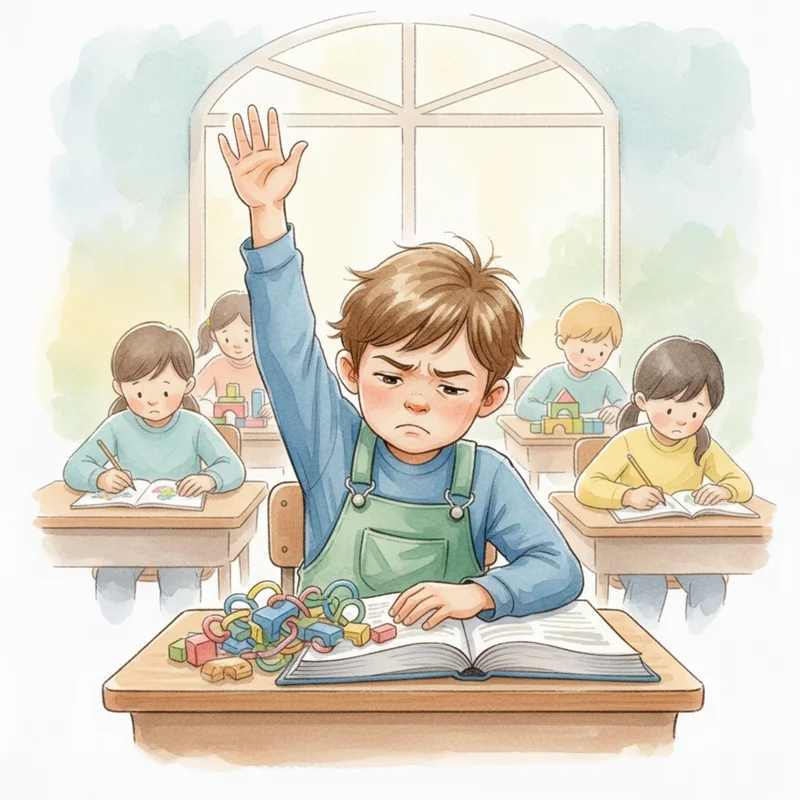
The Learned Helplessness Trap in ADHD Support
Learned helplessness happens when your child's brain starts believing they have no control over outcomes. In ADHD kids, this develops faster because their dopamine and serotonin systems already struggle with motivation and mood regulation.
When Emma stopped attempting problems independently, her brain was protecting itself from the emotional dysregulation that comes with ADHD challenges. But it was also training her prefrontal cortex to stay offline.
The cycle looks like this: Challenge appears → Anxiety spikes → Adult rescues → Temporary relief → Brain learns to expect rescue → Stops trying → Anxiety about independence increases.
This isn't laziness or manipulation. It's a neurological adaptation to an environment that consistently removes struggle before the brain can build resilience.
Why Constant Assistance Kills Intrinsic Motivation
Your child's dopamine system needs to learn that effort leads to reward. When adults consistently provide the solution, the brain stops making that connection.
Emma's teacher was inadvertently teaching her that the reward (completed work, adult approval) comes from asking for help, not from problem-solving. Her motivation system adapted accordingly.
ADHD brains are particularly vulnerable to this because they're already dopamine-deficient. They latch onto whatever provides the quickest, most reliable dopamine hit — which becomes dependency rather than achievement.
The GABA pathways that should calm anxiety during challenge also stay underdeveloped when we consistently remove the opportunity to work through discomfort.
The Shame Cycle That Develops From Over-Support
Here's the cruel irony: the more help Emma received, the more convinced she became that she needed it. And the more convinced she became that needing help meant something was wrong with her.
ADHD kids already battle negative self-talk due to their neurological differences. When school support makes them feel even more different, the shame compounds.
Emma started saying things like "I'm too stupid for math" and "Everyone else is smarter than me." These weren't tantrums — they were genuine beliefs forming in her developing brain.
"The goal isn't to make school easier for ADHD kids. It's to make success more accessible while preserving their sense of competence."
How to Advocate for Independence-Building Accommodations
I requested a meeting to restructure Emma's support plan. Instead of constant assistance, we implemented what I call "scaffolded independence."
The aide now checks in at specific intervals rather than sitting beside her. Emma gets a visual timer to help her gauge when to ask for help versus when to keep trying.
Her math worksheets get broken into smaller chunks with built-in celebration points. This supports her dopamine pathways while maintaining the challenge her brain needs to develop.
We also added movement breaks before difficult tasks to activate her norepinephrine system naturally — something that's crucial for ADHD attention regulation.
The 4-Pathway Approach to Building Confidence
True confidence in ADHD kids requires supporting all four brain pathways simultaneously, not just managing symptoms with external help.
Dopamine gets activated through achievable challenges and celebrating small wins. Serotonin stabilizes through predictable routines and emotional validation. GABA develops through practicing self-soothing during mild frustration. Norepinephrine strengthens through physical movement and attention-building exercises.
When schools only focus on external supports, they miss the opportunity to help these pathways mature. Emma's new plan includes specific activities targeting each system.
Research from the 2019 study in the Journal of Child and Adolescent Psychopharmacology showed that supporting these pathways naturally can be as effective as medication for building sustained attention and emotional regulation.
Working With Teachers to Fade Support Strategically
The key is gradual release, not cold turkey. Emma's teacher and I created a plan to slowly reduce assistance while monitoring her confidence levels.
Week 1: Aide checks in every 10 minutes instead of sitting beside her. Week 2: Every 15 minutes. Week 3: Only when Emma raises her hand after attempting at least two problems.
We also established that effort counts more than accuracy during this transition. Emma earns praise for attempting, not just for getting answers right.
The goal is building what I call "productive struggle" — enough challenge to grow her brain pathways, but not enough to trigger emotional dysregulation.
Three months later, Emma raises her hand 70% less frequently and completes most assignments independently. More importantly, she told me yesterday, "I figured out that hard problem all by myself!"
That pride in her voice? That's what we were accidentally taking away with too much help.
Is your child's school support helping or creating dependency?
Take our free assessment to discover whether your child's accommodations are building independence or accidentally undermining their confidence.
TAKE THE FREE ASSESSMENT →

