
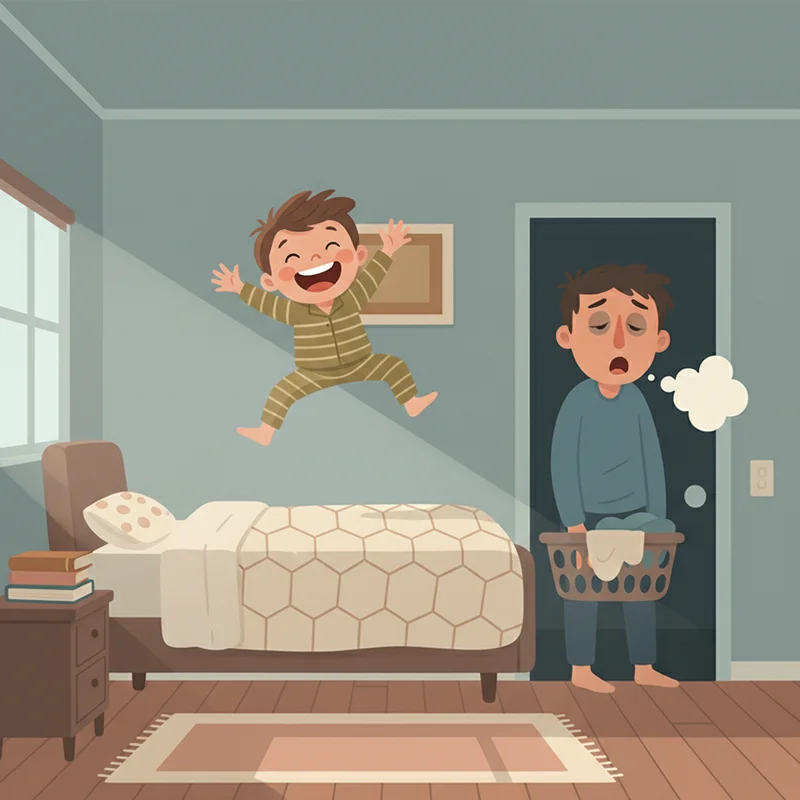
It's 8 PM and your sweet, manageable child suddenly transforms into a tornado. They're bouncing off walls, picking fights with siblings, and acting like they've never heard the word "bedtime" in their life.
If this sounds familiar, you're not dealing with defiance or poor parenting. You're witnessing your ADHD child's brain chemistry in crisis mode.
Here's what I wish someone had told me years ago: ADHD isn't bad behavior — it's brain chemistry. And evening hyperactivity isn't random chaos. It's a predictable neurological response that happens when four specific brain pathways crash simultaneously.
The Jekyll and Hyde Phenomenon: When Brain Chemistry Shifts
During the day, your child's brain works overtime to maintain focus and regulation. By evening, the neurochemical systems that keep ADHD symptoms in check are completely depleted.
Think of it like a phone battery that's been running on 10% all day. Eventually, it doesn't just die gradually — it shuts down suddenly and dramatically.
This isn't willful defiance. It's neurological exhaustion manifesting as hyperactivity.
"The same brain that struggles to sit still in math class is now desperately seeking stimulation to regulate itself before sleep."
Why ADHD Brains Are Wired Differently for Evening Hyperactivity
ADHD brains operate on four key neurotransmitter pathways: dopamine, serotonin, GABA, and norepinephrine. By evening, all four systems are running on empty.
Dopamine depletion means your child can't find satisfaction in calm activities. They need bigger, louder, more intense stimulation to feel regulated.
Serotonin crashes trigger mood swings and emotional reactivity. That's why bedtime becomes a battleground over seemingly tiny issues.
GABA deficiency makes self-soothing nearly impossible. Your child physically cannot calm their nervous system down.
Norepinephrine imbalances create the paradox of being simultaneously wired and exhausted.
This is why magnesium alone won't fix your child's meltdowns. Single-ingredient supplements only address one pathway, leaving the other three in chaos.
The Dopamine Crash That Triggers Nighttime Chaos
Here's what happens in your child's brain around 7-8 PM: dopamine levels, already lower in ADHD brains, hit rock bottom.
Dopamine isn't just about attention — it's your child's reward and motivation system. When it crashes, normal activities feel boring and unrewarding.
Suddenly, putting on pajamas feels impossible. Brushing teeth becomes a negotiation. And sitting still for a bedtime story? Forget it.
Your child isn't being difficult. They're desperately seeking dopamine stimulation through movement, noise, and conflict because their brain literally cannot find satisfaction in calm activities.
This explains why they'll argue about anything — even positive attention feels better than the neurochemical emptiness of dopamine depletion.
How Cortisol and Norepinephrine Create the Perfect Storm
Just when dopamine crashes, cortisol (stress hormone) and norepinephrine (alertness chemical) spike erratically.
This creates the exhausted-but-wired state every ADHD parent recognizes. Your child is genuinely tired but neurologically incapable of calming down.
Traditional "calm down" techniques fail because you're fighting brain chemistry, not behavior choices. No amount of deep breathing can override a norepinephrine surge.
The worst part? This is why they save their worst behavior for you. Home is where they finally feel safe enough to let their neurological exhaustion show.
Why Traditional Bedtime Routines Backfire for ADHD Kids
Most bedtime advice assumes neurotypical brain chemistry. "Create a calm environment" and "stick to a routine" sound logical — until you understand ADHD neuroscience.
ADHD brains need stimulation to regulate. Complete sensory deprivation actually increases hyperactivity because it creates an understimulation crisis.
This is why your child gets more hyperactive in their dark, quiet bedroom. Their brain is desperately seeking input to balance depleted neurotransmitter systems.
Similarly, rigid routines can backfire when your child's executive function is offline. They literally cannot process multi-step instructions when their prefrontal cortex is neurochemically depleted.
The Four-Pathway Approach to Evening Regulation
Effective evening regulation requires supporting all four neurotransmitter pathways simultaneously, not just one at a time.
Research indicates that comprehensive approaches addressing dopamine, serotonin, GABA, and norepinephrine together may provide more sustained evening calm than single-pathway interventions.
The 2019 clinical study by Baziar and colleagues showed that saffron, which works on all four pathways, demonstrated comparable efficacy to methylphenidate in managing ADHD symptoms — including the evening hyperactivity that other supplements fail to address.
This multi-pathway support explains why parents often see dramatic improvements in bedtime behavior when addressing the complete neurochemical picture rather than just individual symptoms.
Natural Solutions That Work With Your Child's Brain Chemistry
Once you understand the mechanism, evening strategies make more sense.
Controlled stimulation before bedtime can actually help. Think heavy work activities, sensory input, or even gentle roughhousing to give the dopamine system what it needs.
Nutritional timing matters. Supporting neurotransmitter production earlier in the day prevents the dramatic evening crash.
Routine flexibility works better than rigid schedules. When executive function is offline, having backup plans reduces power struggles.
Most importantly, understanding the mechanism removes guilt. This isn't about your parenting. It's about brain chemistry that you can learn to support.
Creating an Evening Routine That Actually Calms the ADHD Brain
Start with neurochemical support 30-60 minutes before traditional "bedtime." This gives depleted pathways time to stabilize.
Build in acceptable stimulation — jumping jacks, wall pushes, or singing loudly in the shower. Fighting your child's need for input creates more resistance.
Use connection over control. When serotonin is low, emotional co-regulation works better than behavioral demands.
Remember: the goal isn't immediate compliance. It's gradually teaching your child's brain to regulate itself through consistent neurochemical support.
"When you stop fighting your ADHD child's brain chemistry and start working with it, bedtime transforms from a battleground into a bridge toward rest."
Parent Training — Limited Spots
Want a Step-by-Step Plan for Your ADHD Child?
The Unbreakable ADHD program gives parents a complete framework for managing meltdowns, building routines, and connecting with their ADHD child. 9 video modules by licensed therapist Anneliese.
87 of 100 spots taken · 9 video modules · $9.99 trial
START YOUR $9.99 TRIAL →Is your child's evening hyperactivity actually an ADHD regulation crisis?
Take our free assessment to discover your child's specific neurochemical patterns and get personalized strategies that work with their brain, not against it.
TAKE THE FREE ASSESSMENT →

