
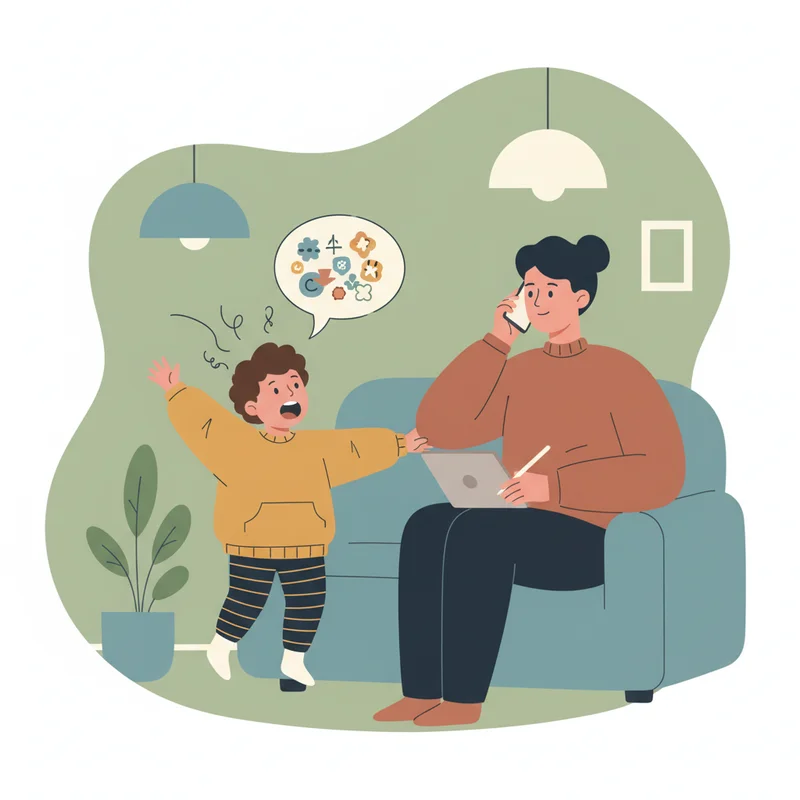
I was mid-sentence explaining to another mom why we couldn't do the playdate that Friday when my son burst in: "Mom! Can we get ice cream? And also my iPad isn't working and Tommy said his dad has a drone and—"
The other mom's face shifted. That look. The one that says, Can't she control her child?
Here's what I wish I could have told her: My child's interrupting has nothing to do with my parenting or his politeness. ADHD isn't bad behavior — it's brain chemistry, and the constant interrupting is actually his dopamine-seeking brain working exactly as it's designed to.
Why ADHD Brains Can't 'Just Wait Their Turn'
When neurotypical kids interrupt, it's usually a learned behavior that responds to consequences and reminders. When ADHD kids interrupt, it's neurological.
The ADHD brain has lower baseline dopamine levels, especially in the prefrontal cortex that controls executive function. When your child has a thought or question, their brain gets a small dopamine hit. But if they wait to share it, that dopamine fades and the thought literally disappears from working memory.
From their perspective, interrupting isn't rude — it's survival. If they don't speak immediately, they'll lose the thought entirely.
"It's like trying to hold water in a colander. The thought is there one second and gone the next if I don't say it right away." — 12-year-old with ADHD
The Working Memory Connection Most Parents Miss
Working memory is like your brain's notepad — it holds information temporarily while you use it. ADHD significantly impacts working memory capacity.
So when you're talking and your child has a question, their brain is juggling: listening to you + holding onto their question + trying to wait for the "right" moment. That's three cognitive tasks at once. For most ADHD kids, something has to give — and it's usually the waiting part.
This is also why your child can remember every detail about their favorite video game but "forgets" to wait their turn in conversation. Different types of memory are processed differently in the ADHD brain.
How Interrupting Affects Friendships and Self-Esteem
The social cost is real. Other kids label frequent interrupters as "annoying" or "rude." Your child starts getting excluded from conversations and friendships suffer.
Worse, constant correction ("Wait your turn!" "Stop interrupting!") chips away at their self-worth. They begin to see themselves as the kid who "always messes up" conversations.
This creates a vicious cycle. Lower self-esteem triggers more anxiety, which actually increases impulsive behaviors, including interrupting. The social skills challenges compound over time if we don't address the root cause.
5 Strategies That Actually Work (Beyond 'Practice Patience')
1. The "Hold That Thought" Signal
Teach a discrete hand signal they can use when they have something to say. You acknowledge with a nod, and they know you'll circle back. This reduces their anxiety about forgetting.
2. Scheduled Talk Time
Build in regular one-on-one conversation windows where they have your full attention. When they know guaranteed talk time is coming, the urgency to interrupt decreases.
3. The "Important vs. Interesting" Framework
Help them categorize thoughts. Important = safety, bathroom, or genuine emergency. Interesting = cool fact about dinosaurs. Important thoughts can interrupt; interesting ones wait for breaks.
4. Working Memory Supports
Give them tools to hold onto thoughts: a small notepad, a "thought jar" where they can write quick notes, or visual cues to remember what they wanted to say.
5. Dopamine-First Conversation
Start conversations with something that interests them before diving into your agenda. This gives their dopamine system a boost, making it easier to regulate impulses for the rest of the conversation.
When Interrupting Signals Other Neurotransmitter Imbalances
Sometimes excessive interrupting isn't just about dopamine and working memory. If your child's interrupting has increased alongside morning meltdowns or anxiety, other neurotransmitter pathways might be involved.
Low serotonin affects impulse control across the board. GABA imbalances can create a sense of urgency around everything, including the need to speak immediately. Even norepinephrine levels impact the ability to regulate attention between listening and preparing to respond.
The most effective approaches address multiple pathways simultaneously rather than focusing on dopamine alone. Research suggests that supporting all four major neurotransmitter systems — dopamine, serotonin, GABA, and norepinephrine — provides the most comprehensive support for executive function challenges like impulse control.
Building Conversation Skills Without Crushing Their Enthusiasm
The goal isn't to create a child who never speaks up — it's to help them communicate effectively while preserving their natural curiosity and enthusiasm.
Focus on when and how to share thoughts rather than suppressing the thoughts themselves. Celebrate improvements, even small ones. "I noticed you waited until I finished that sentence before asking your question. That helped me really listen to what you wanted to say."
Remember: their brain is wired to seek connection and share discoveries. Punishment-based approaches don't work because they're fighting neurology, not behavior choice.
Most importantly, model the conversation skills you want to see. If you interrupt them regularly, they'll assume that's how conversations work. Show them what respectful back-and-forth looks like by giving them the same courtesy you'd give an adult.
Parent Training — Limited Spots
Want a Step-by-Step Plan for Your ADHD Child?
The Unbreakable ADHD program gives parents a complete framework for managing meltdowns, building routines, and connecting with their ADHD child. 9 video modules by licensed therapist Anneliese.
87 of 100 spots taken · 9 video modules · $9.99 trial
START YOUR $9.99 TRIAL →Is your child's interrupting part of a bigger pattern?
Constant interrupting often goes hand-in-hand with other ADHD challenges like meltdowns, focus struggles, and emotional reactivity. This 2-minute assessment helps identify which neurotransmitter pathways might need the most support.
TAKE THE FREE ASSESSMENT →

