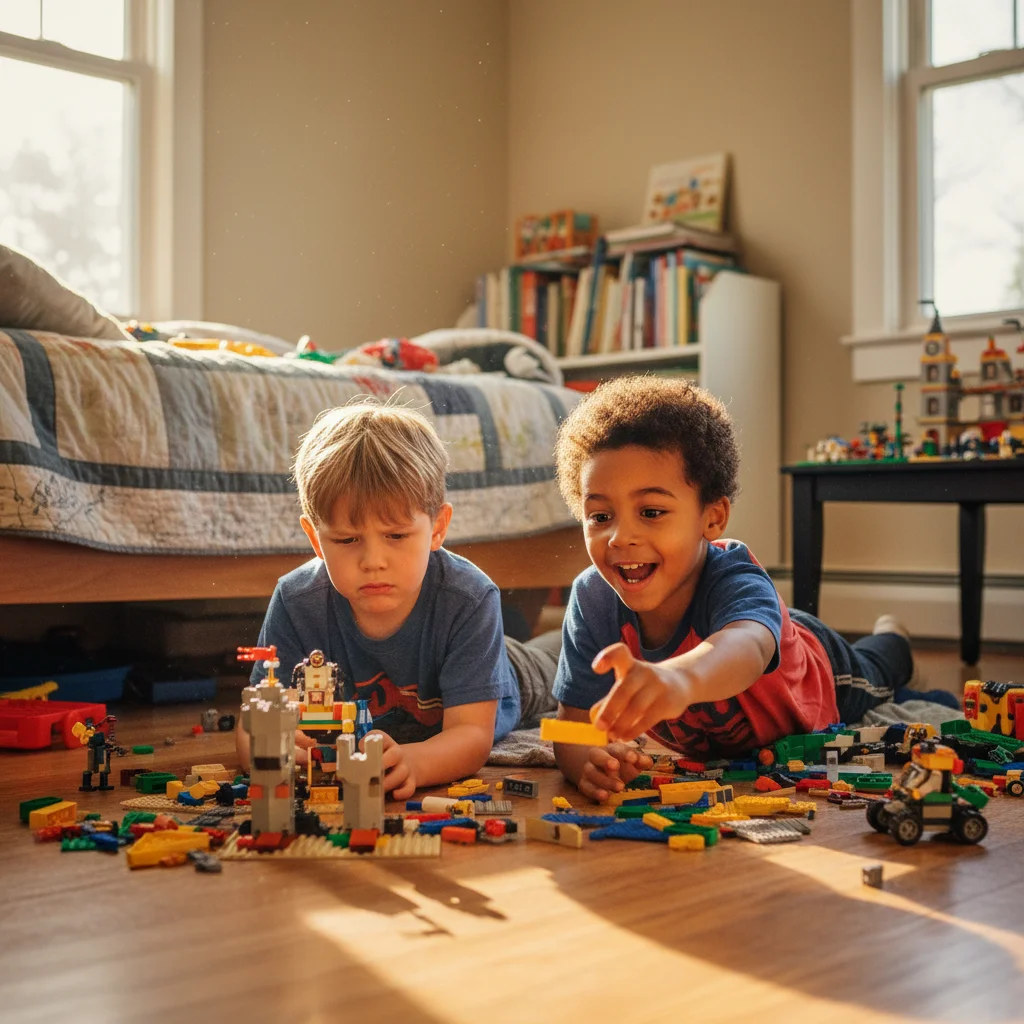
Oliver got invited to every birthday party in second grade. He was funny and enthusiastic and kids genuinely liked him at first. Then, quietly, the calls stopped coming.
No dramatic fallout. No big fight. Just silence. And I didn't understand why — until I actually watched him play.
If your ADHD child keeps getting the initial invite but never the follow-up, I want you to know: this is not about your parenting, and it's not about your kid being "too much." There's a specific gap happening in their brain that makes friendship maintenance — not friendship starting — the hard part. Once I understood it, I could actually help.
The Pattern I Kept Ignoring
For almost a year, I told myself the other kids were just busy. That playdates were hard to schedule. That we'd moved recently and it takes time.
Then one mom — a kind one, thank goodness — said something gently honest when I ran into her at pickup. Her son had told her he didn't want to have Oliver over again because "Oliver never lets me pick the game."
That landed hard. Because Oliver isn't mean. He's not aggressive. He's just — relentless. When he wants to play a certain way, his brain locks in and he genuinely cannot read the signals that the other kid is done, bored, or frustrated. He wasn't being unkind. He was being unaware.
That's the gap. And it's not a character flaw — it's a neurological one. ADHD isn't bad behavior — it's brain chemistry, and the same wiring that makes focus hard also makes social reading hard.
What I Actually Saw When I Watched Him Play
I started hanging back during playdates instead of retreating to the kitchen. What I saw was clarifying.
Oliver would burst into an activity with enormous energy — which kids loved initially. But within 20 minutes, four specific things kept derailing things.
He couldn't read when the other kid was losing interest. That glazed look, the slowing down, the "I dunno, whatever" — Oliver didn't catch any of it. He'd just escalate his own enthusiasm trying to pull the other kid back in.
He couldn't handle losing or being wrong. Not in a tantrum way — more like a full-body protest that sucked the fun out of the room. I've written more about why ADHD kids can't handle losing and the rejection sensitivity behind it.
He interrupted constantly. Not to be rude — because his thought would evaporate if he didn't say it immediately. The other kid would be mid-sentence and Oliver would barrel right over him. I've since learned this is one of the most common ADHD impulse control challenges parents face.
He couldn't read facial expressions in real time. Boredom, irritation, wanting-to-go-home — Oliver missed all of it. This is actually more common than I knew; ADHD kids often struggle to read facial expressions in ways that quietly break friendships.
None of these are things you can fix by telling a kid to "be nice." They require specific, practiced skills — and a nervous system that isn't already running on fumes.
The Prep Routine That Actually Changed Things
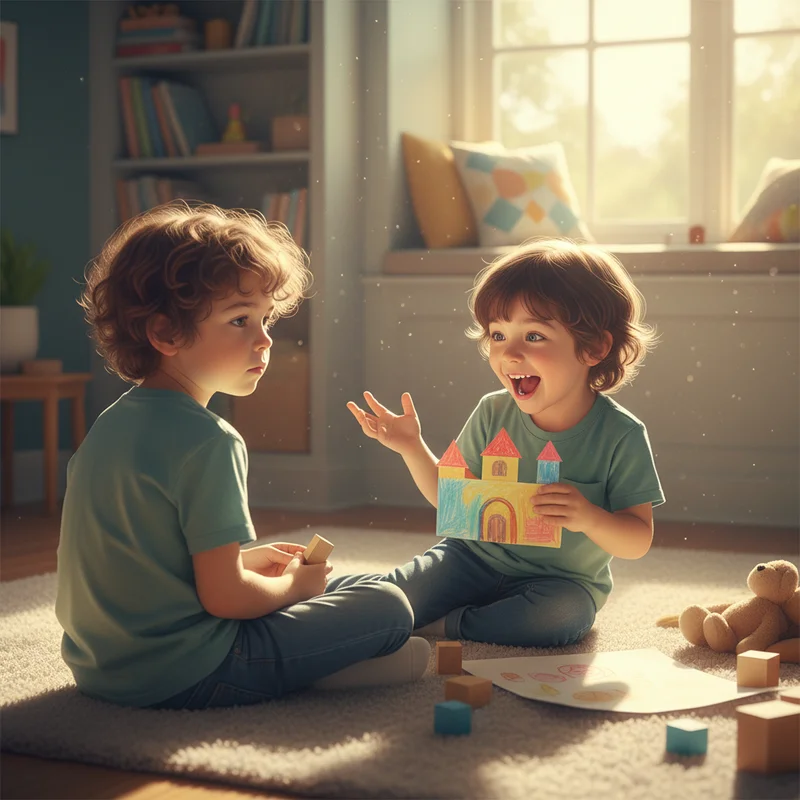
This is where the shift happened for us. I stopped trying to coach Oliver during playdates (humiliating for him, ineffective in the moment) and started doing a short prep conversation beforehand.
Five minutes. Every time. Before the friend arrived or before we drove over.
We'd cover three things:
- Guest choice first. "When Eli gets here, your first job is to ask him what HE wants to do." We practiced this out loud. I'd ask "what are you going to say?" and have him say it back to me.
- The bored face check. I showed him what boredom actually looks like — eyes drifting away, body turning sideways, slower voice. We made it a game at the dinner table so he could recognize it before he needed to in real life.
- One rescue phrase. We picked a single sentence he could use when things started going sideways: "You pick what we do next." That's it. Short enough to actually remember under pressure.
It didn't work perfectly the first time. Or the fifth. But it gave Oliver something to reach for instead of just hoping instincts would kick in.
For kids who are also struggling with emotional regulation more broadly, the explosive reactions when things don't go their way often need their own separate work — the playdate prep alone won't cover that piece.
Talking to Other Parents Without Oversharing
This part scared me most. I didn't want to be the mom who led with "my son has ADHD so please be patient" — that felt like setting Oliver up to be managed, not befriended.
What I landed on was something simple and honest, said casually before a playdate: "Oliver gets really excited and sometimes needs a reminder to take turns — if things get loud, just know that's normal for him and you can always call me."
That's it. No diagnosis. No apology. Just a heads-up that kept the other parent from being blindsided and kept me from being anxious the whole time.
The parents who were worth knowing appreciated it. And it opened the door for them to share things about their own kids too.
What Progress Actually Looks Like
Six months in, Oliver has two kids who ask for him specifically now. Not a large social circle — two. And that feels enormous.
Progress with ADHD social skills doesn't look like a sudden personality transformation. It looks like fewer meltdowns when a game goes wrong. It looks like one moment where he actually paused and let the other kid choose. It looks like a playdate that ends without anyone crying.
If your child is also dealing with the broader "zero friends" crisis that can hit around ages 7-9, that's worth its own deeper dive — the social stakes get higher fast as kids get older and friendships become more nuanced.
The one thing I know for certain: telling an ADHD kid to "just be nice" or "just share" does nothing. Their brain isn't refusing to cooperate — it's missing the real-time signals that make cooperation possible. Once you teach those signals deliberately and repeatedly, outside of the pressure of the moment, things actually start to shift.
You know your kid. Trust that. And if you're wondering whether something deeper is driving the dysregulation underneath all of this, it's worth exploring what's actually going on in their brain.
Parent Training — Limited Spots
Learn How to Actually Coach Your ADHD Child Through Social Situations
The Unbreakable ADHD course walks you through exactly how to teach the social scripts, emotional regulation skills, and pre-event prep routines that make a real difference — without the guesswork.
87 of 100 spots taken · 9 video modules · $9.99 trial
START YOUR $9.99 TRIAL →Is emotional dysregulation making your child's friendships harder?
Social struggles often connect to deeper neurological patterns. A free 2-minute assessment can help identify what's driving the behavior — and what kind of support might actually help.
TAKE THE FREE ASSESSMENT →