
For three years, I watched my son have what I thought were random "quiet moments" at home while his teacher praised how well-behaved he was at school. Then I learned these weren't peaceful interludes — they were invisible ADHD meltdowns happening right under my nose.
This isn't your fault. ADHD meltdowns don't always look like the explosive, screaming episodes we see in movies. Many children experience what experts call "internal meltdowns" — neurological storms that are completely hidden from view.
The ADHD Meltdown That Doesn't Look Like a Meltdown
My son would come home from school and disappear to his room. Not to play or read — just to stare at the ceiling. When I'd ask about his day, he'd give one-word answers. I thought he was being moody or tired.
What I didn't realize was that his brain was in full meltdown mode. His dopamine and serotonin pathways were completely overwhelmed from holding it together all day at school. The quiet withdrawal wasn't defiance — it was neurological exhaustion.
Unlike autism meltdowns, which often involve repetitive behaviors or sensory seeking, ADHD internal meltdowns look more like depression or anxiety episodes. Your child might seem "fine" on the surface while their brain chemistry is in chaos.
Why ADHD Meltdowns Are Invisible (And Often Missed by Teachers)
Teachers see the mask. Your child spends enormous mental energy suppressing their ADHD symptoms during school hours, depleting their dopamine and norepinephrine reserves. By the time they get home, their brain has nothing left.
This is why ADHD kids often save their worst behavior for home — not because they don't love you, but because home is the only safe place to let their neurological guard down.
Teachers miss these internal meltdowns because they're not disruptive. A child sitting quietly, staring into space, isn't causing classroom management problems. But internally, their GABA pathways are failing to regulate anxiety while their serotonin struggles to manage emotional reactivity.
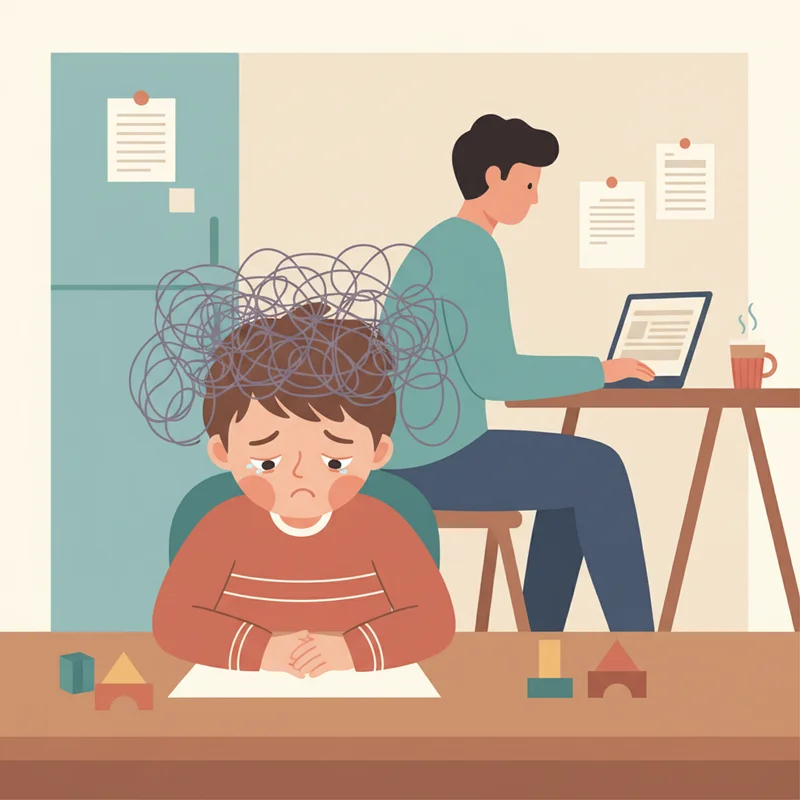
The Internal Storm — What's Happening in Your Child's Brain
During an internal ADHD meltdown, four key neurotransmitter pathways are simultaneously dysregulated:
Dopamine crashes: The reward system shuts down, making everything feel pointless. Your child can't find motivation for activities they usually enjoy.
Serotonin plummets: Mood regulation fails. Small disappointments feel catastrophic, but they lack the energy to express it outwardly.
GABA depletion: The brain's natural calming system stops working. Anxiety spikes internally while they appear calm externally.
Norepinephrine imbalance: Executive function collapses. Simple decisions become overwhelming, so they shut down completely.
This isn't a behavioral choice — it's brain chemistry, not bad behavior.
ADHD vs Autism Meltdowns: The Key Differences Parents Need to Know
Autism meltdowns typically involve visible sensory behaviors — covering ears, repetitive movements, or seeking deep pressure. The child is trying to regulate their sensory system.
ADHD internal meltdowns look completely different:
- Withdrawal and silence instead of sensory-seeking
- Emotional flatness rather than intense emotional expression
- Difficulty making decisions versus rigid adherence to routine
- Mental exhaustion that looks like depression
Both are neurological responses to overwhelm, but ADHD meltdowns often go unrecognized because they're internalized rather than externalized.
The Quiet Signs I Wish I'd Recognized Sooner
These subtle behaviors signal an internal ADHD meltdown in progress:
- Sudden loss of interest in preferred activities
- Inability to make simple choices ("I don't care" responses)
- Physical complaints with no apparent cause
- Delayed responses to questions, like their brain is buffering
- Increased clumsiness or dropping things
- Seeking isolation in small, enclosed spaces
My son would crawl under his desk or hide in his closet — not because he was upset about something specific, but because his overstimulated brain was seeking a quiet, contained environment to reset.
How Dopamine Crashes Trigger the 'Invisible' Meltdown
The dopamine system in ADHD brains is already underactive. When your child has been "masking" their symptoms all day — sitting still, following directions, suppressing impulses — they've depleted their already limited dopamine reserves.
Without adequate dopamine, motivation disappears. Your child might stare at homework they could normally complete, not because they're being defiant, but because their brain literally cannot generate the neurochemical reward needed to begin the task.
This dopamine crash also affects working memory, which is why they might forget instructions you gave them five minutes earlier. It's not selective hearing — it's working memory failure during a neurological crisis.
What to Do When Your Child Melts Down Silently
First, recognize that internal meltdowns require the same compassionate response as visible ones. Your child isn't choosing to withdraw — their brain is protecting itself.
Avoid flooding them with questions or trying to cheer them up immediately. Instead, offer quiet companionship. Sit nearby without talking. Let them know you're available without pressuring them to engage.
Support their brain chemistry recovery by reducing demands temporarily. If homework triggers these episodes, postpone it until their neurotransmitter levels stabilize.
Consider whether their daily routine is sustainable. If internal meltdowns happen regularly, your child might need additional support to manage their ADHD symptoms during the day, reducing the neurological crash that happens at home.
Supporting Recovery from Internal Emotional Storms
Recovery from an internal ADHD meltdown takes time — usually 20-30 minutes minimum for neurotransmitter levels to begin restoring.
During this time, your child needs low-stimulation activities that don't require executive function: drawing, listening to music, or gentle physical movement like stretching.
Nutrition can support neurotransmitter recovery. Protein-rich snacks help rebuild depleted dopamine, while complex carbohydrates support serotonin production.
"Once I understood that my son's quiet withdrawal was actually a meltdown, I could respond appropriately. Instead of pushing him to 'snap out of it,' I gave him the time and space his brain needed to recover."
Remember: internal meltdowns are neurological events, not behavioral problems. They signal that your child's brain has reached its capacity for managing ADHD symptoms and needs support to reset.
Parent Training — Limited Spots
Tired of Walking on Eggshells Around Meltdowns?
Licensed therapist Anneliese teaches a step-by-step framework for managing ADHD meltdowns, building connection, and ending the daily battles. 9 video modules parents are calling life-changing.
87 of 100 spots taken · 9 video modules · $9.99 trial
START YOUR $9.99 TRIAL →Is Your Child Having Internal Meltdowns You Haven't Recognized?
Take our free assessment to identify the hidden signs of ADHD overwhelm and get personalized strategies for supporting your child's unique brain chemistry.
TAKE THE FREE ASSESSMENT →

