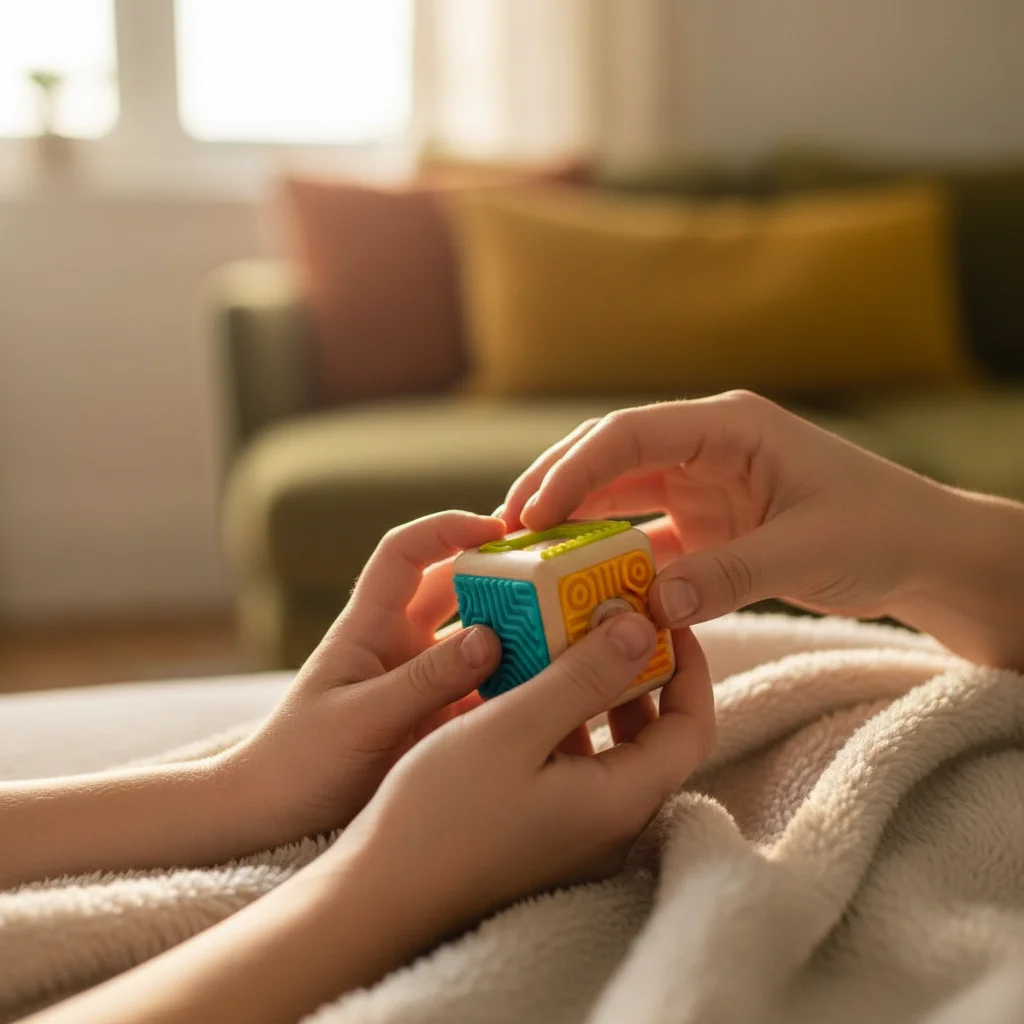
I found the blood first. Tiny drops on his homework. Then I saw his fingernails—or what was left of them.
My 8-year-old had been biting his nails for months, but this was different. He'd bitten down so far that his fingertips were raw and bleeding. When I asked him about it, he looked genuinely confused.
"I don't know, Mom. I didn't even realize I was doing it."
If your ADHD child is biting their nails compulsively—especially to the point of pain—this isn't defiance or a "bad habit" you can simply correct. It's their nervous system desperately seeking the sensory input it needs to regulate.
Why Nail Biting Isn't Just a "Bad Habit" in ADHD Kids
Most parents get told their child will "grow out of" nail biting. But for kids with ADHD, nail biting serves a neurological purpose that behavioral interventions alone can't address.
ADHD brains are constantly seeking the right amount of stimulation. When the nervous system is dysregulated—too under-stimulated or too over-stimulated—it looks for ways to self-regulate. Nail biting provides intense sensory input that can temporarily calm an anxious, overwhelmed system.
The fact that your child bites until it hurts actually makes sense. Pain creates a strong sensory signal that can override the noise of an overstimulated nervous system. It's not self-harm in the traditional sense—it's self-regulation gone wrong.
"I realized my son wasn't being defiant when he bit his nails during homework. He was trying to focus."
The Sensory Input ADHD Brains Crave Through Repetitive Behaviors
ADHD children often engage in what looks like repetitive "bad" behaviors: nail biting, hair pulling, skin picking, fidgeting. These aren't habits—they're stimming behaviors that provide necessary sensory regulation.
Nail biting specifically provides multiple types of sensory input:
- Oral stimulation that can be calming (similar to why babies suck their thumbs)
- Tactile feedback from the fingers and mouth working together
- Proprioceptive input from the jaw muscles, which can be organizing for the nervous system
When you see your child bite their nails more during homework, tests, or transitions, they're not being "nervous" in the way we think of it. They're seeking the sensory input their brain needs to focus or calm down.
This is why simply telling them to "stop biting your nails" doesn't work. You're asking them to give up a coping mechanism without offering an alternative that meets the same neurological need.
How Dysregulated Brain Pathways Create Anxiety-Driven Stimming
To understand why nail biting escalates in ADHD kids, you need to understand what's happening in their brain. Four key neurotransmitter pathways control how we process sensory input and regulate emotions:
- GABA helps us feel calm and reduces anxiety
- Serotonin regulates mood and impulse control
- Dopamine affects focus and reward-seeking
- Norepinephrine manages alertness and stress response
When these pathways are imbalanced—which is common in ADHD—your child's nervous system gets stuck in a chronic state of dysregulation. They feel simultaneously wired and tired, anxious but unable to focus.
Nail biting becomes a way to manually regulate what their brain chemistry can't. The intense sensory input temporarily activates their calming GABA pathway and can provide the focus-enhancing stimulation their dopamine-deficient brain craves.
This is why you might notice nail biting increases during:
- Homework or focus-demanding tasks
- Transitions between activities
- Overstimulating environments
- Times of stress or uncertainty
The behavior isn't random—it's your child's nervous system trying to cope with neurochemical imbalance. As I learned when I researched why ADHD isn't bad behavior but brain chemistry, understanding the mechanism changes everything about how we respond.
The Hidden Emotional Triggers Behind Increased Nail Biting
Beyond the sensory component, nail biting in ADHD kids often spikes around specific emotional triggers that parents miss:
Performance anxiety: If your child bites their nails more during homework or before tests, they're not just fidgeting. They're managing the overwhelming anxiety that comes when their brain knows it can't perform the way it wants to.
Rejection sensitivity: ADHD kids often have rejection sensitive dysphoria—they feel criticism more intensely than neurotypical children. Nail biting can increase after social conflicts or when they sense disappointment from adults.
Emotional overwhelm: When multiple demands hit at once, nail biting becomes a way to channel overwhelming feelings into something manageable. It's not unlike how adults might stress-eat or fidget with their hair.
I noticed my son's nail biting was worst right after school—the time when many ADHD kids save their worst behavior for home. He'd held it together all day, and his nervous system was seeking relief.
Sensory Alternatives That Actually Satisfy the Need
The key to reducing nail biting isn't elimination—it's replacement. Your child needs that sensory input, so you need to offer alternatives that provide similar neurological satisfaction.
Oral alternatives:
- Chewy jewelry or pencil toppers designed for sensory needs
- Sugar-free gum (provides jaw proprioception)
- Frozen fruit or ice chips during focus time
Tactile alternatives:
- Fidget toys that provide resistance (thinking putty, stress balls)
- Textured surfaces to rub (velcro strips under the desk)
- Hand lotion with strong scent for sensory engagement
Heavy work alternatives:
- Wall push-ups during homework breaks
- Carrying heavy books or water bottles
- Chair push-ups (pushing up on the seat while seated)
The goal isn't perfection—it's progress. Even reducing nail biting by 50% can allow healing and show your child they have control over their body's needs.
Addressing the Root Anxiety with Natural Pathway Support
While sensory alternatives address the immediate need, the underlying anxiety driving the nail biting often needs additional support. Many parents find that supporting their child's neurotransmitter pathways naturally can reduce the baseline anxiety that makes stimming behaviors necessary.
Research suggests that when serotonin and GABA pathways are better supported, children experience less of the chronic low-level anxiety that drives repetitive behaviors. The 2019 clinical study by Baziar and colleagues found that natural saffron extract, which works on multiple neurotransmitter pathways simultaneously, showed comparable benefits to traditional medication for ADHD symptoms—including anxiety-related behaviors.
This makes sense when you understand that single-pathway approaches like magnesium often aren't enough to address the complex neurochemical imbalances in ADHD. Supporting multiple pathways simultaneously can help create the baseline regulation that makes intense stimming less necessary.
When Nail Biting Becomes a Serious Health Concern
Most nail biting in ADHD kids is manageable with understanding and sensory alternatives. But there are times when professional intervention becomes necessary:
- Bleeding or infection: If your child regularly bites until they bleed or if you see signs of infection around the nail beds
- Social impact: If other children are commenting or your child is avoiding activities because of their appearance
- Escalating intensity: If the behavior is getting worse despite environmental modifications
- Multiple self-injurious behaviors: If nail biting is accompanied by hair pulling, skin picking, or head banging
In these cases, working with an occupational therapist who understands sensory processing can help you develop a comprehensive regulation plan. Sometimes the nail biting is a symptom of broader sensory processing challenges that need professional support.
Remember: seeking help isn't admitting failure. It's recognizing that your child's nervous system needs more support than environmental modifications alone can provide.
"Once I understood that nail biting was his way of coping with an overwhelmed nervous system, everything changed. Instead of fighting the behavior, we focused on supporting his brain."
Six months after I found blood on his homework, my son's nails are growing back. He still has his chewy necklace for school and stress putty for homework time. But more importantly, he understands that his brain works differently—and that's not something to hide or be ashamed of.
The nail biting was never the real problem. It was his brain's way of asking for help. Once we learned how to listen, we could finally give him what he needed.
Parent Training — Limited Spots
Want a Step-by-Step Plan for Your ADHD Child?
The Unbreakable ADHD program gives parents a complete framework for managing meltdowns, building routines, and connecting with their ADHD child. 9 video modules by licensed therapist Anneliese.
87 of 100 spots taken · 9 video modules · $9.99 trial
START YOUR $9.99 TRIAL →Is your ADHD child showing signs of sensory-seeking or anxious behaviors?
Our free assessment helps identify whether your child's challenges stem from underlying neurotransmitter imbalances and what support might help their developing brain.
TAKE THE FREE ASSESSMENT →

