
Oliver was seven when I found out he'd been eating lunch alone for three weeks.
Not because no one would sit with him. Because he didn't know how to ask.
His teacher mentioned it almost as an aside at pickup — "Oliver tends to keep to himself at lunch" — and I drove home and cried the whole way. That night he told me, very quietly, that he wished he had a best friend. And I realized I had no idea how to help him get one.
If your ADHD child is struggling socially, I want to say this clearly: this is not a parenting failure. ADHD makes friendship genuinely harder in ways that aren't obvious, and it has nothing to do with how lovable your child is.
Why ADHD kids struggle with friendship in ways we don't always see
The social challenges that come with ADHD aren't about manners or effort. They're about timing, reading cues, and impulse control — things that happen faster than conscious thought.
Oliver would interrupt without meaning to. He'd hyperfocus on his topic and miss that the other kid had mentally left the conversation. He'd get so excited that he'd accidentally talk over people. And when he sensed rejection — even imagined rejection — he'd shut down completely. (If your child has a hair-trigger reaction to perceived rejection, the rejection sensitive dysphoria connection is worth understanding.)
Kids with ADHD also often struggle to read facial expressions accurately, which means they miss the social feedback that tells most kids to change course mid-conversation.
None of this is character. It's neurology. But it looks like rudeness to other kids, and kids respond accordingly.
What social scripts actually are — and why ADHD kids need them more
A social script is just a pre-planned phrase your child can pull up when their brain goes blank under social pressure.
Neurotypical kids absorb these instinctively through observation. ADHD kids often don't — their working memory is too occupied managing everything else. So they freeze at exactly the moment they need words most.
Scripts give them something to grab. Not to make them robotic. To give them a starting point so they can actually get into the conversation.
Think of it like training wheels. The goal isn't to use the script forever. The goal is to have enough early successes that confidence takes over.
"Oliver didn't need to be taught how to be kind. He already was kind. He just needed the words to get through the door."
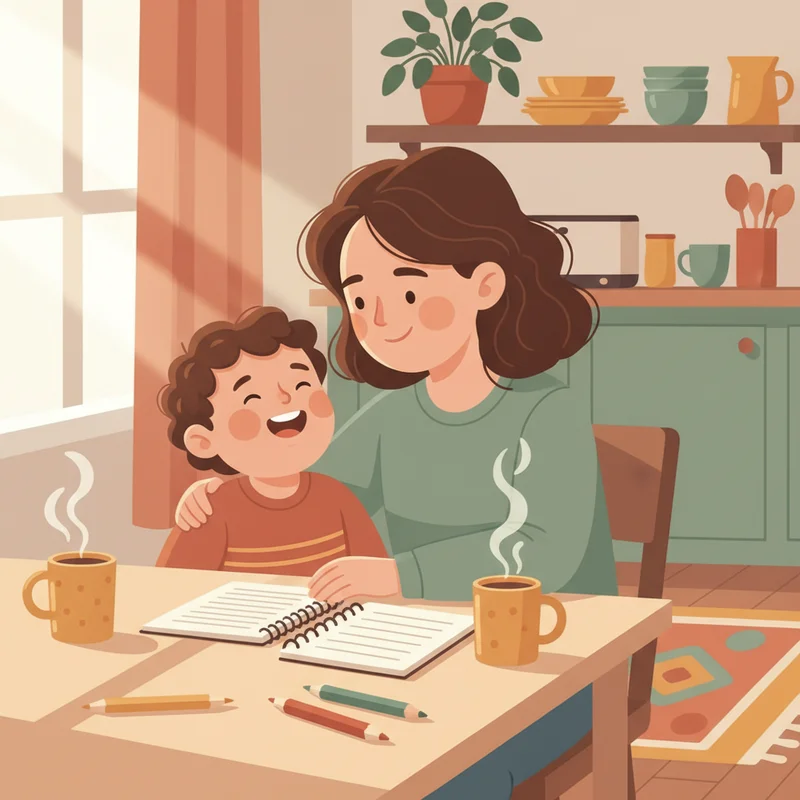
The 5 scripts we practiced at home (with real examples)
We kept these short on purpose. Oliver's working memory couldn't hold long sentences under pressure.
- The Join-In: "Can I play too?" — Simple, but Oliver needed to practice saying it out loud before it came naturally. We drilled it until it felt boring.
- The Genuine Question: "What's your favorite part of that game?" — This one was transformative. Kids love talking about themselves. One real question can carry three minutes of conversation.
- The Recovery: "Wait, sorry — what were you saying?" — For when he interrupted. Acknowledging it and handing the floor back immediately changed how other kids perceived him.
- The Exit: "I have to go, but that was cool." — Oliver didn't know how to end conversations, so they'd trail off awkwardly. A warm exit matters as much as a warm entry.
- The Invitation: "Do you want to sit here?" — Proactive rather than waiting. This one terrified him the most and worked the best.
We also worked separately on the eye contact piece, which was its own challenge, and on the interrupting habit that kept derailing his conversations.
How we practiced without making it feel like homework
Oliver hated anything that felt like school at home. So we made it a game.
We used dinner as a practice field — I'd play a new kid, he'd try a script. If it worked, he got to pick the after-dinner activity. If it felt weird, we'd rewind and try again, no pressure.
We also practiced in the car on the way to school. Two minutes, one scenario. "What would you say if someone asked you about your Legos?" The car worked because he didn't have to make eye contact, which lowered the stakes enough for him to actually engage.
The rule we kept strictly: never practice right before a stressful social situation. That just adds performance anxiety. Drills happen when everyone is calm and it feels like play.
For kids who also struggle with the emotional regulation piece — the dysregulation that makes social situations feel so threatening — understanding rejection sensitive dysphoria helped me understand why Oliver would sometimes completely melt down after school, even on good days. He was spending enormous energy just holding it together.
What happened the first week he tried them at school
He came home on Wednesday and said, "Mom. I asked Caleb if he wanted to sit with me and he said yes."
That was it. That was the whole report. But his face.
By the end of that month, his teacher emailed me unprompted to say she'd noticed Oliver seemed "more comfortable with his classmates." She had no idea we'd been working on anything. That unsolicited teacher observation is still one of the things I'm most proud of from that year.
It wasn't a straight line. There were still days he came home crushed. But now he had something to reach for, instead of just standing at the edge of a group hoping someone would notice him.
What other parents in our ADHD support group said worked
When I shared what we'd done in our local ADHD parent group, I got a flood of responses. A few themes kept coming up:
- Structured activities over free play. Several parents found that their kids did far better in settings with a shared task — art class, chess club, coding camp — than unstructured recess. When there's a shared focus, the social pressure drops enough for ADHD kids to actually connect.
- One friend, not a group. Almost every parent who saw progress started with the goal of one consistent friendship, not a social circle. The group dynamics are too complex at first.
- Role-playing at bedtime. One mom said she did two-minute script practice as part of bedtime routine — low stakes, relaxed, already lying down. Her daughter started requesting it.
Several parents also noted that their kids' social struggles got significantly harder during periods of dysregulation — when sleep was off, routines had collapsed, or the after-school crash was particularly brutal. It's hard to use a social script when your nervous system is already in overdrive.
The one thing I wish I'd done two years earlier
I wish I'd stopped waiting for the social skills to develop on their own.
I kept thinking Oliver would "grow into" it. That he just needed more time, more exposure, more playdates. What he actually needed was explicit instruction — the kind that neurotypical kids absorb passively but ADHD kids need spelled out.
I also wish I'd paid more attention to the social skills gap that opens up around age 8, when peer expectations suddenly shift. By third grade, kids notice social missteps that first-graders overlook. Oliver hit that wall hard and I didn't understand why until later.
If your child is struggling to keep friends — not just make them — the keeping friends piece is its own challenge worth reading about separately.
And if you're also managing the emotional fallout that comes home every afternoon — the meltdowns, the tears, the "I hate school" — know that ADHD burnout in kids is real, and social exhaustion is one of the biggest drivers.
You're not failing your child by not knowing this stuff. None of us were taught it. We're all just figuring it out as we go.
Parent Training — Limited Spots
Get the Tools to Help Your ADHD Child Navigate Social Situations
The Unbreakable ADHD course walks parents through exactly how to build social confidence in ADHD kids — including scripts, role-play frameworks, and how to handle the emotional fallout when things don't go as planned.
87 of 100 spots taken · 9 video modules · $9.99 trial
START YOUR $9.99 TRIAL →Is your child's ADHD making social situations feel impossible?
Every ADHD brain is different. This free 2-minute assessment helps identify which specific challenges are getting in the way — and what kind of support tends to help most.
TAKE THE FREE ASSESSMENT →

