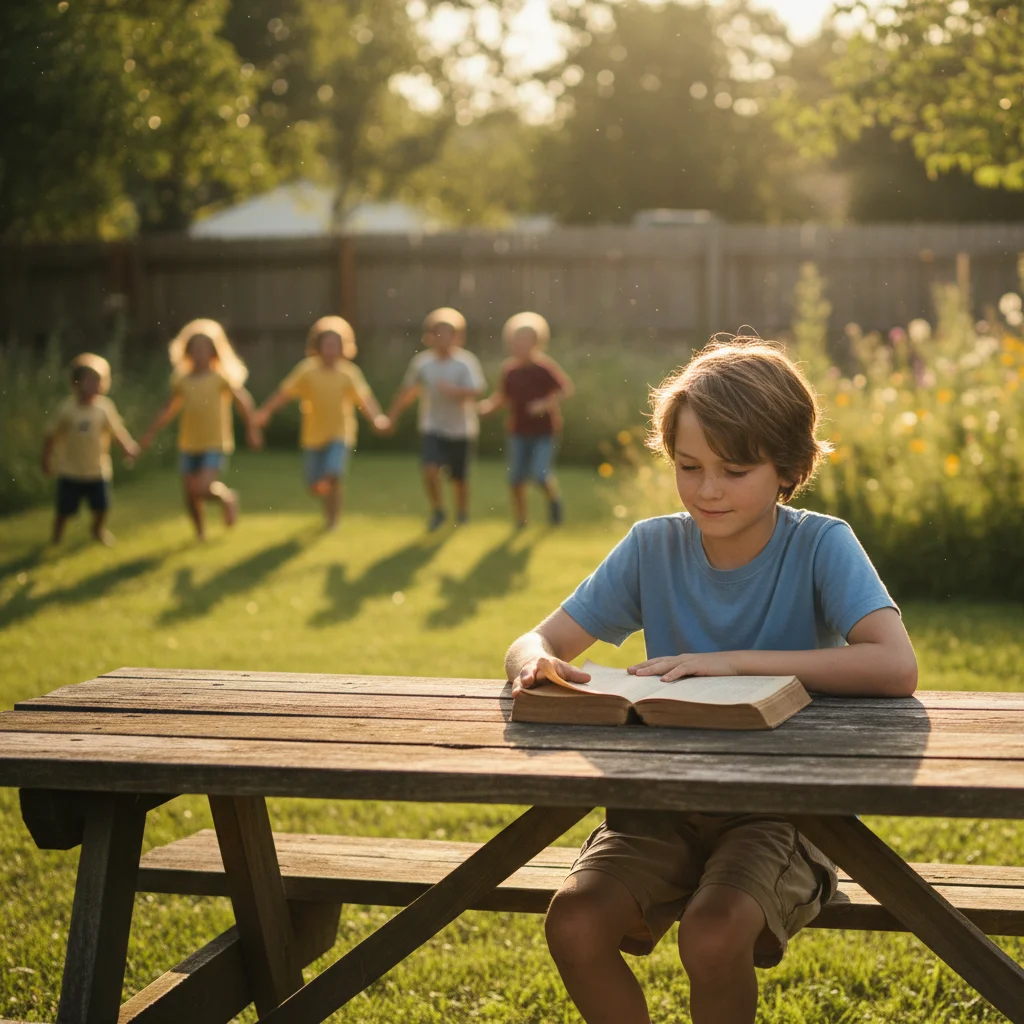
When Oliver was 9, he looked me dead in the eye and said, "Mom, I don't want any friends. Friends are too much work."
I laughed nervously and changed the subject. But that night I cried in the bathroom for twenty minutes, because I knew — on some level — that this wasn't a quirky thing a confident kid says. It was a child who had already given up.
And none of that was his fault. Or mine. But it took me a long time to understand what was actually happening.
The difference between can't and won't — and why it matters
There's a version of social difficulty that gets a lot of attention: the ADHD child who desperately wants friends but keeps losing them. They interrupt, they overshare, they miss social cues. It's painful, but at least the desire is visible.
Then there's Oliver's version — the child who has stopped wanting them altogether.
These look completely different on the surface. One child is trying and failing. The other has quietly stopped trying. But underneath? They often share the same root cause: too many failed attempts, and a brain that learned to protect itself.
If your child's ADHD means they've struggled to keep friendships or has had zero friends by age 8, the withdrawal you're seeing now may be the direct downstream effect of years of invisible pain.
Why repeated failure shuts down the motivation to try again
Here's what I learned — first as an OT, then as Oliver's mom — about what happens in an ADHD brain after repeated social rejection.
ADHD kids often misread facial expressions and miss social cues that neurotypical kids pick up automatically. They interrupt at the wrong moment. They get too intense too fast. They avoid eye contact in ways that read as rude when they're actually just overwhelmed.
Every one of those moments registers as a micro-rejection. A weird look. A kid walking away. Not being invited back.
Do that enough times and the brain — which is already wired to seek reward and avoid pain — starts doing a very logical calculation: Is the potential connection worth the near-certain pain?
For a lot of our kids, the answer becomes no.
"It's not that he became antisocial. It's that he became self-protective. And there's a huge difference."
Rejection sensitive dysphoria: the "why bother" shutdown
If you've never heard of rejection sensitive dysphoria, it's one of the most underrecognized features of ADHD — and one of the most devastating for social development.
RSD means that perceived rejection doesn't just sting. It floods. It feels catastrophic and all-consuming in a way that's wildly out of proportion to what actually happened.
A child with RSD who gets left out of a game at recess doesn't experience mild disappointment. They experience something closer to humiliation — a full-body emotional crash that can last hours.
Do that a few dozen times and "why bother" isn't pessimism. It's a learned survival strategy.
Oliver once told me that being around kids he didn't know felt like "waiting to get hurt." That sentence broke something open in me. He wasn't being dramatic. He was being completely accurate about his experience.
The exhaustion factor: masking leaves nothing for socializing
Here's the piece most parents miss entirely.
Many ADHD kids — especially those who've been in school for a few years — are masking all day long. They're working incredibly hard to hold it together, follow rules, stay in their seat, not blurt out answers, not react when a classmate bumps into them.
By 3 PM, they have nothing left. The emotional tank is empty. Which is exactly why the worst behavior shows up at home after school.
Now add a playdate to that equation. Another child, unpredictable energy, social performance required, no script to follow.
For an already-depleted ADHD child, a playdate isn't fun. It's another exhausting performance with a high probability of failure. Of course they'd rather be alone in their room with Minecraft.
This is also why ADHD burnout and social withdrawal often go hand in hand. If your child has been pushing through for months without enough recovery time, pulling back socially is their nervous system's way of asking for rest.
What their withdrawal is actually telling you
When an ADHD child stops seeking connection, it usually signals one of three things:
- Accumulated rejection fatigue — too many failed attempts, not enough successful ones
- Sensory and emotional overwhelm — socializing costs more than their current capacity can afford
- Shame — they've internalized the message that something is wrong with them, and distance feels safer than exposure
None of these are character flaws. All of them are workable. But they require a completely different response than "we need to get you out there more."
Forcing more social exposure on a child whose nervous system is already signaling danger is like telling someone with a sprained ankle to run it off. The instinct to push feels right. The outcome is usually worse.
How to rebuild social appetite — without forcing it
What worked for us wasn't more playdates. It was smaller, lower-stakes connection.
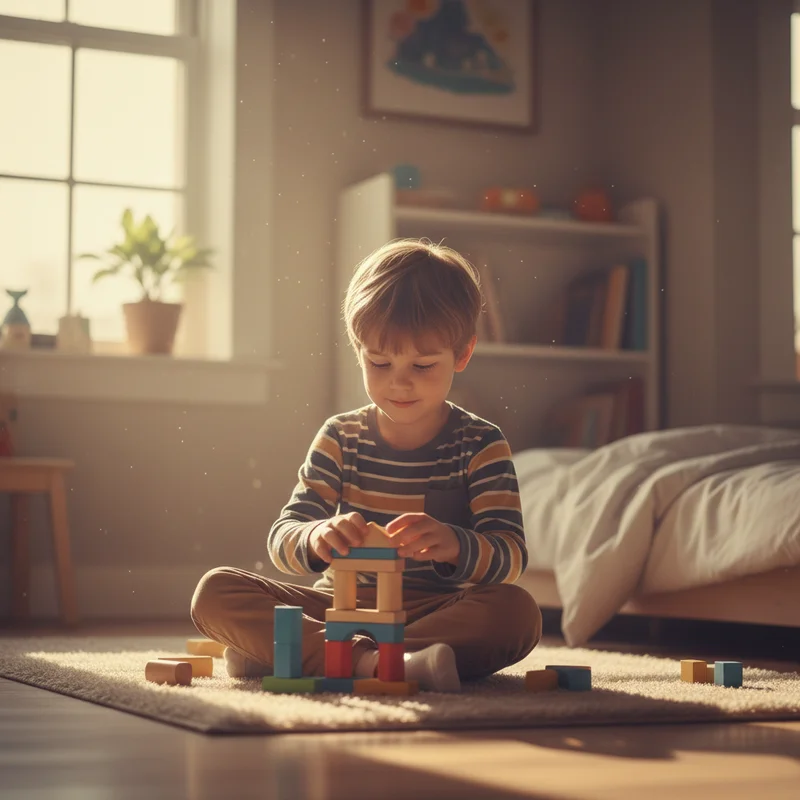
One kid, not a group. Groups are unpredictable. One-on-one is manageable. We started inviting a single child over for an activity Oliver already loved — building LEGO sets — so there was a shared focus that took the pressure off direct interaction.
Activity-based, not conversation-based. Oliver doesn't do well with unstructured "hang out." Side-by-side activity (gaming, building, cooking something) gives kids with ADHD a social container that doesn't require constant eye contact or small talk.
Short windows. A two-hour playdate was too long and usually ended badly. Ninety minutes with a clear endpoint ("we'll stop when Dad gets home") meant Oliver could hold it together and — crucially — end on a success.
Debrief without interrogating. Instead of "how was it? did you have fun? do you want to invite him again?" I'd say something like, "I noticed you two were really into that build. That looked fun." Let him come to his own conclusions about whether it was good.
You might also find that social scripts — simple, rehearsed phrases for common awkward moments — can reduce the cognitive load of social interaction significantly. We practiced things like "that's cool, tell me more about it" until they felt automatic for Oliver.
When to bring in outside support
If your child's social withdrawal has been going on for more than a few months, or if they've started making statements like "nobody likes me" or "I'm weird" — that's the point where outside support becomes genuinely useful.
A few things that actually help:
- Social skills groups run by an OT or therapist — not generic "social skills class," but groups specifically designed for neurodivergent kids where the other children are in a similar boat. The playing field levels considerably.
- Individual therapy with an ADHD-informed therapist — specifically to work through RSD and the shame narrative. Cognitive behavioral approaches can help a child challenge the story that they're fundamentally unlikeable.
- Interest-based communities — Minecraft clubs, LEGO leagues, art classes. Connection through shared passion sidesteps a lot of the social performance anxiety. Oliver found his people in a robotics after-school program. Not because anyone taught him social skills — because suddenly he was in a room where his intensity was an asset, not a problem.
Worth noting: if your child also shows signs of anxiety alongside the social withdrawal, the overlap between ADHD and anxiety can be significant. They feed each other in ways that require targeted support, not just more social exposure.
And if school is where the worst of the rejection is happening, look into what accommodations might reduce the daily social stress. A 504 plan can sometimes include accommodations around lunch seating or unstructured time that take a bit of the pressure off.
The goal isn't to make your child into a social butterfly. Some ADHD kids are genuinely more introverted, and that's completely fine. The goal is to make sure their withdrawal is a choice — not a default driven by fear and shame.
Oliver, at 11, now has two kids he'd call actual friends. It took three years of very intentional, very low-pressure work to get there. But the turning point wasn't a social skills curriculum. It was the day he stopped believing there was something fundamentally wrong with him.
That shift started at home.
Parent Training — Limited Spots
Learn How to Support Your ADHD Child's Social World
If your child is withdrawing from peers and you don't know where to start, this 9-module course walks you through exactly what to do — from rebuilding motivation to managing meltdowns around social situations.
87 of 100 spots taken · 9 video modules · $9.99 trial
START YOUR $9.99 TRIAL →Is your child's mood and social withdrawal connected to what's happening in their brain?
Take the free 2-minute assessment to understand what's driving your child's behavior — and what kind of support might actually help.
TAKE THE FREE ASSESSMENT →
