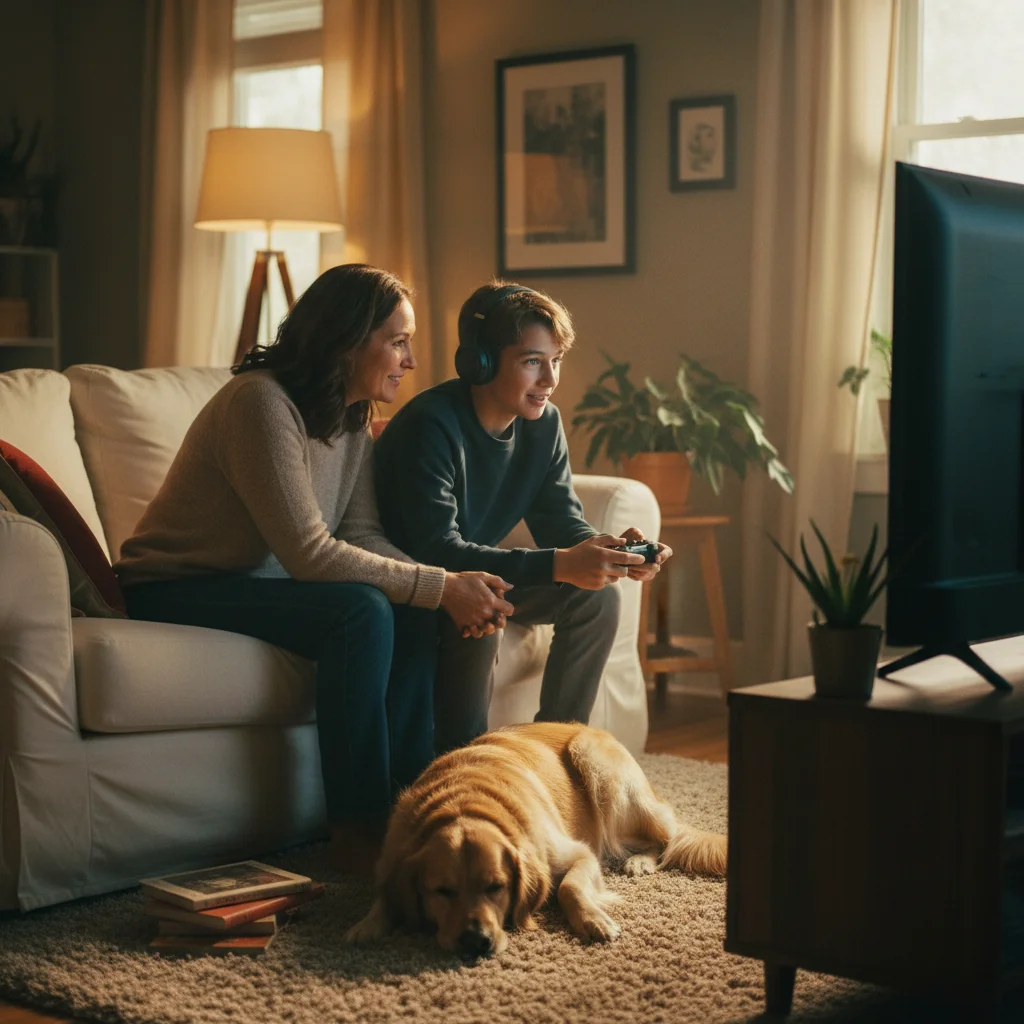
Your child's been glued to their screen for three hours straight. When you announce dinner time, World War III erupts. They scream about being "in the middle of something important," throw the controller, and storm off.
You're not dealing with an addiction. You're dealing with brain chemistry that makes transitions nearly impossible—and it's not bad behavior, it's how their ADHD brain works.
Why ADHD Brains Get "Hooked" on Gaming
Video games are perfectly designed dopamine delivery systems. For ADHD brains starving for this crucial neurotransmitter, games provide what the real world often can't: instant rewards, clear goals, and constant stimulation.
Your child isn't choosing games over everything else out of defiance. Their dopamine-hungry brain has found its perfect match. Games offer immediate feedback loops that school, chores, and conversations simply can't compete with.
This isn't weakness or poor parenting. This is an understimulated brain finding what feels good—just like your ADHD child isn't lazy, they're understimulated.
The Dopamine Connection (And the Other 3 Pathways)
Here's what's happening in your child's brain during gaming sessions:
Dopamine: Every level completed, enemy defeated, or achievement unlocked triggers a dopamine release. Games are designed to keep this reward pathway firing constantly.
Norepinephrine: The alertness and focus neurotransmitter kicks into high gear during gaming. Your child can focus for hours on games but can't sit through homework because games provide the stimulation their brain craves.
GABA: Gaming can actually calm the hyperactive ADHD brain by providing a single focus point, reducing the internal chaos they often feel.
Serotonin: Success in games boosts mood and confidence—something many ADHD kids struggle to find elsewhere.
Understanding these four pathways explains why simply removing games creates such explosive reactions. You're suddenly cutting off their brain's primary source of neurochemical satisfaction.
When Gaming Crosses the Line
Not all intense gaming is problematic. ADHD hyperfocus can actually be a superpower when channeled properly. But here are the red flags:
- Explosive meltdowns every time gaming stops
- Refusing to eat, sleep, or use the bathroom during gaming sessions
- Complete withdrawal from family activities or friendships
- Aggressive behavior when gaming is limited or removed
- Gaming interfering with basic self-care or school attendance
If you're seeing these patterns alongside other behavioral challenges, like hitting when frustrated or constant sibling conflicts, the gaming obsession might be one piece of a larger neurological puzzle.
Why Traditional Screen Time Limits Backfire
Most parenting advice treats ADHD brains like neurotypical ones. "Just set a timer and stick to it" works for kids whose brains can smoothly shift between activities. ADHD brains can't.
When you abruptly end gaming time, you're asking an already dysregulated brain to make a massive neurochemical shift. It's like slamming on the brakes while driving 70 mph—the crash is inevitable.
Traditional approaches often lead to daily battles that leave everyone exhausted, just like morning routine battles that seem impossible to solve.
The Transition Strategy That Actually Works
Instead of fighting your child's brain chemistry, work with it:
The Bridge Method: Give three warnings—30 minutes, 10 minutes, and 2 minutes. But here's the key: make the transition TO something engaging, not just away from gaming.
Natural Stopping Points: Work with game structure. "After this level" or "after this match" honors their need for completion.
Dopamine Replacement: Have an immediately engaging alternative ready. Physical activity, music, or hands-on projects can provide similar neurochemical satisfaction.
Visual Schedules: ADHD brains process visuals better than verbal instructions. A simple chart showing gaming time and transition activities reduces arguments.
Harnessing Hyperfocus for Other Activities
That intense focus your child brings to gaming? It's a neurological superpower that can transfer to other areas with the right approach.
Look for activities with similar characteristics to games: clear progression, immediate feedback, and engaging challenges. Coding, martial arts, music production, or building projects often capture ADHD interest in similar ways.
The goal isn't to eliminate gaming entirely—it's to expand the activities that can trigger their hyperfocus and provide neurochemical satisfaction.
Parent Training — Limited Spots
Want a Step-by-Step Plan for Your ADHD Child?
The Unbreakable ADHD program gives parents a complete framework for managing meltdowns, building routines, and connecting with their ADHD child. 9 video modules by licensed therapist Anneliese.
87 of 100 spots taken · 9 video modules · $9.99 trial
START YOUR $9.99 TRIAL →Is your child's gaming obsession part of a bigger ADHD picture?
Gaming battles often signal that multiple brain pathways need support. Take our free assessment to understand what's really happening in your child's brain.
TAKE THE FREE ASSESSMENT →

