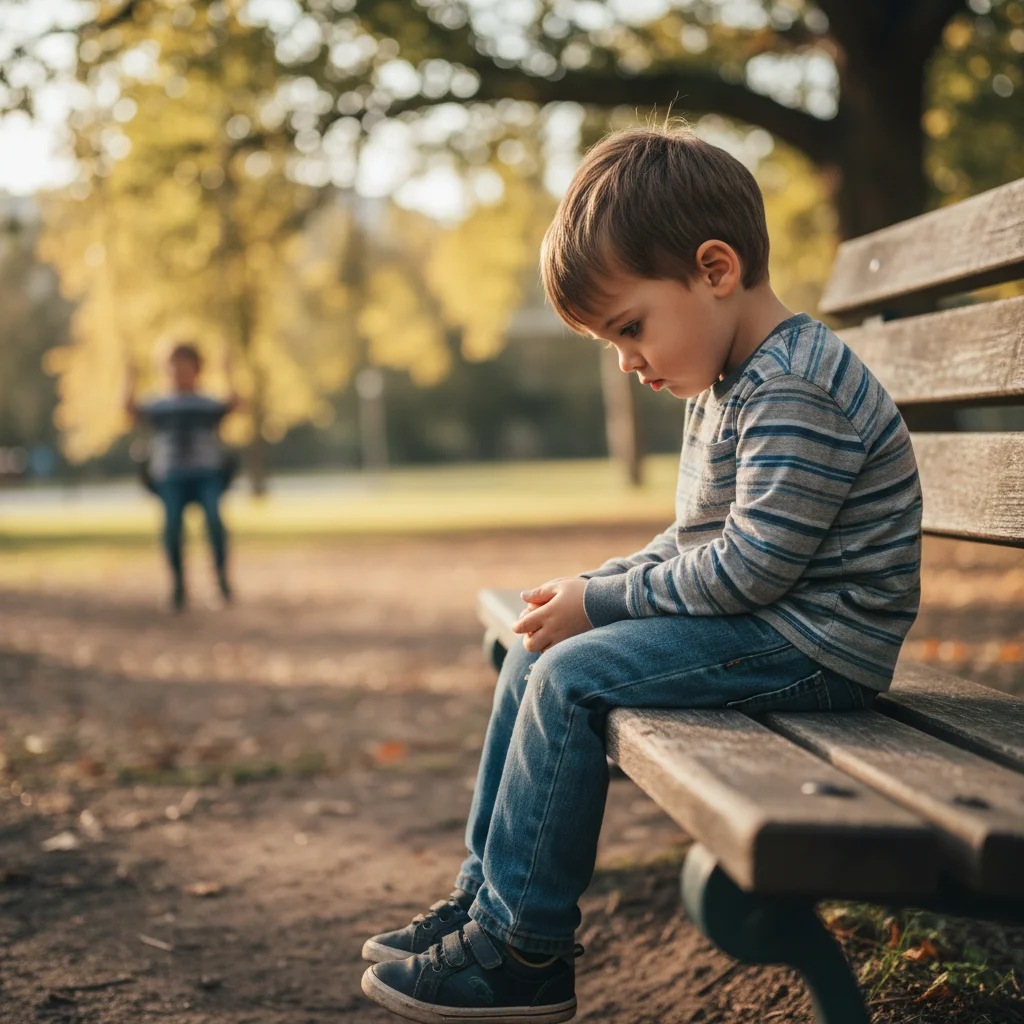
Oliver was eight when I realized the one friendship keeping him socially afloat was quietly unraveling — and he had no idea why.
His friend Marcus had been over less and less. The last playdate ended with Oliver melting down over a video game disagreement, and Marcus's mom texted me a polite "maybe another time" that felt permanent. I sat in my car afterward and cried. Not because Oliver had been bad. Because he hadn't even known anything was wrong until the invitations just stopped coming.
If your ADHD child only has one close friend — and that friendship is showing cracks — this is not a parenting failure. It's one of the most common and least talked-about struggles in the ADHD world. And there are things you can actually do about it.
Why ADHD Kids Often End Up With Just One Friend (And Why That Makes It So Fragile)
Most ADHD kids don't have a wide social circle by choice. The same impulsivity and emotional intensity that makes group settings exhausting also makes one-on-one friendships feel safe and manageable.
The problem is that puts all their social eggs in one basket. When that friendship has friction — as all friendships eventually do — there's no buffer. No other friend to call. No social network to fall back on. The stakes feel catastrophic, because they essentially are.
And the behaviors that erode friendships happen slowly, invisibly. Oliver didn't explode every playdate. He interrupted constantly, redirected every game to what he wanted to play, and couldn't let a "you're wrong" moment go. Individually, those things are minor. Over dozens of playdates, they add up into something exhausting for even the most patient kid.
I've written before about why ADHD kids struggle to keep friends — the social skills gap is real and it goes deeper than most people realize.
What RSD Does to a Small Friendship Rupture
This is the part that almost broke us.
When Marcus cancelled a playdate — genuinely sick, nothing personal — Oliver spiraled for three days. He was convinced Marcus hated him. He refused to go to school because Marcus would be there. He cried himself to sleep saying "I have no friends."
That's rejection sensitive dysphoria, and it turns a normal friendship hiccup into what feels like a relationship-ending catastrophe. The ADHD brain doesn't just feel rejection more intensely — it also has trouble distinguishing between "this person is temporarily unavailable" and "this person has abandoned me forever."
So Oliver would then overcompensate. He'd crowd Marcus at school, text him thirty times, or swing the other way and give him the cold shoulder entirely. Both responses pushed Marcus further away. And Oliver couldn't see the pattern.
If your child can't handle even minor disappointments without a full emotional collapse, RSD is likely part of what's damaging the friendship.
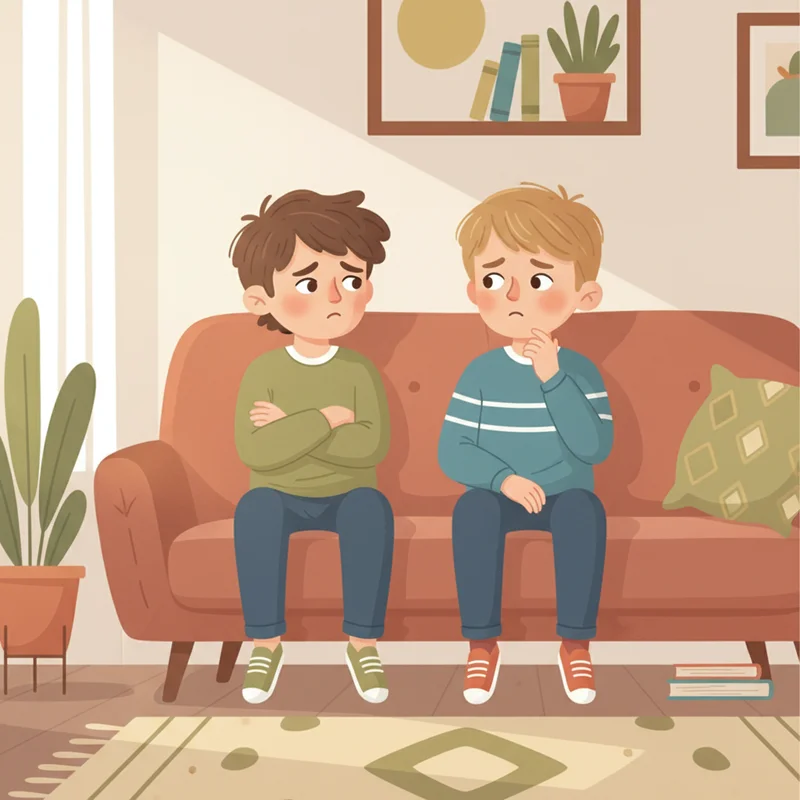
What I Actually Said When He Came Home Crying
The day Oliver came home and said "Marcus doesn't want to be my friend anymore," I had to resist every instinct to fix it immediately.
I didn't say "you need to apologize." I didn't say "what did you do?" I said: "That sounds really painful. Tell me what happened."
Just that. Nothing more for a few minutes.
When he'd gotten it all out, I said: "I think Marcus still likes you. I think sometimes friendships go through hard patches, and it doesn't mean it's over. Can we think together about what might help?"
That "can we think together" framing matters. It positions you as his ally, not his critic. It avoids the shame spiral that shuts ADHD kids down completely — something I've seen derail even the best repair attempts. Shame spirals after mistakes are a real obstacle to learning.
The Repair Scripts We Practiced — And Which Ones Worked
We role-played. A lot. I was Marcus, Oliver was himself, and we practiced what to say the next day at school.
The scripts that didn't work: anything that required Oliver to apologize for a long list of things, or that involved explaining his feelings in complex ways. Too many steps, too much cognitive load.
The script that worked was almost embarrassingly simple.
"Hey, do you want to play at lunch today? I've been saving a good spot by the field."
That's it. No apology. No explanation. Just a forward-looking invitation that gave Marcus an easy yes.
We also practiced what to do when a game wasn't going his way: say "your turn to pick next" before the argument started, not after. That one tiny shift — proactive accommodation instead of reactive compromise — changed the texture of their playdates significantly.
For kids who struggle with explosive reactions when they feel they're wrong, having a pre-loaded exit phrase ("let's do it your way this time") gives them something to grab before the lid blows.
Building a Slightly Wider Circle — Without Overwhelming Him
I didn't try to manufacture a social life overnight. That backfires badly with ADHD kids — too much novelty, too many unwritten social rules, too much to regulate at once.
Instead, we found one structured activity: a small Lego robotics club at the library, eight kids, a clear task, limited free social time. Oliver didn't have to figure out what to talk about. The activity provided the script.
Within six weeks, there was a second kid he knew well enough to wave at in the hallway. That's it. But it meant that if things with Marcus got rocky again, it wasn't total social isolation.
If your child struggles with making friends at all, structured activities with a clear shared purpose are usually the lowest-risk entry point. Groups where everyone is doing something together — not just hanging out — are far easier for ADHD kids to navigate than unstructured social time.
For kids who've been on playdates but never get invited back, the issue is usually what happens in the unstructured middle — the moment when the activity runs out and no one knows what to do next. Having a transition activity ready (a specific game, a snack, a short movie) can bridge that gap before dysregulation sets in.
When the Friendship Doesn't Survive — And How to Help Your Child Grieve It
Sometimes it doesn't work out. Marcus and Oliver are still friends — cautiously, with more space between them now — but I know that's not every family's story.
If the friendship ends, your child needs to grieve it. Don't rush past it. Don't immediately replace it with "well, we'll find you a better friend." That dismisses something that was genuinely important to them.
What helped Oliver most when he thought it was over: I named it as a loss. "It's really sad when a friendship changes. That's allowed to hurt." Then, after a few days, I started asking about the Lego club kid. Not pushing. Just opening a door.
If your child is already showing signs of complete social isolation or withdrawal from social connection entirely, that's worth a conversation with their pediatrician or a therapist who specializes in ADHD. Social struggles that go unaddressed have a way of compounding into something much harder to untangle later.
You're not failing your child by not being able to fix this alone. This is hard, neurologically-rooted stuff. The fact that you're looking for answers is already the most important thing.
Parent Training — Limited Spots
Help Your ADHD Child Navigate Friendships Without the Meltdowns
The Unbreakable ADHD course walks you through exactly how to coach your child through social challenges — with scripts, strategies, and support built for ADHD brains.
87 of 100 spots taken · 9 video modules · $9.99 trial
START YOUR $9.99 TRIAL →Is your child's emotional regulation making friendships harder than they need to be?
Take our free 2-minute assessment to better understand what's going on in your child's brain — and what kind of support might actually help.
TAKE THE FREE ASSESSMENT →

