
I was standing in aisle 7 of Target, watching my 8-year-old son melt down over the "wrong" cereal boxes being moved, when another mom whispered what I'd been thinking: "It's not your fault." She was right — but that didn't stop the stares or the shame spiral I was already falling into.
What I didn't know then was that his brain was screaming for something specific: heavy work input. And the solution that finally ended our public meltdown nightmare cost me exactly $3 at Walmart.
What Heavy Work Input Means for ADHD Brains
Heavy work input is pressure or resistance that activates your proprioceptive system — the sensory network that tells your brain where your body is in space. For ADHD kids, this system is often underactive, leaving them feeling literally "ungrounded."
Think of it this way: your child's nervous system is like a car engine that's revving too high. Heavy work input acts like gentle pressure on the gas pedal — it doesn't shut the engine off, but it brings the RPMs back to a manageable level.
This isn't just behavioral management. When proprioceptive input is lacking, it affects all four key neurotransmitter pathways that regulate ADHD symptoms:
- Dopamine: Seeking stimulation through movement and sensory input
- Serotonin: Mood regulation and emotional control
- GABA: The brain's "brake system" for calming hyperarousal
- Norepinephrine: Fight-or-flight response and attention regulation
When these pathways are out of balance, what looks like "bad behavior" is actually a neurological cry for help. ADHD isn't bad behavior — it's brain chemistry desperately trying to find equilibrium.
Why Proprioceptive Input Regulates All Four Pathways
Here's what I learned from my occupational therapy background: proprioceptive input has a unique ability to "reset" the nervous system by activating the parasympathetic response. Unlike other sensory inputs that can be overwhelming for ADHD kids, heavy work is organizing and calming.
"When a child receives deep pressure input, it triggers the release of serotonin and activates the body's natural relaxation response. This simultaneously calms hyperarousal and improves focus." — Sensory Processing Research
The magic happens because proprioceptive input works on multiple levels:
- It satisfies the dopamine system's need for stimulation in a regulatory way
- It boosts serotonin production, improving mood and impulse control
- It activates GABA pathways, creating that "ahh" feeling of calm
- It down-regulates norepinephrine, reducing that constant fight-or-flight state
This is why kids who seem "hyperactive" often crave being squeezed, or why your child might throw things when overwhelmed — it's a proprioceptive need their brain is trying to meet.
The Simple Weighted Solution That Works Anywhere
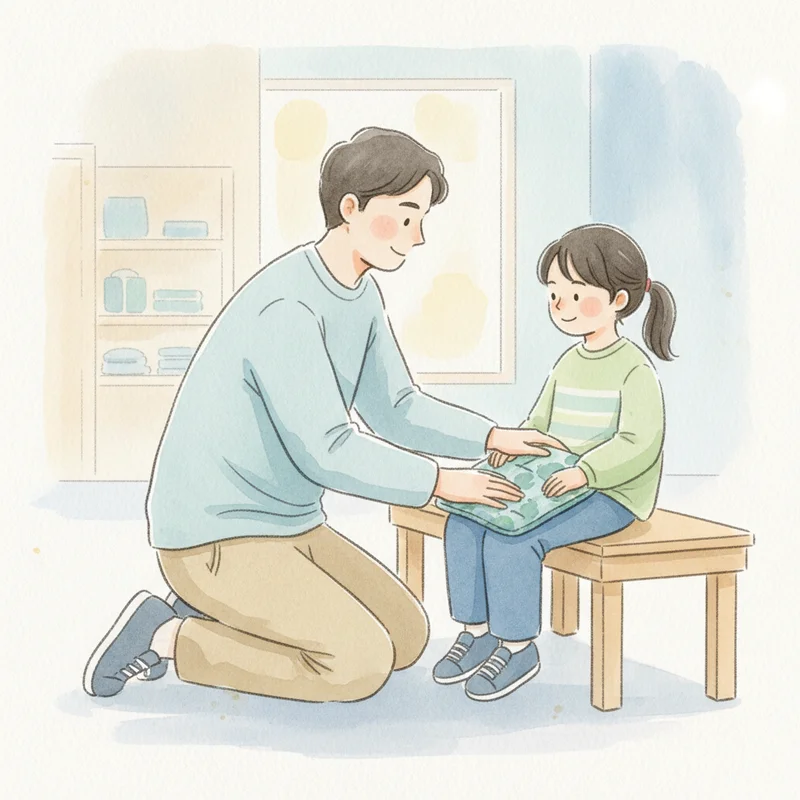
After that Target meltdown, I drove straight to Walmart and bought a $3 rice sock. Not kidding — I grabbed a tube sock from the dollar aisle, filled it with uncooked rice, and tied it off.
That little weighted "lap buddy" became our secret weapon. My son could carry it discretely, press it against his lap in the cart, or hold it tight when he felt that familiar overwhelm building.
The key was making it his choice. I didn't present it as a "behavior tool" — I called it his "calm buddy" and let him discover how good the pressure felt.
Within two weeks, our public outings transformed. No more restaurant meltdowns from sensory overload. No more leaving stores halfway through because he couldn't handle the environment.
DIY Heavy Work Strategies for Public Places
You don't need expensive therapy equipment. Here are the strategies that work in real life:
- The Rice Sock Method: Fill a clean tube sock with 1-2 cups uncooked rice. Tie securely. Instant portable weight that fits in any bag.
- Shopping Cart Push: Let your child be the one pushing the cart (even if you're steering). The resistance provides proprioceptive input.
- Heavy Bag Carry: Give them the water bottles or canned goods to carry. Make them feel helpful while meeting sensory needs.
- Wall Push-Ups: In bathrooms or quiet corners, 10 wall push-ups can reset their system in 30 seconds.
- Tight Hugs: Learn their "squeeze tolerance" — some need gentle pressure, others need bear hugs that would crush us.
The goal isn't to suppress their energy — it's to channel it through their proprioceptive system so their brain can organize itself.
How to Recognize When Your Child Needs Proprioceptive Input
Watch for these early warning signs before the meltdown hits:
- Increased fidgeting or restlessness
- Seeking out tight spaces (under tables, behind couches)
- Rough play or seeming "aggressive" with siblings
- Difficulty following simple directions they usually handle fine
- That glazed look that comes before emotional dysregulation
I learned to spot my son's "proprioceptive hunger" about 10 minutes before he'd hit his breaking point. That became our window to intervene.
Remember, this isn't about perfect behavior. Your child's meltdowns have nothing to do with your parenting — they're neurological events that heavy work input can often prevent.
Building Heavy Work Into Daily Routines
The real breakthrough came when I stopped thinking of heavy work as "crisis management" and started building it into our routine:
- Before leaving home: 2 minutes of wall push-ups or carrying the heavy grocery bags to the car
- In the car: Weighted lap pad during the drive to "pre-load" his system
- Transition moments: Heavy hugs between activities, not just during meltdowns
- At bedtime: Deep pressure therapy to help his nervous system wind down
The key insight: ADHD kids need regular proprioceptive "meals" throughout the day, not just emergency interventions during crisis moments.
The Science Behind Why Pressure Calms ADHD Nervous Systems
Research shows that deep pressure stimulation increases serotonin and dopamine while decreasing cortisol — exactly what ADHD brains need to find balance. It's the same reason weighted blankets work for anxiety, but applied to hyperactive nervous systems.
The proprioceptive system sends signals directly to the brainstem, bypassing the "thinking brain" that's already overwhelmed in ADHD kids. That's why heavy work input can calm a meltdown when reasoning and rewards can't.
One year later, my son still carries his rice sock buddy. But now he rarely needs it — his nervous system has learned to self-regulate through consistent proprioceptive input.
The $3 investment changed everything. Not because it "fixed" his ADHD, but because it gave his brain what it was desperately seeking: the organizing, calming input that helps all four neurotransmitter pathways find their balance.
Parent Training — Limited Spots
Tired of Walking on Eggshells Around Meltdowns?
Licensed therapist Anneliese teaches a step-by-step framework for managing ADHD meltdowns, building connection, and ending the daily battles. 9 video modules parents are calling life-changing.
87 of 100 spots taken · 9 video modules · $9.99 trial
START YOUR $9.99 TRIAL →Is Your Child's Brain Getting What It Needs?
Heavy work addresses the sensory side of ADHD regulation, but many kids need additional support for the neurotransmitter pathways. Take our free assessment to see what else might help.
TAKE THE FREE ASSESSMENT →
