
Two years ago, Oliver stood at the end of our driveway in his field day t-shirt, arms crossed, and told me his stomach hurt.
I knew that look. It wasn't the stomach flu. It was field day — 400 kids, no schedule, noise, sun, chaos, and absolutely zero predictability for three solid hours. His body was already telling him what his words couldn't.
If your ADHD child is suddenly full of excuses every time a school event rolls around in May or June, I want you to hear this first: it is not defiance, and it is not a parenting failure. What looks like avoidance is usually a nervous system doing exactly what it was designed to do — protect itself.
Why End-of-Year Events Are a Perfect Storm for ADHD Kids
The last six weeks of school are genuinely harder for ADHD kids than any other stretch of the year.
Think about what May and June actually look like: field day, class parties, award ceremonies, graduation rehearsals, talent shows, teacher appreciation weeks, "last day" celebrations. Every single one of these events shares the same three features: unpredictable schedule, high sensory load, and intense social pressure.
That's not a fun combination for a kid whose brain already struggles with handling unexpected changes in plans. The moment a child can't predict what's coming next — what the noise level will be, where they're supposed to stand, who they'll sit with, whether anyone will want to talk to them — their stress response activates before they even walk through the gym doors.
Add in the fact that many ADHD kids are already running on fumes by June. The accumulated weight of a whole school year of masking, focusing, and holding it together is real. I've written about ADHD burnout in kids before, and end-of-year events often land right on top of it.
The Difference Between "I Don't Want To" and "I Genuinely Can't Cope"
This is the distinction that changed everything for me.
When Oliver said he didn't want to go to field day, my first instinct was to push through it — "You'll have fun once you get there." And sometimes that works for typical reluctance. But ADHD social avoidance is a different animal entirely.
The excuses — "my stomach hurts," "I'm tired," "nobody there likes me" — aren't manipulation. They're his best attempt to communicate something his brain doesn't have words for yet: I am already overwhelmed just thinking about this, and I have no confidence I can regulate myself once I'm in the middle of it.
Kids with ADHD often struggle to read social cues accurately, which means unstructured social events feel like navigating a minefield blindfolded. They can't predict who will want to play with them, whether a joke will land, or how to re-enter a group mid-activity. That uncertainty is genuinely exhausting.
It's also worth noting that social anxiety and ADHD frequently travel together — and the physical symptoms can be real. The stomachache isn't fake. It's anxiety presenting somatically, which I've seen missed by so many parents and teachers alike.
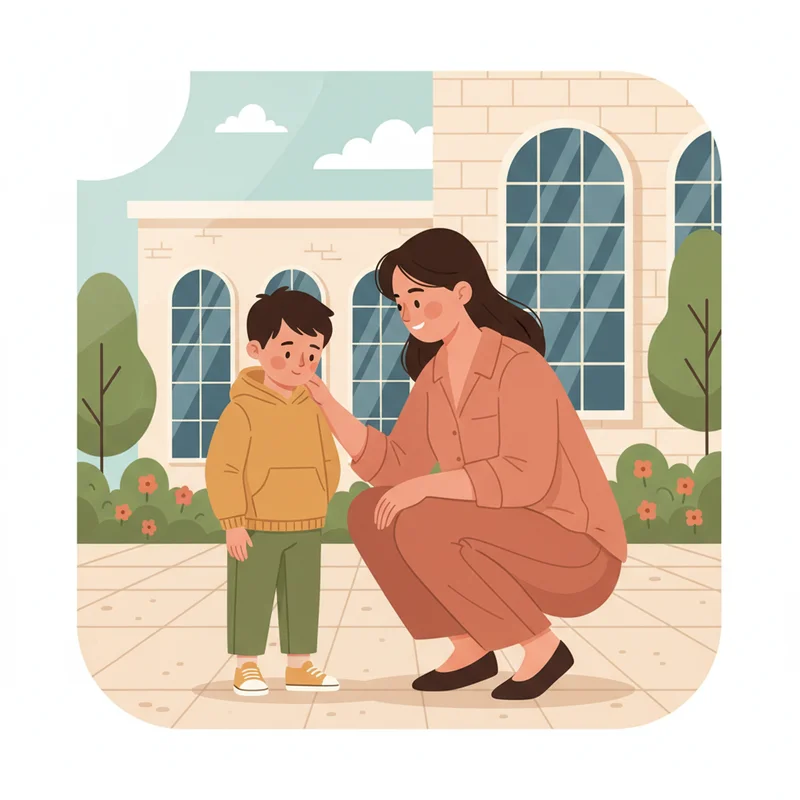
The Pre-Event Script That Actually Gets Us Out the Door
I stopped arguing about whether Oliver was going. That battle was never winnable.
Instead, I started using what I now call a pre-event script — a short, specific conversation we have the night before and again in the car on the way. It has four pieces:
- Name the hard part out loud. "Field day is loud and you won't always know what's next. That's genuinely hard." Don't minimize it.
- Give them a job. "Your only job is to stay for the first relay race. After that, we reassess." A single concrete task replaces the overwhelming open-endedness.
- Build in the exit. "If you need a break, go find Mrs. K and tell her your signal word." Having a real escape route lowers the stakes enormously.
- Define "success" before you walk in. "If you make it to the first relay, that's a win. Full stop." This one is critical — I'll come back to it.
This isn't about forcing participation. It's about lowering the activation energy enough that they can take one step forward instead of shutting down completely. If you're dealing with full school refusal beyond events, this piece on when to fight vs. pivot covers that decision in more depth.
What to Say to Teachers — and How to Set Up a Modified Participation Plan
You don't need to suffer through this alone, and neither does your child.
Before any major end-of-year event, I send a short email to the teacher — not asking permission, just communicating a plan. Something like:
"Oliver finds large unstructured events really overwhelming. We've talked about him joining for the first part and taking a sensory break if needed. Can you designate a quiet spot he can go to if he needs a minute? He knows to use his signal word with you."
Most teachers will say yes. It costs them almost nothing, and it prevents the meltdown that would otherwise eat up thirty minutes of their field day too.
If your child has a 504 or IEP, reduced-participation accommodations for school events are absolutely within scope. This guide to 504 accommodations breaks down exactly what you can request and how to phrase it. And if you're not sure what your child's legal rights are, this piece on school legal rights is worth bookmarking.
The goal isn't to get your child out of everything. It's to create enough scaffolding that participation becomes possible — even if it looks different from everyone else's participation.
How to Help Your Child Feel Proud — Even If They Only Made It 20 Minutes
This is the part I got wrong for a long time.
When Oliver made it to field day but melted down after 25 minutes and had to leave early, I used to frame it as a partial failure. "We almost made it." I didn't mean it that way, but that's what he heard.
Now I treat 20 minutes as a full victory. Because for his nervous system, showing up at all — walking into that gym when everything in him was screaming not to — was an act of genuine courage.
After every event, no matter how it went, we do a two-question debrief in the car on the way home:
- "What was one moment that wasn't terrible?"
- "What's one thing you handled?"
These questions train his brain to find evidence of competence, even when the event felt hard overall. Over time, that evidence stacks. And a child who has evidence he can handle hard things will try again next time.
If social struggles are affecting your child beyond events — friendships, keeping connections — this piece on ADHD and social skills and these social scripts have been some of my most-shared resources for a reason.
What Worked for Us (And What Made Things Worse)
What helped:
- Visiting the event space the day before when it was empty
- Having one known adult as a "home base" at the event
- A sensory kit in his backpack (noise-reducing earbuds, a chewy, a small fidget)
- Short, achievable participation goals set in advance
- Celebrating any attendance, no matter how brief
What made things worse:
- Surprise events ("Oh, today they're having a class party!") with no warning
- "Just try it, you'll be fine" without a real exit plan
- Comparing his participation to other kids' participation out loud
- Debriefing the meltdown in the parking lot immediately after — too raw
The birthday party strategies I've written about overlap significantly here — if parties are also a struggle, that article has a few additional prep tools worth trying.
What I know now that I didn't know two summers ago: your child isn't refusing because they don't want to belong. They want it desperately. They're just protecting themselves from an experience their nervous system has decided isn't safe yet.
That's not defiance. That's survival. And it's our job to help them build enough scaffolding that safe starts to feel possible.
Parent Training — Limited Spots
Learn How to Prepare Your ADHD Child for Hard Social Situations
The Unbreakable ADHD course walks you through exactly how to coach your child through anxiety, avoidance, and social overwhelm — with scripts, strategies, and tools you can use this week.
87 of 100 spots taken · 9 video modules · $9.99 trial
START YOUR $9.99 TRIAL →Is social overwhelm part of a bigger picture for your child?
The free 2-minute assessment helps identify which areas of your child's regulation are most under-supported — and what to do about it.
TAKE THE FREE ASSESSMENT →

