
The last time we had a family wedding to attend, my son Oliver — who was 8 at the time — was in full meltdown mode before we even made it out the front door. Dress shirt on the floor. Shoes thrown across the hallway. Me in my one nice dress, crying in the bathroom because we were already 20 minutes late and I'd ruined it somehow.
I spent months believing I was the problem. That I'd said the wrong thing, picked the wrong outfit, given too much warning or not enough.
I want to say this clearly: you didn't cause this. The explosion before every holiday, every birthday party, every "nice" family outing is not a parenting failure. It's a neurological one — and once you understand what's actually happening in your child's brain before these events, the whole thing starts to make a different kind of sense.
Why special occasions feel like ambushes to the ADHD brain
Your child's ADHD brain craves predictability. Not because they're rigid or difficult — but because unpredictability creates a flood of stress hormones that a dysregulated nervous system genuinely cannot manage.
Special occasions are, by definition, unpredictable. New location. Different clothes. Unfamiliar schedule. Expectations they can feel but can't fully process. The ADHD brain picks up on all of it at once — and the result is what looks to everyone else like a tantrum over a button-down shirt.
It's not about the shirt. It never was.
This is the same nervous system overload behind why ADHD kids can't handle changes in plans — the anxiety that looks exactly like defiance. Same root cause. Same intervention logic.
The real reason the meltdown happens before you even leave
There's a specific cruelty to transition panic: it peaks at the worst possible moment. You're running late. You're already stressed. Everyone is watching.
Here's what's happening underneath the surface.
The ADHD brain has a harder time shifting between mental "modes" — from whatever they were doing (playing, relaxing, existing) to the high-demand social performance of a family event. That shift requires executive function resources that are already in short supply.
Add to that the sensory load of "nice clothes" — collars, waistbands, stiff fabrics, tight shoes — and you have a child whose nervous system is being asked to do two impossible things at once: manage the emotional transition AND tolerate physical discomfort.
As I wrote in why mornings turn into war zones over getting dressed, sensory processing issues and ADHD overlap far more than most parents realize. "Nice outfits" are often sensory nightmares — and they're being introduced at the exact moment your child is already at their regulatory limit.
The explosion isn't defiance. It's overflow.
The 48-hour window: what to do days before, not minutes before
This is the single biggest shift that changed things for us.
The preparation for a special event cannot start the morning of. By then, the stress response is already building — and you're trying to redirect a train that left the station the night before.
What actually works is a two-day runway. Here's the framework I use with Oliver:
- 48 hours before: Mention the event casually, with one concrete detail. "We're going to Grandma's birthday dinner on Sunday. There will be cake." That's it. No logistics. No clothing discussion. Just plant the seed.
- 24 hours before: Walk through the event together — verbally or with a simple visual. "We'll drive there, say hi to family, eat dinner, then come home. The whole thing is about three hours." Predictability is calming. Vague is terrifying.
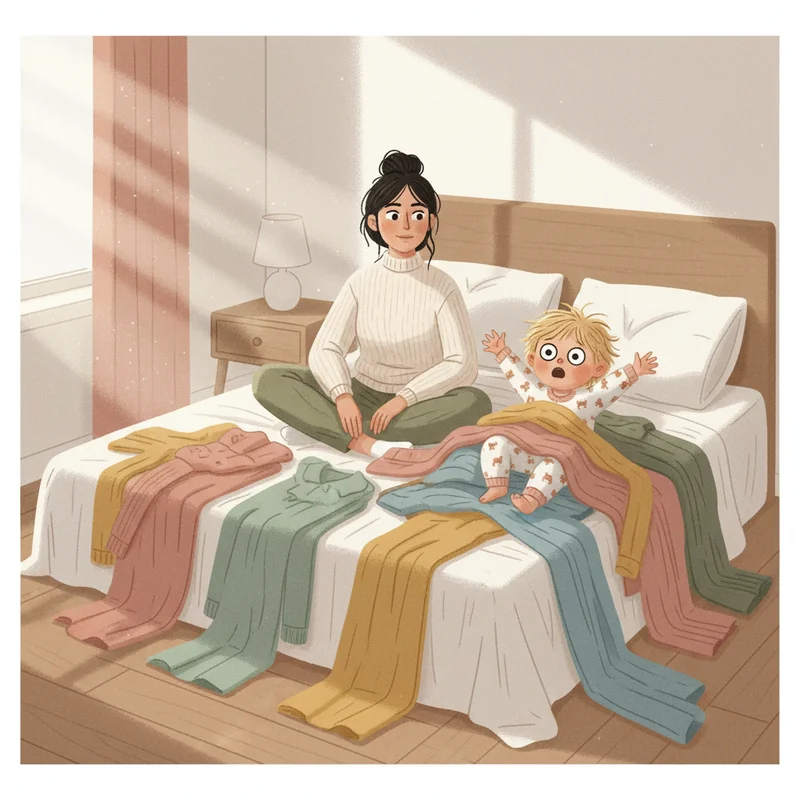
- Night before: Let your child pick their outfit (within reasonable parameters). Lay it out together. Touch it. Try it on. Deal with the sensory feedback now — while there's no time pressure and no audience.
- Morning of: Reference the plan you already made together. "Remember — you already picked your clothes. They're right there."
The goal is to eliminate novelty at every step possible. Routine rigidity in ADHD kids isn't a flaw — it's a coping mechanism. Work with it instead of against it.
The clothing battle decoded
Sensory triggers hiding inside "nice outfits" are real and they are significant.
Oliver cannot wear anything with a tight collar. Full stop. I learned this the hard way at three separate family events before I stopped fighting it. His nervous system experiences that collar as a genuine physical threat — not as discomfort, but as danger.
When you're preparing clothing the night before, run through this checklist:
- Tags removed or tagless options selected
- Waistbands tested — elastic vs. button, which does your child tolerate?
- Fabric texture — scratchy wool or stiff cotton is a no. Soft knit or jersey versions of "nice" clothes exist.
- Shoes — new dress shoes are a sensory ambush. Break them in days before, or find a clean version of a familiar shoe.
- Layers — if the event space will be hot or cold, your child needs to know that and have a plan
Sensory-proofing the outfit eliminates one entire category of trigger before the day even begins. It sounds small. It is not small.
A pre-event script that actually de-escalates
When you feel the tension starting to build — the resistance, the "I don't want to go," the slow-motion shutdown — the instinct is to push harder. That makes it worse every time.
Here's the script I use:
"I can see this feels like a lot right now. We're going to [event], and I know that's a change from your regular day. I'm going to be right there with you the whole time. You already picked your clothes. You already know the plan. You've got this."
Notice what that script does: it names the feeling, removes uncertainty, anchors to preparation already done, and reassures proximity. It does not argue, threaten, or minimize.
For step-by-step de-escalation language, the framework I use for ADHD meltdowns when leaving the house translates directly to family events — the transition mechanics are identical.
When the meltdown happens anyway — damage control in real time
Sometimes you do everything right and it still explodes. This is not evidence that the approach failed. It's evidence that your child's nervous system was already past the threshold before you got there.
In-the-moment damage control:
- Stop talking. I know. It feels counterintuitive. But as I discovered when I stopped talking during Oliver's meltdowns, silence is often the fastest path back to regulation. Every word you add is more input to an already overloaded system.
- Reduce sensory load immediately. Dimmer room. Quieter space. Remove whatever piece of clothing is causing distress. Regulation first, compliance second.
- Give them a job. "Can you help me carry the gift to the car?" Redirecting to a concrete, manageable task bypasses the shutdown and gives the brain something useful to do.
- Lower the stakes out loud. "We don't have to stay the whole time. We'll go for an hour and then we can leave." Even if you fully intend to stay longer — the perceived exit reduces the panic response immediately.
The meltdown is not the end of the day unless you let it be. A 10-minute reset in a quiet room has saved more family events in our house than any amount of advance preparation.
Talking to family members who don't understand what they're watching
This is the part nobody talks about — and it's often the most painful piece.
You arrive to a family event already frazzled from the pre-event chaos. And then you have to watch relatives give your child The Look. Or worse, say something. "He just needs firmer boundaries." "She was fine last year." "Why does he always do this at these things?"
You don't owe anyone a detailed explanation of your child's neurology. But having a short, calm script for the moments when family members wade in helps protect your own regulation — which is what your child needs most right now.
Something like: "His brain processes transitions differently. We have strategies that work — he just needs a few minutes." Then change the subject.
If you have extended family who are genuinely trying to understand, pointing them toward why ADHD isn't bad behavior — it's brain chemistry gives them the framing they need without requiring you to be the educator in the middle of a hard moment.
And when the event goes well — when you used the prep window, you sensory-proofed the outfit, you gave the script, and your kid walked in and held it together — hold your head high. That wasn't luck. That was you figuring out how your child's brain works and building a system around it.
That is exactly what good parenting looks like for a kid like ours.
Parent Training — Limited Spots
Stop the Pre-Event Explosion Before It Starts
Learn the exact transition frameworks, scripts, and regulation tools that work for ADHD kids — in 9 focused video modules you can watch at your own pace.
87 of 100 spots taken · 9 video modules · $9.99 trial
START YOUR $9.99 TRIAL →Is transition panic part of a bigger pattern for your child?
Take the free 2-minute assessment to understand what's driving your child's meltdowns — and what kind of support their brain actually needs.
TAKE THE FREE ASSESSMENT →
