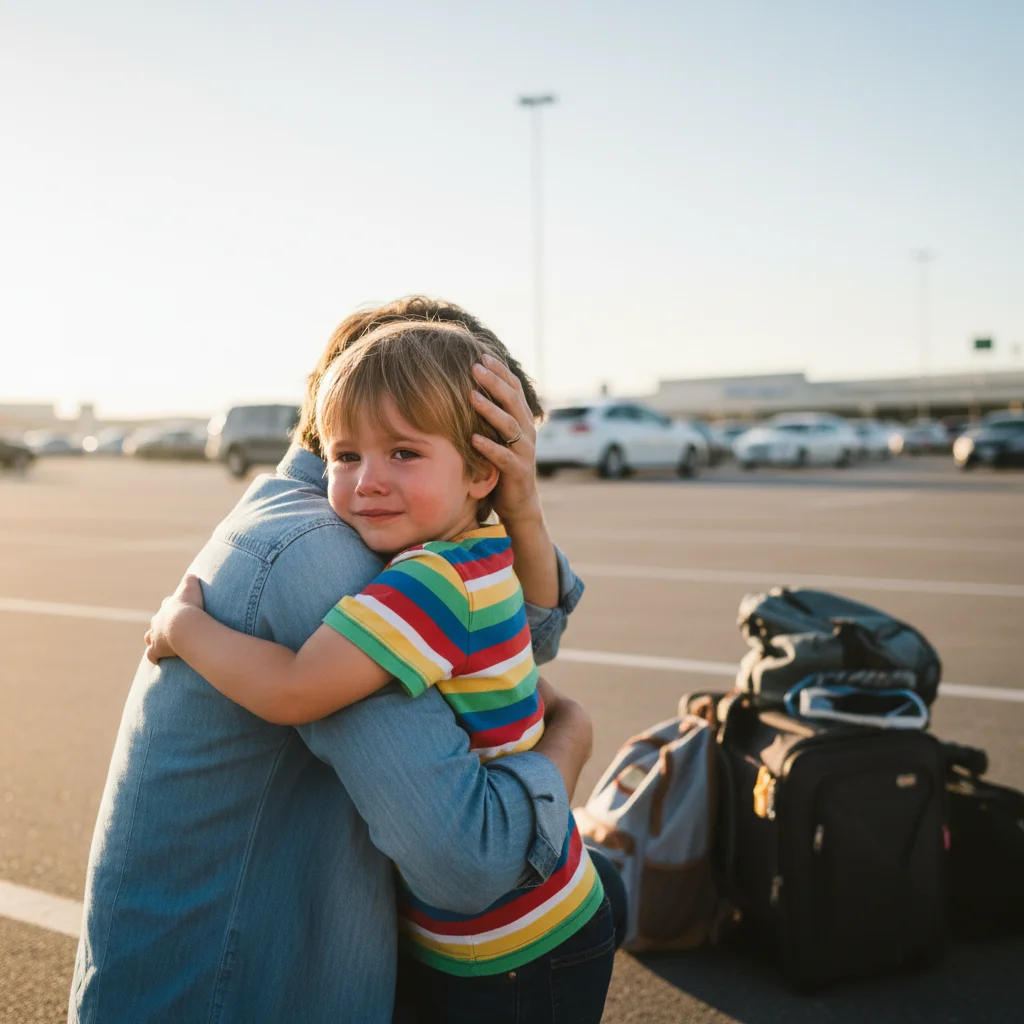
The brochure looked perfect. Kayaking. Archery. Fireflies at dusk. I set it on the kitchen table in front of Oliver, then eight years old, expecting excitement.
What I got instead was two weeks of escalating panic — crying at bedtime, clinging at the door every morning, and a full meltdown in the cereal aisle when he spotted the granola bars I was buying "for camp."
If your ADHD child is refusing sleep-away camp — or dissolving at the mere mention of it — I want you to hear this first: this is not a parenting failure, and it is not your child being dramatic. ADHD separation anxiety is real, it's neurological, and it's one of the least-discussed parts of raising an ADHD kid.
Why ADHD Kids Hit a Wall When Facing Overnight Separation
Most camp prep advice assumes a neurotypical child with typical-range anxiety. It does not account for what's actually happening in an ADHD brain when you introduce a major, uncontrollable change.
ADHD brains already struggle with tolerating changes in plans — the anxiety that shows up as defiance when a routine shifts. Add separation from the one person who is their external regulation system (you), and you've stacked two enormous stressors on top of a nervous system that was already running hot.
Oliver's version of this wasn't quiet worry. It was rage followed by shutdown. He'd go from begging me to cancel camp to refusing to talk about it at all — sometimes within the same hour. That's not manipulation. That's an overwhelmed brain cycling through its only available coping strategies.
There's also a time-blindness piece here. ADHD and time blindness mean that "two weeks away" isn't an abstract future event — it feels immediate and permanent. Oliver genuinely could not hold in his mind that I would be there on pickup day. That's not irrational fear. That's how his brain processes time.
What I Tried First That Made Everything Worse
I did what most parents do: I reasoned with him.
I made lists of fun activities. I found YouTube videos of kids having a blast at the exact camp we'd chosen. I reminded him — repeatedly — that his cousin had gone and loved it.
Every single approach made it worse.
Here's what I didn't understand then: when an ADHD child is in the grip of anxiety, the thinking brain is offline. Logic doesn't land. Information doesn't comfort. What it actually communicates is: your fear is wrong, and I need you to stop feeling it.
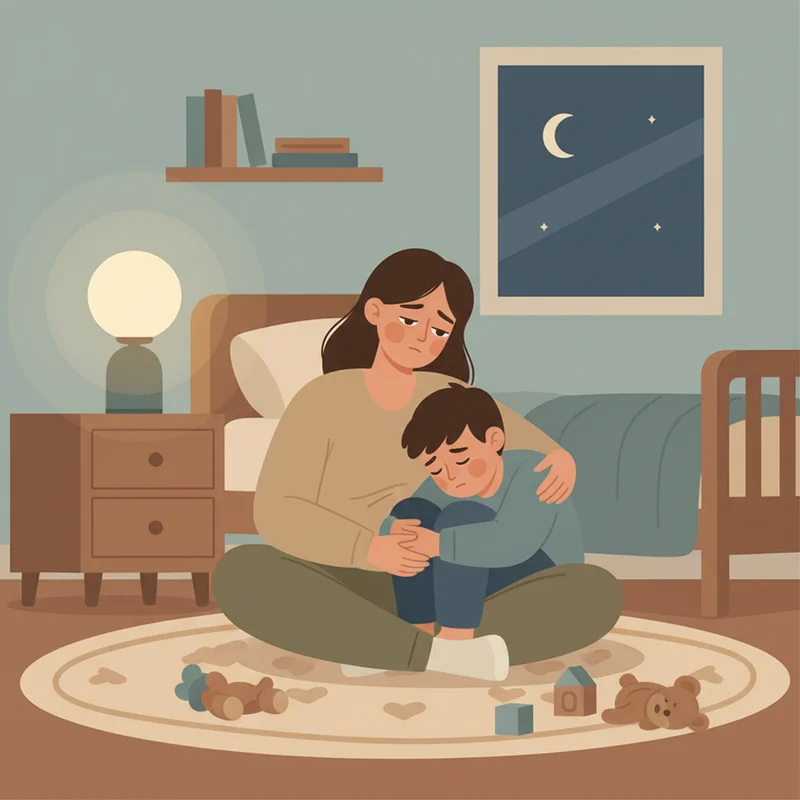
The more I tried to talk him out of it, the more panicked he became. By the end of the second week, he was waking up crying at night — something we hadn't seen since he was four. I was exhausted, he was exhausted, and I'd come close to canceling the whole thing twice.
I also made the mistake of framing camp as a reward for being brave. That put the weight of his anxiety on his character, which is the last thing an ADHD kid who already struggles with self-esteem needs to carry.
The 5 Preparation Strategies That Actually Helped Us Get to Drop-Off Day
Once I stopped trying to fix the anxiety and started working with it, things shifted — slowly, but genuinely.
- Acknowledge first, every single time. Before any information, any pep talk, any logistics — I said "I hear you. This feels really scary and really big." That's it. Nothing else until he'd settled even slightly. When I stopped rushing past his feelings, the conversations got shorter, not longer.
- Make the invisible visible. We made a paper chain — one link per day until camp ended, not until it started. Every night Oliver tore off a link. This wasn't about counting down to camp; it was giving his time-blind brain a concrete, tactile way to understand that the separation had an end date. This single change reduced the bedtime panic significantly within a few days.
- Practice separation in smaller doses. We did two overnight stays at my sister's before camp — the same week, back to back. Not because I thought he needed practice being away from me, but because I wanted him to build his own evidence that he could do it and I'd come back. His brain needed lived proof, not my verbal reassurance.
- Create a connection ritual he could control. We made a small photo book — just eight pages, printed at Walgreens for a few dollars — with pictures of our family, our dog, our backyard. He packed it himself. Having something tangible that was his choice to bring helped with the helplessness piece that so often underlies ADHD anxiety.
- Script the goodbye in advance. We practiced the drop-off conversation four or five times at home. I told him exactly what I'd say, what I'd do, how long I'd stay. ADHD kids who struggle with unexpected transitions do significantly better when the transition itself has been rehearsed. Drop-off day was still hard. But it wasn't a surprise.
What to Do If Your Child Calls Begging to Come Home
He called on day two. Crying. Saying he hated it and wanted to leave.
I will be honest: I almost drove the three hours to get him.
What stopped me was a conversation I'd had with the camp director, who had worked with ADHD kids for fifteen years. She told me something I've thought about many times since: "The call almost always comes on day two. The ones who stay almost always stop calling by day four."
That doesn't mean you ignore a genuine emergency. There are real reasons to bring a child home — illness, bullying, a situation that is genuinely unsafe. But homesickness, even intense homesickness, is not an emergency. It is a child learning, possibly for the first time, that hard feelings pass.
When Oliver called, I didn't try to convince him camp was fun. I said: "I hear you. I miss you too. I am going to be right here on pickup day. You don't have to like it. You just have to get through today." Then I asked him one question about something concrete — what he'd had for dinner, whether the lake was cold. Small, sensory, present-tense. It got him out of the spiral for long enough to say goodbye.
He stopped calling after day three.
How to Know When Camp Truly Isn't the Right Fit
Not every child is ready for sleep-away camp at the age the brochure suggests. That is not a judgment on your child or on you.
Signs that camp may be genuinely wrong right now — not just hard:
- Your child is in the middle of a major regulatory crisis (new diagnosis, recent school trauma, ADHD burnout)
- The anxiety is causing physical symptoms — vomiting, severe sleep disruption — weeks before camp even starts
- Your child has never successfully managed a single-night separation, and this would be their first attempt at seven or more days
- The camp environment has no experience with ADHD kids and no flexibility in structure
If any of those are true, trying again next summer is not giving up. It is reading your child accurately — which is exactly what good parents do.
Oliver went back the following summer. He asked to go. He called once, on day one, and it was a three-minute call. By day five he was a junior counselor's helper for the kayaking group.
That wouldn't have happened if I'd forced it the first year when he wasn't ready, or if I'd given up after the two weeks of meltdowns and never tried again.
Your child's nervous system is not broken. It just needs more runway than the brochure accounts for.
Parent Training — Limited Spots
Learn How to Regulate the Anxiety Before the Next Big Transition
If separation anxiety is just one piece of a larger picture — meltdowns, transitions, emotional dysregulation — this course gives you a concrete system for all of it, built specifically for ADHD families.
87 of 100 spots taken · 9 video modules · $9.99 trial
START YOUR $9.99 TRIAL →Is anxiety making your child's ADHD symptoms harder to manage?
ADHD and anxiety overlap more than most parents realize. This free assessment helps identify what's driving your child's specific challenges — so you can support them more effectively.
TAKE THE FREE ASSESSMENT →