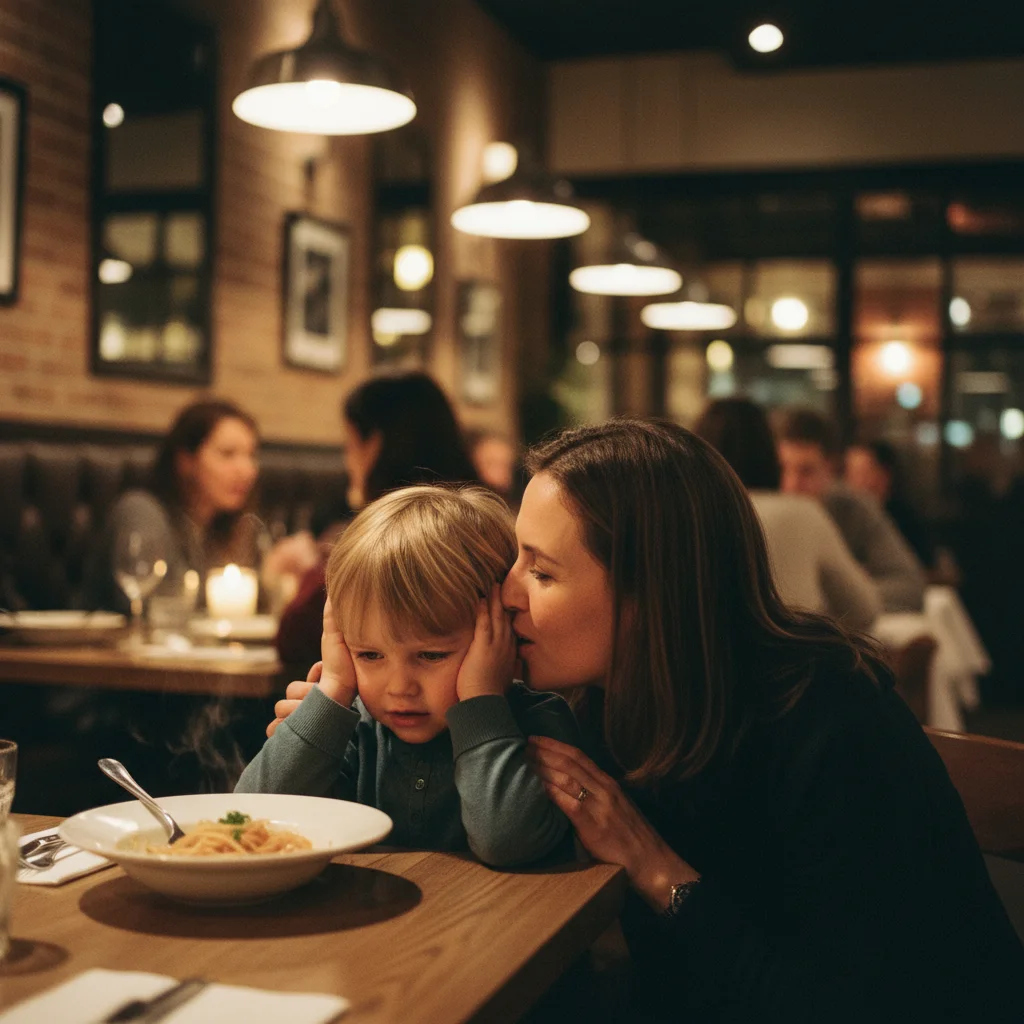
Your family walks into a restaurant with hope. Maybe tonight will be different. Maybe your ADHD child will actually sit through dinner without melting down.
Ten minutes later, they're crawling under the table, refusing to eat, or having a full meltdown over the "wrong" fork. Other families stare. You feel that familiar knot in your stomach.
Here's what I need you to know: This isn't defiance. It's not bad behavior. It's not your parenting. Your child's brain is literally under assault from sensory input they can't filter or process.
The Sensory Storm Happening in Your Child's Brain
When you walk into a restaurant, your brain automatically filters the noise. You hear your family talking but tune out the clattering dishes and the conversation at the next table.
Your ADHD child's brain can't do this. They hear everything at the same volume—the sizzling from the kitchen, every conversation, the music, the chair scraping, the ice machine cycling on.
This happens because ADHD affects the brain's executive function—the CEO that's supposed to decide what's important to pay attention to. Without that filter, every sound, smell, and visual input demands equal attention.
"It's like having 20 radio stations playing at once, and you can't turn down the volume or change the channel."
The fluorescent lights feel harsh. The booth fabric scratches. The smell of different foods mixing together is overwhelming. What looks like a pleasant family dinner to you feels like sensory chaos to them.
Why ADHD Brains Can't Filter Restaurant Chaos
This filtering problem comes down to neurotransmitter imbalances in four key brain pathways:
GABA deficiency means their nervous system can't calm down and self-soothe in overwhelming environments. They stay in a state of hyperarousal where every stimulus feels threatening.
Low serotonin makes it harder to regulate emotions and impulses. Small frustrations—like the wrong drink or having to wait—trigger explosive reactions because their brain can't modulate the response.
Dopamine dysregulation means they can't sustain attention on "boring" tasks like sitting still and eating. Their brain constantly seeks more stimulation, making them fidgety and restless.
Norepinephrine imbalances affect their ability to regulate alertness and energy. They might seem wired and overstimulated, then crash into exhaustion mid-meal.
Understanding this brain chemistry helps you see that ADHD isn't bad behavior—it's a neurological difference that makes everyday environments feel overwhelming.

The Difference Between Defiance and Nervous System Overload
When your child refuses to sit in the booth, they might not be trying to control the situation. The vinyl might feel scratchy or sticky against their skin. The confined space might trigger claustrophobia when they're already overstimulated.
When they "act out" while waiting for food, their brain might be desperately seeking stimulation because sitting still with nothing to focus on feels unbearable. An understimulated ADHD brain often looks hyperactive as it tries to create the stimulation it needs.
True defiance involves choice and intention. Sensory overload is an automatic nervous system response they can't control in the moment.
The key difference: defiance usually comes with eye contact and a testing attitude. Sensory overload often involves avoiding eye contact, covering ears, or seeking escape routes.
How Low GABA Levels Amplify Sensory Sensitivity
GABA is your brain's "calm down" neurotransmitter. It helps filter out unnecessary information and keeps you from being overwhelmed by sensory input.
Many ADHD children have naturally lower GABA levels, which means their nervous system stays revved up. Without enough GABA, they can't downregulate when environments become overwhelming.
This is why supplements like magnesium alone often aren't enough—they might support GABA function, but ADHD involves multiple neurotransmitter systems working together.
Research suggests that supporting all four pathways—GABA, serotonin, dopamine, and norepinephrine—may be more effective than targeting just one system.
Restaurant Survival Strategies That Actually Work
Start with timing. Choose early dinner times when restaurants are quieter and less crowded. Avoid peak hours when sensory input is at its highest.
Call ahead to request a booth in the quietest section, away from the kitchen, bathrooms, and main walkways. Corner booths often work best because they provide some sensory protection.
Pack a sensory toolkit: noise-canceling headphones, fidget toys, or even a small weighted lap pad can help them regulate while sitting.
Preview the menu online so they can decide what to order before arriving. This eliminates one decision-making demand when they're already managing sensory overload.
Have a signal system for when they need a break. Maybe they tap your hand three times, and you know it's time for a quick walk outside or to the bathroom to reset.
Similar strategies work for other overwhelming social situations like birthday parties—the key is recognizing and planning for sensory triggers.
Building Tolerance Gradually Without Forcing It
Start with success experiences at quieter, smaller restaurants during off-peak hours. Build positive associations before tackling more challenging environments.
Practice restaurant behaviors at home during family dinners. Work on sitting for gradually longer periods, using appropriate volume levels, and waiting patiently.
Never force a child through a complete meltdown in public. This often makes sensory sensitivity worse over time because they associate restaurants with trauma and overwhelm.
Celebrate small wins. If they made it through ordering without a meltdown, that's progress worth acknowledging.
Remember that building frustration tolerance takes time, especially when ADHD symptoms overlap with anxiety in social situations.
Is your child's restaurant behavior really sensory overload?
Understanding whether your child needs sensory support, behavioral strategies, or neurological support can change everything. Our free assessment looks at the full picture of your child's challenges.
TAKE THE FREE ASSESSMENT →
