
It was 7:23 AM on a Tuesday when my 8-year-old son threw his backpack across the kitchen and screamed, "I'm the stupidest kid in my class! I hate my brain!"
My coffee mug froze halfway to my lips. This wasn't a tantrum—this was my child's soul breaking in real time. And the worst part? This wasn't the first time. It had become his daily mantra: "I'm stupid. I'm dumb. I can't do anything right."
If your ADHD child says things like this, please know: this crushing self-talk isn't a character flaw or attention-seeking behavior. It's a neurological response called rejection sensitive dysphoria, and it's destroying our kids' confidence from the inside out.
The Comparison Trap That Devastates ADHD Kids' Self-Worth
ADHD children live in a world designed for neurotypical brains. Every day, they watch classmates finish worksheets while they're still reading the instructions. They see other kids remember their homework while theirs sits forgotten in their locker.
Their brains are constantly comparing: Why is this so hard for me? Why can everyone else sit still? Why do I always forget everything?
The brutal truth? ADHD isn't bad behavior—it's brain chemistry working differently. But our kids don't see brain chemistry. They see failure. And they internalize it as proof that something is fundamentally wrong with them.
The dopamine pathway—responsible for motivation and reward—is underactive in ADHD brains. This means tasks that neurotypical kids find mildly challenging feel impossible to ADHD kids. When they can't complete these "simple" tasks, they don't think, "My dopamine is low." They think, "I'm stupid."
Rejection Sensitive Dysphoria: The Hidden Pain Behind the Harsh Words
Most parents have never heard of rejection sensitive dysphoria (RSD), but it affects up to 99% of people with ADHD. RSD isn't just being sensitive—it's an intense emotional response to perceived criticism or rejection that feels physically painful.
When your child says "I'm stupid," they're not fishing for compliments. They're expressing genuine anguish. Their brain interprets every correction, every redirection, every "try harder" as confirmation that they're fundamentally flawed.
ADHD children can't handle losing games for the same reason they can't handle academic struggles—their brains amplify disappointment into devastation.
RSD involves the same serotonin and norepinephrine pathways that regulate mood and emotional response. When these pathways are imbalanced—as they often are in ADHD—criticism hits 10 times harder than it should.
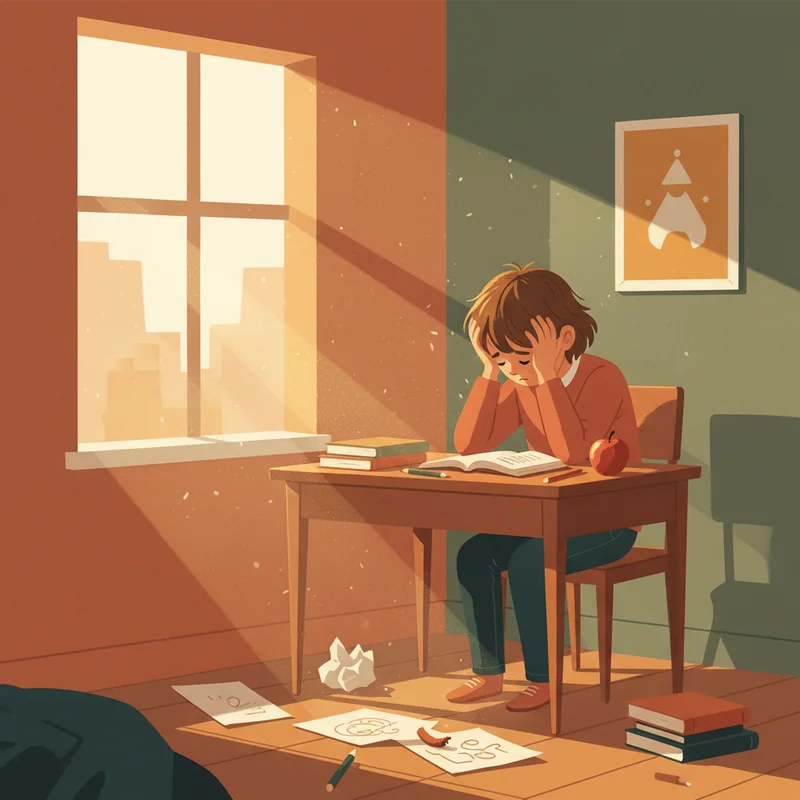
How Schools Accidentally Reinforce the 'I'm Stupid' Message
I don't blame teachers—they're doing their best with overcrowded classrooms. But traditional school systems inadvertently reinforce negative self-talk in ADHD kids through:
Constant redirection: "Sit down. Pay attention. Focus. Stop fidgeting." Each correction reinforces the message that their natural state is wrong.
Public comparisons: Star charts, timed tests, and reading groups make differences painfully visible. When teachers say ADHD children are "spacing out," kids hear "you're not smart enough to pay attention."
Executive function expectations: "Remember your homework. Organize your desk. Follow the three-step directions." These aren't character issues—they're neurological challenges that need support, not criticism.
The GABA pathway, which helps regulate anxiety and self-soothing, is often underactive in ADHD brains. This means school stress hits harder and recovery takes longer. What feels like minor feedback to teachers can trigger major emotional spirals in our kids.
The Dopamine-Confidence Connection That Changes Everything
Here's what I wish I'd understood earlier: confidence isn't built through praise alone. It's built through dopamine—the neurotransmitter that creates feelings of accomplishment and motivation.
ADHD brains have less available dopamine, which means our kids need more frequent, more immediate rewards to feel successful. Traditional "work hard, get rewarded later" systems don't work for them.
When dopamine is consistently low, children develop learned helplessness. They stop trying because their brain chemistry makes effort feel pointless. This isn't laziness—your ADHD child isn't lazy, they're understimulated.
The breakthrough came when I learned that certain nutrients can support healthy dopamine production. Research suggests that saffron, for example, may help balance multiple neurotransmitter pathways simultaneously—not just dopamine, but also serotonin (mood), GABA (anxiety), and norepinephrine (focus).
7 Phrases That Rebuilt My Son's Self-Worth
After months of research and trial and error, I discovered specific phrases that actually penetrated my son's negative self-talk:
Instead of "You're so smart": "Your brain works in amazing ways."
Instead of "Try harder": "Let's figure out what your brain needs right now."
Instead of "You can do better": "I see how hard you're working."
Instead of "Don't say that about yourself": "That must feel really painful. Tell me more."
Instead of "You're not stupid": "ADHD brains are different, not broken."
Instead of "Everyone struggles sometimes": "Your struggles are real, and so are your strengths."
Instead of "You'll get it eventually": "We'll find the way that works for your brain."
The key was validating his emotional experience instead of dismissing it. When he said "I'm stupid," I stopped arguing and started listening.
The Natural Support That Stabilized His Emotional Regulation
Around the same time I changed my language, I also started supporting his brain chemistry more directly. After reading about the 2019 clinical trial showing saffron had comparable efficacy to methylphenidate in children with ADHD, I decided to try natural neurotransmitter support.
The study, published in the Journal of Child and Adolescent Psychopharmacology, found that saffron worked on all four key pathways—dopamine, serotonin, GABA, and norepinephrine. This made sense to me because magnesium alone won't fix your child's meltdowns—you need comprehensive pathway support.
Within three weeks of consistent use, I noticed he wasn't spiraling as deeply when faced with challenges. The "I'm stupid" comments became less frequent. His teacher even commented that he seemed more resilient after setbacks.
Was it the saffron? The language changes? The combination? I honestly don't know. But something was working.
The Breakthrough Moment When He Finally Believed in Himself
Six months later, my son came home from school with a different energy. His teacher had asked the class to solve a challenging math problem, and while other kids gave up, he kept trying different approaches.
"I didn't get it right away," he told me, "but I figured out three different ways it DIDN'T work. And then I got it."
That night, instead of his usual "I'm so dumb" bedtime commentary, he said something that made me tear up: "Mom, I think my brain just works differently. And maybe that's actually kind of cool."
That's when I knew we'd turned a corner. His harsh inner critic was being replaced by curious self-awareness. He wasn't calling himself stupid anymore—he was calling himself different. And different, we'd learned together, wasn't something to fix. It was something to understand and support.
If your child is stuck in that brutal cycle of negative self-talk, please know: their harsh words about themselves aren't the truth. They're a signal that their brain chemistry needs support, their environment needs adjustment, and their emotional experience needs validation.
The "I'm stupid" phase doesn't last forever. With the right support—whether that's therapeutic, nutritional, environmental, or all three—our kids can learn to see their ADHD brain as different, not defective.
Parent Training — Limited Spots
Helping Your ADHD Child Build Real Connections
Social skills, self-esteem, and emotional regulation — the Unbreakable ADHD program covers the strategies that help ADHD kids thrive. 9 video modules from licensed therapist Anneliese.
87 of 100 spots taken · 9 video modules · $9.99 trial
START YOUR $9.99 TRIAL →Is your ADHD child's negative self-talk breaking your heart too?
Take our free 2-minute assessment to discover personalized strategies for rebuilding their confidence and supporting their unique brain chemistry.
TAKE THE FREE ASSESSMENT →
