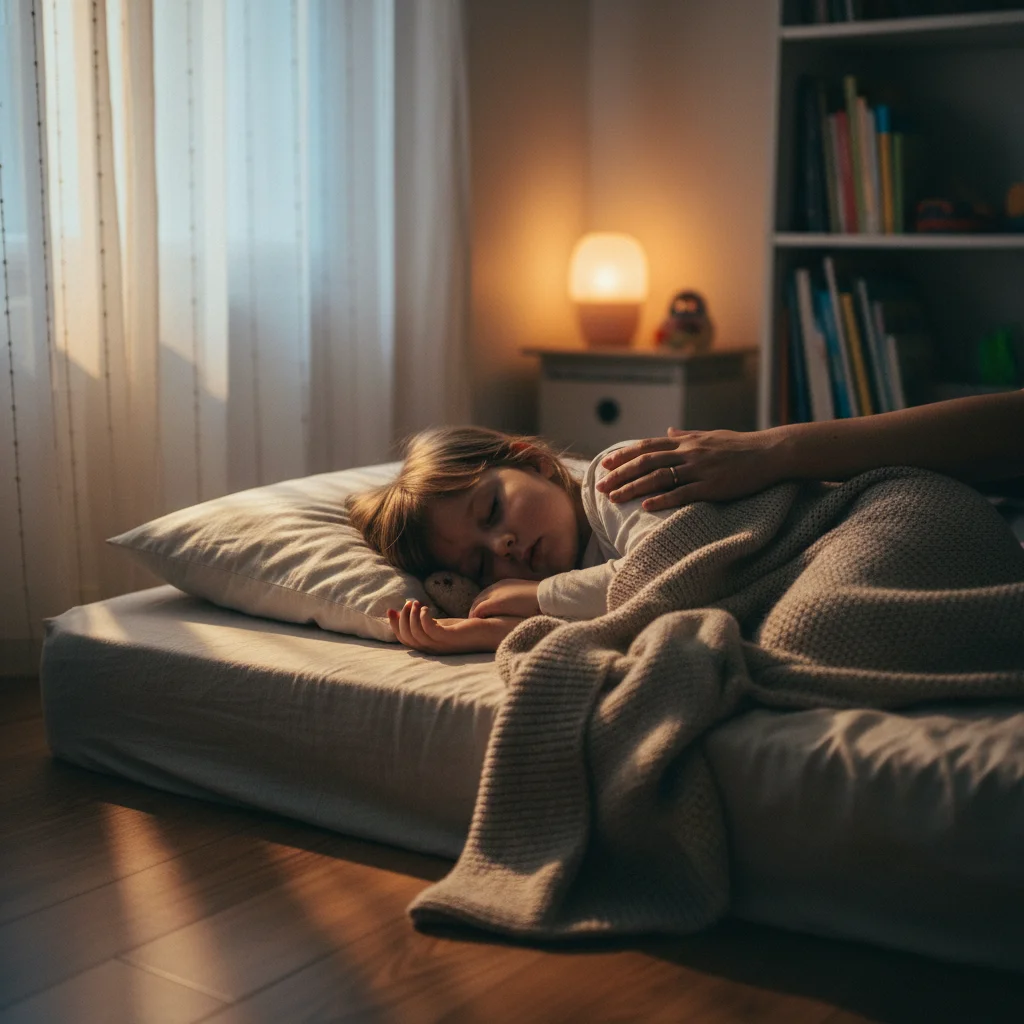
If you're reading this at 2:47 AM while your ADHD child bounces off the walls for the third night this week, I want you to know: this isn't your fault. You're not a bad parent. Your child isn't broken. And yes, there is hope.
I'm writing this from my kitchen table at 6 AM, but not because my son woke me up. He's been sleeping through the night for eight months now. That feels surreal to type because for nearly three years, bedtime was a battlefield and sleep was a luxury I'd forgotten existed.
The journey from sleep disaster to peaceful nights wasn't quick, and it definitely wasn't easy. But once I understood what was actually happening in my son's ADHD brain during those late-night wake-ups, everything changed. Let me share what finally worked for us.
The 2 AM Wake-up Calls That Broke Me
It started when Jake was seven. What began as occasional bedtime resistance turned into a nightly three-hour negotiation. But the real breaking point wasn't bedtime—it was the middle-of-the-night wake-ups that followed.
Picture this: It's 2 AM. You hear footsteps in the hallway. Your heart sinks because you know what's coming. Your child appears in your doorway, wide awake, announcing they "can't sleep" or they're "scared" or they need water for the fifteenth time.
What followed was a cascade of chaos. Jake would end up in our bed, tossing and turning for hours. I'd be awake until 4 AM, then dragging myself through the next day like a zombie. My husband and I were snippy with each other. My patience with Jake was non-existent.
The worst part? Everyone had advice. "Just let him cry it out." "Try melatonin." "He's manipulating you." But when you have an ADHD child, traditional sleep advice doesn't just fail—it backfires spectacularly.
Why ADHD Brains Fight Sleep (The Dopamine Connection)
As a former pediatric occupational therapist, I thought I understood sleep issues. But ADHD sleep problems aren't like typical sleep challenges. There's actual neuroscience behind why our kids fight bedtime and wake up at 2 AM ready to discuss dinosaurs.
The culprit? Dopamine regulation. ADHD brains have chronically low baseline dopamine levels. During the day, this shows up as hyperactivity, impulsivity, and attention struggles. But at night, it creates a perfect storm for sleep chaos.
Here's what happens: When neurotypical kids get tired, their brains naturally wind down. But ADHD brains actually become more alert as dopamine drops further. It's like their nervous system hits the panic button, flooding them with cortisol and adrenaline right when they should be getting sleepy.
This explains why your child can be exhausted but simultaneously unable to settle. Their brain is literally fighting against sleep because it perceives the dopamine drop as danger. No amount of traditional sleep hygiene fixes this neurochemical mismatch.
The Sleep Mistakes I Made for Years
Before I understood the dopamine connection, I made every mistake in the book. Maybe you're making some of these too:
Mistake #1: Fighting the hyperarousal instead of supporting it. I spent years trying to force Jake to be calm at bedtime. Dimmed lights, quiet voices, no stimulation. But his nervous system was in overdrive—he needed gentle movement and sensory input to regulate, not forced stillness.
Mistake #2: Relying on melatonin as a magic bullet. Don't get me wrong—melatonin can help some kids. But it doesn't address the underlying dopamine dysregulation. We'd give Jake melatonin, he'd fall asleep initially, then wake up at 2 AM when it wore off and his brain chemistry chaos resumed.
Mistake #3: Inconsistent boundaries during night wakings. Some nights I'd march him back to bed immediately. Other nights, exhausted and defeated, I'd let him stay up or climb in our bed. The inconsistency actually made his sleep anxiety worse because he never knew what to expect.
Mistake #4: Focusing only on bedtime routine, not the whole day. I obsessed over the perfect bedtime routine but ignored how his daytime experiences were affecting his nervous system. His afternoon sugar crash, lack of morning sunlight, and overstimulating evenings were all sabotaging sleep.
The turning point came when I stopped treating symptoms and started supporting his brain chemistry. That required understanding a pathway I'd never heard of before.
How We Discovered the GABA Pathway Was Missing
After eighteen months of sleep battles, I was desperate enough to dig into research journals. That's when I discovered something fascinating: ADHD isn't just about dopamine. It involves four key neurotransmitter pathways, and sleep requires all of them to work together.
Dopamine handles motivation and reward. Serotonin regulates mood and circadian rhythms. Norepinephrine manages alertness and stress response. But the one I'd been ignoring? GABA—the brain's primary calming neurotransmitter.
GABA is like your brain's brake pedal. It slows down racing thoughts, reduces anxiety, and signals the nervous system that it's safe to rest. In ADHD brains, GABA function is often impaired. No wonder traditional "relaxation" techniques weren't working—Jake's brain literally couldn't access its own calming system.
This explained so much. Why he'd get more hyper when overtired. Why melatonin helped him fall asleep but not stay asleep. Why he'd wake up in the middle of the night with anxiety about random things. His GABA pathway wasn't functioning properly, leaving his nervous system stuck in fight-or-flight mode.
Once I understood this, I could finally create a sleep protocol that actually worked with his brain chemistry instead of against it.
Our Natural Sleep Protocol That Changed Everything
The protocol we developed addresses all four neurotransmitter pathways, not just one. It sounds complex, but it's actually quite simple once you understand the framework. Here's what we do:
Morning: Set the circadian foundation. Jake gets 15 minutes of direct sunlight within an hour of waking up. This kickstarts serotonin production and helps regulate his internal clock. We do this even on cloudy days—he sits by our brightest window while eating breakfast.
Afternoon: Support dopamine naturally. Instead of fighting his need for stimulation, we channel it productively. Jake gets 30 minutes of intense physical activity after school—trampolines, bike rides, or wrestling with dad. This gives his dopamine system the input it craves without overwhelming his nervous system.
Early evening: Begin the GABA transition. Two hours before bedtime, we start supporting his GABA pathway. This isn't about forced quiet time—it's about gentle, repetitive activities that naturally boost GABA production. Coloring, building with Legos, or listening to audiobooks all work beautifully.
Bedtime routine: Layer in all four pathways. Our routine hits every neurotransmitter system. Warm bath (GABA activation), gentle massage with lavender oil (serotonin support), consistent timing (dopamine regulation), and deep breathing exercises (norepinephrine balance).
The key insight? We stopped trying to force calmness and started building it neurochemically. Within two weeks, Jake was falling asleep within 20 minutes instead of two hours.
The Supplements That Actually Helped (And Which Ones Didn't)
I tried a graveyard of supplements before understanding the four-pathway approach. Here's what actually moved the needle versus what was a waste of money:
What didn't work: Standalone magnesium was our first attempt. While magnesium does support GABA function, it wasn't enough for Jake's multi-pathway dysfunction. Magnesium alone can't address the complex neurochemistry of ADHD. L-theanine was too subtle. Melatonin helped initially but stopped working after a few weeks as his tolerance built up.
What helped: After months of research, I found that saffron was being studied for ADHD sleep issues. Unlike single-ingredient supplements, research suggests saffron may support all four neurotransmitter pathways simultaneously. The 2019 clinical trial showing saffron's comparable efficacy to methylphenidate wasn't just about daytime attention—participants also reported improved sleep quality.
We tried a high-quality saffron supplement for kids, and within three weeks, Jake's middle-of-the-night wake-ups decreased from nightly to maybe once a week. More importantly, when he did wake up, he could self-soothe back to sleep instead of needing us.
The difference wasn't just better sleep—it was Jake's entire nervous system learning to regulate itself. That's what happens when you support the root neurochemistry instead of just treating symptoms.
Creating the Perfect ADHD Bedtime Environment
Environment matters enormously for ADHD sleep, but not in the ways most sleep experts recommend. ADHD kids often need more sensory input, not less, to regulate their nervous systems for sleep.
Lighting strategy: Instead of immediately dimming lights, we use amber bulbs starting at 7 PM. This reduces blue light exposure while still providing enough illumination that Jake doesn't feel anxious. Complete darkness actually increased his sleep anxiety.
Sound management: White noise machines weren't enough—Jake needed brown noise (deeper, more consistent) to mask household sounds that would jolt him awake. We use a brown noise app at moderate volume all night.
Temperature control: ADHD kids often struggle with temperature regulation. Jake's room stays at 68°F year-round with a small fan for air circulation. Too warm and his hyperactivity increases; too cold and he can't settle.
Sensory supports: A weighted blanket provides deep pressure input that supports GABA function. Jake also has a small fidget toy for the rare nights when his mind is racing—giving his hands something to do actually helps his brain wind down.
The goal isn't a perfectly quiet, dark room. It's an environment that supports his specific nervous system needs.
What to Do When Nothing Seems to Work
Even with the perfect protocol, some nights will still be rough. ADHD brains are complex, and sleep can be affected by everything from growth spurts to changes at school. Here's what to do during the inevitable setbacks:
Don't abandon the routine. It's tempting to throw everything out the window after one bad night, but consistency is crucial for ADHD brains. Stick with your protocol even when it feels like it's not working.
Track patterns, not perfection. I keep a simple sleep log noting Jake's bedtime, wake-up time, and any night wakings. This helps me identify triggers—like too much screen time or a particularly stressful school day—that disrupt his sleep.
Address the root cause, not just the sleep. If your child is going through a difficult phase at school or experiencing anxiety that looks like ADHD, their sleep will be affected. Sometimes improving sleep means addressing the daytime stressors first.
Remember: progress isn't linear. Jake had setbacks at 8 weeks, 4 months, and 6 months. Each time, I thought the protocol had stopped working. But each setback was shorter than the last, and his baseline kept improving.
Most importantly, be patient with yourself. These challenges aren't your fault, and finding the right approach takes time. You're not failing your child—you're learning how to support their unique brain.
Is your child's sleep schedule also a disaster?
Every ADHD child is different, but understanding their unique brain chemistry is the first step toward peaceful nights. Take our free assessment to discover what might be disrupting your child's sleep and get personalized recommendations.
TAKE THE FREE ASSESSMENT →

