
Last March, I thought I was being a good mom by involving Emma in our spring cleaning routine. "Let's sort your toys together!" I said cheerfully, not realizing I was about to trigger the worst meltdown she'd had in months.
If your ADHD child melts down during what should be helpful organizing activities, you're not dealing with defiance or laziness. You're witnessing a neurological system in complete overload — and it's not your fault.
The Spring Cleaning Day That Ended in Disaster
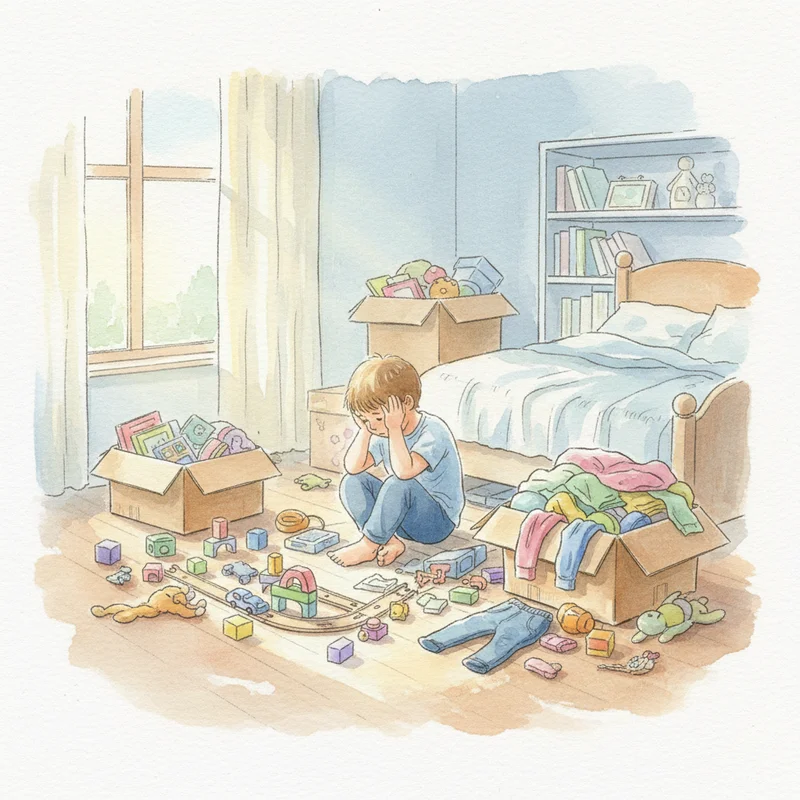
It started innocently enough. Emma seemed excited to help organize her room. But within 20 minutes, she was screaming, throwing toys, and completely inconsolable. I couldn't understand what went wrong.
What I didn't realize was that spring cleaning creates a perfect storm of sensory and cognitive triggers for ADHD brains. The visual chaos, decision fatigue, chemical smells, and executive function demands were overwhelming her nervous system faster than I could recognize the warning signs.
This wasn't bad behavior — it was brain chemistry responding to an impossible situation.
Why Organizing Activities Overwhelm ADHD Sensory Systems
ADHD brains process sensory information differently. During spring cleaning, your child is bombarded with multiple sensory inputs simultaneously:
- Visual overload: Items scattered everywhere create chaotic visual fields
- Tactile overwhelm: Touching dusty, forgotten items triggers sensory aversion
- Auditory chaos: Vacuum cleaners, music, multiple conversations
- Olfactory assault: Chemical cleaning products disrupt sensitive systems
The ADHD brain struggles to filter and prioritize these inputs. What feels like helpful organizing to us becomes sensory torture for them.
When Emma started crying during toy sorting, she wasn't being difficult. Her sensory system was saying "STOP" but she couldn't articulate why.
The Executive Function Overload of Sorting and Decision-Making
Spring cleaning demands intense executive function skills that ADHD brains find exhausting. Every item requires multiple decisions: Keep or donate? Where does it go? Is it still useful? Do I remember this?
For neurotypical brains, these micro-decisions happen automatically. For ADHD brains, each choice depletes precious dopamine reserves. After 30-60 decisions, your child's executive function tank is empty.
This is why they can start enthusiastically but crash into meltdowns quickly. It's not about attention span — it's about working memory overload and decision fatigue.
Visual Chaos vs. ADHD Brain's Need for Calm
Here's something most parents don't know: ADHD brains are constantly seeking visual calm to balance their internal hyperactivity. Messy spaces actually dysregulate their nervous systems more than neat spaces do.
During spring cleaning, you temporarily make the visual environment MORE chaotic before it gets organized. This sends the ADHD brain into fight-or-flight mode. The GABA and serotonin pathways that normally provide calm become overwhelmed.
Your child isn't being dramatic when they say the mess "hurts their brain." It literally does create neurological discomfort.
Chemical Sensitivities That Make Cleaning Products Toxic
Many ADHD children have heightened chemical sensitivities that parents don't recognize. The artificial fragrances, bleach, and volatile organic compounds in cleaning products can trigger:
- Immediate hyperactivity spikes
- Emotional dysregulation
- Headaches and fatigue
- Increased sensory sensitivity
Emma's worst meltdowns always happened when I used heavy-duty cleaners. Switching to fragrance-free, natural alternatives reduced her spring cleaning reactions by 70%.
Modified Cleaning Routines That Work With ADHD Brains
Instead of traditional spring cleaning marathons, try these ADHD-friendly approaches:
The 15-Minute Rule: Clean for only 15 minutes at a time with 30-minute breaks. This prevents executive function depletion.
One Category Method: Sort only one type of item per session (just books, just toys, just clothes). Multiple categories overwhelm decision-making pathways.
Sensory Prep: Use noise-canceling headphones, dim harsh lighting, and eliminate chemical smells before starting.
Choice Limitation: Offer only two options per item — keep or donate. Skip the complicated sorting systems.
These modifications honor how ADHD brains actually function instead of forcing them into neurotypical expectations.
Teaching Organization Skills Without Sensory Overwhelm
You can still teach valuable organizing skills by working WITH your child's neurology:
Start microscopic: Organize one desk drawer, not an entire room. Success builds dopamine for future tasks.
Use visual systems: Clear bins with picture labels reduce decision-making burden while maintaining visual calm.
Create calming rituals: Play specific music, use essential oils, or practice deep pressure techniques before organizing sessions.
Celebrate micro-wins: Acknowledge every small success to maintain motivation and positive associations with organizing.
The goal isn't perfect organization — it's building skills while respecting neurological differences.
Is your child's spring cleaning stress connected to deeper ADHD challenges?
Take our free 2-minute assessment to discover which brain pathways might need extra support during seasonal transitions and stressful activities.
TAKE THE FREE ASSESSMENT →