
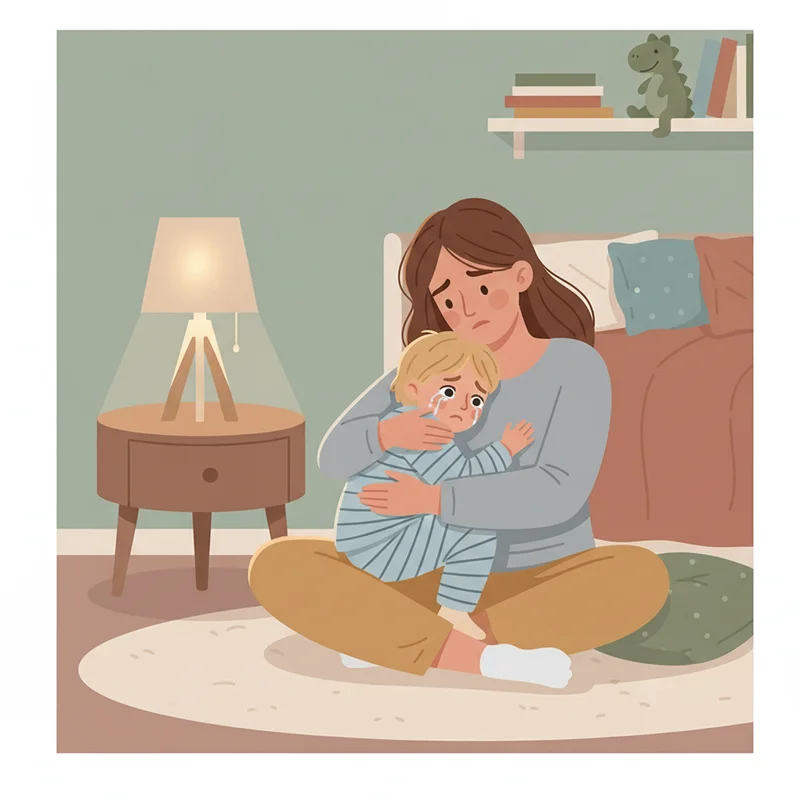
Every Sunday at around 6 PM, Oliver would start to unravel. It was so predictable I could set a clock by it. The quiet dread that crept in after dinner, the stomach ache that appeared out of nowhere, the crying that turned into a full meltdown by bath time. I used to think I was doing something wrong — too much screen time, too little structure, maybe I let the weekend get too loose.
I wasn't doing anything wrong. And neither are you.
ADHD child school anxiety on Sunday nights is one of the most common things I hear from parents in my community, and one of the most dismissed. Pediatricians call it "normal worry." Teachers say kids just need more routine. But for a child whose brain genuinely struggles to regulate anticipation and uncertainty, Sunday night isn't just nerves — it's a neurological event.
Why ADHD brains experience Sunday night dread so intensely
The ADHD brain doesn't experience time the way other brains do. There's a concept called time blindness — the inability to feel the distance between now and a future event. For most kids, Monday is "tomorrow." For an ADHD child, Monday is right now, emotionally speaking, the moment they start thinking about it.
That means the anxiety of the whole upcoming school week can crash down on Sunday afternoon in one overwhelming wave. It's not dramatic. It's not manipulation. It's brain chemistry, not bad behavior.
Add to that the fact that school asks ADHD kids to do hard things all day — sit still, wait their turn, manage transitions, suppress impulses, keep track of materials. The weekend was a break from all of that. Sunday evening is when the brain registers: that break is ending.
The stomach aches are real, by the way. ADHD anxiety shows up physically in ways parents often miss — headaches, nausea, muscle tension. If your child says their tummy hurts every Sunday night, believe them.
The difference between "not wanting to go" and a genuine anxiety crisis
This matters, because the response is different.
A child who doesn't want to go to school might grumble, stall, ask for one more show. That's normal reluctance. A child in a genuine anticipatory anxiety crisis looks different: inconsolable crying, physical symptoms, catastrophic thinking ("I'm going to fail," "nobody likes me," "something bad is going to happen"), inability to be reasoned with or distracted.
If it's the latter, you're not dealing with a preference. You're dealing with a dysregulated nervous system that needs co-regulation before it can hear anything you say. Trying to logic your way through it — "but school is fine, remember last week?" — won't work and often makes it worse.
This is also the moment to pay attention. Sunday night anxiety is often your child's signal that something specific at school is hard right now. If they're getting physically sick before tests, or shutting down during assessments, the Sunday dread might be pointing directly at that.
5 things we do Sunday evening that actually help
These aren't magic. They didn't eliminate the anxiety overnight. But within about three weeks of being consistent, Oliver's Sunday nights went from crisis-level to manageable. Here's what shifted things for us.
1. End the weekend at 4 PM, not at bedtime. We instituted a "Sunday prep hour" — pack the bag, lay out clothes, find the shoes — at 4 PM while energy is still high and brains are still flexible. Doing it at 8 PM when everyone is already tired and anxious is a recipe for disaster.
2. Name the week out loud. Sunday at dinner, I'd say: "This week we have school Monday through Friday, swim on Tuesday, and Grandma is coming Saturday." Just a simple verbal map. For a brain with anxiety about unexpected changes, knowing what's coming reduces the threat response significantly.
3. Create a "Sunday send-off" ritual. We started doing the same three things every Sunday before bed: a warm bath, one chapter of a book together, and a five-minute "good thing / hard thing" conversation where we both share one of each from the week. The ritual itself became a signal that Sunday evening was safe, not scary.
4. Don't try to fix the feeling — acknowledge it. "I know school is hard sometimes. It makes sense that you'd feel nervous." That's it. You don't have to solve it. Just naming the emotion out loud reduces the nervous system's threat response. Shame spirals get worse when feelings aren't validated — the same is true of anxiety.
5. Move the body before bed. Not wild rough play — something rhythmic and calming. A short walk around the block, jumping on a trampoline for five minutes, or even a quick set of jumping jacks. Physical movement is one of the most evidence-backed tools for regulating the ADHD nervous system, and it costs nothing.
Talking to the teacher — and what to actually say
If the Sunday anxiety is severe and ongoing, it's worth a conversation with the classroom teacher. Not to ask for special treatment — just to share what you're seeing at home.
I've found the most effective framing is: "Oliver has been showing significant anxiety on Sunday evenings about the week ahead. I wanted to flag it so we're on the same page — is there anything happening at school right now that might be contributing?" That opens a door without putting the teacher on the defensive.
If the anxiety seems connected to specific school situations — transitions, tests, unstructured time, social dynamics — it may be worth exploring what formal support is available. A 504 plan can address anxiety-related accommodations, and your child has more legal rights at school than most parents realize.
For deeper guidance on teacher communication, this weekly check-in template has been genuinely useful for us.
When Sunday anxiety becomes Monday morning refusal
Sometimes Sunday night dread escalates. The child who was crying at bedtime is now refusing to get in the car Monday morning. There's a real difference between fighting through school refusal and knowing when to pivot — and getting that wrong in either direction has consequences.
The short version: if school refusal is happening more than once a week, or if your child is showing signs of ADHD burnout — not just reluctance but genuine emotional depletion — it's time to loop in a professional. A therapist who works with ADHD and anxiety can help your child build the internal tools that Sunday-night rituals alone can't provide.
In our case, the Sunday strategies helped enough that Monday mornings became manageable again. Oliver still has hard weeks. But the Sunday meltdowns stopped being a weekly event, and that alone changed the entire tone of our household.
The goal isn't to eliminate all anxiety about school. It's to help your child's nervous system feel regulated enough to face it.
If your child is dreading school week after week, that dread is information. It's worth taking seriously — not because something is terribly wrong, but because your child is telling you they need more support than they're currently getting. You're already paying attention. That matters more than you know.
Parent Training — Limited Spots
Learn to calm Sunday night meltdowns before they start
The Unbreakable ADHD course walks you through exactly how to build the rituals, communication scripts, and regulation strategies that stop Sunday dread in its tracks.
87 of 100 spots taken · 9 video modules · $9.99 trial
START YOUR $9.99 TRIAL →Is Sunday night anxiety a sign your child's brain needs more support?
Anticipatory anxiety, emotional dysregulation, and difficulty transitioning between states often have a neurological root. A free 2-minute assessment can help identify what's driving your child's symptoms.
TAKE THE FREE ASSESSMENT →

