
The email arrived at 2:47 PM on a Tuesday. "Oliver seems unmotivated to complete his assignments. He just stares at his worksheet and doesn't even try. We need to discuss strategies to help him care more about his work."
I read it twice, that familiar knot forming in my stomach. Your child's struggles are not your fault, and they're not a character flaw. What teachers often label as "unmotivated" is actually a neurological difference in how ADHD brains process reward and effort.
After Oliver's ADHD diagnosis, I dove deep into the research on motivation and discovered something that changed everything: motivation doesn't work the same way in ADHD brains.
Why 'Motivation' Doesn't Exist the Same Way in ADHD Brains
When Oliver was seven, his teacher kept saying he "just needed to try harder." She wasn't being mean — she genuinely didn't understand that ADHD isn't bad behavior, it's brain chemistry.
In neurotypical brains, motivation comes from anticipating future rewards. You think about the good grade, the teacher's praise, or avoiding consequences, and that drives you to start tasks.
But ADHD brains have a different dopamine reward system. They need immediate, tangible rewards to initiate action. The future reward of "feeling good about completing homework" isn't neurologically accessible to them.
"It's not that they don't want to succeed. Their brain literally can't access the motivational fuel that other kids can."
The Dopamine Reward System That's Actually Misfiring
Here's what's happening in your child's brain when they "won't try" on schoolwork:
Normal dopamine function: Brain anticipates reward → releases dopamine → child feels motivated → starts task → completes task → gets reward → system reinforces itself.
ADHD dopamine dysfunction: Brain can't anticipate distant reward → no dopamine release → no motivation signal → child literally cannot initiate → gets labeled "lazy" or "unmotivated."
This is why Oliver could spend three hours building an elaborate Lego creation but couldn't start a five-minute math worksheet. The Lego provided immediate dopamine hits with each piece clicking into place. The worksheet offered no immediate neurological reward.
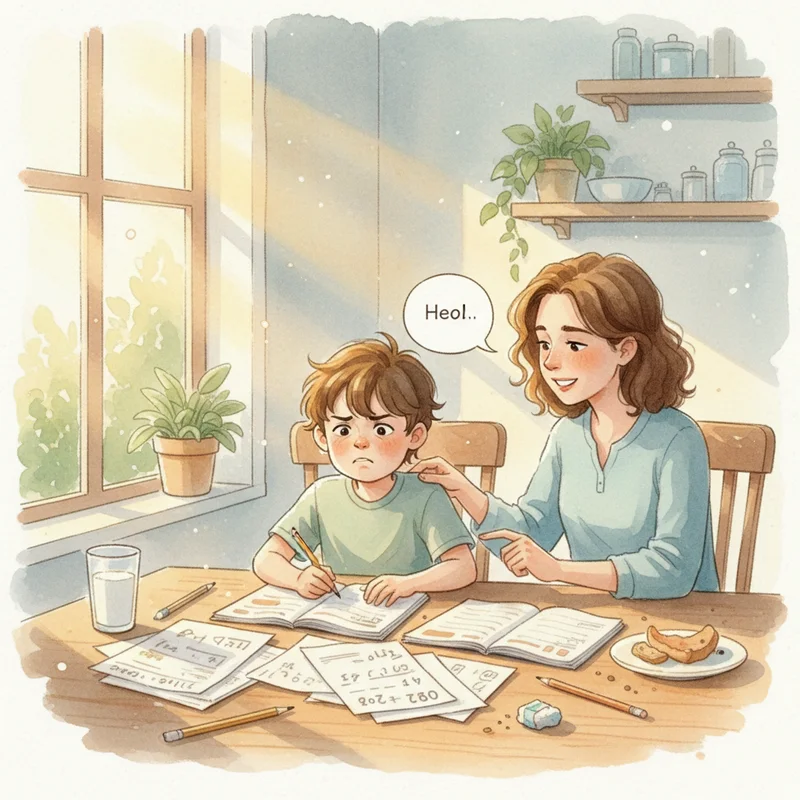
What Unmotivated Behavior Really Looks Like in the Classroom
Teachers might see your child:
- Staring at blank worksheets — not defiance, but genuine inability to start without external dopamine support
- Starting tasks but never finishing — the dopamine reward faded before completion
- Only working when teacher is right there — using the teacher's attention as immediate dopamine fuel
- Hyperfocusing on "fun" assignments — but unable to access that same focus for routine work
When Oliver's teacher told me he "only works when I stand right behind him," I realized she was unknowingly providing the dopamine boost his brain needed to initiate tasks.
How to Explain ADHD Motivation to Teachers
I've learned to frame it this way: "Oliver's brain works like a car with a faulty ignition. The engine is fine, but it needs a jump-start every time. Once it's running, he can go just as fast and far as any other kid."
Here's the script that changed my relationship with Oliver's teachers:
"I understand it looks like Oliver doesn't care about his work. What's actually happening is his brain processes motivation differently due to ADHD. He needs more immediate, concrete rewards to get started on tasks. Once he starts, he can do the work — it's the initiation that's neurologically difficult for him."
I also share the effort paradox that teachers miss — ADHD kids are often trying harder than anyone else in the room, just to achieve basic task initiation.
Accommodations That Work With (Not Against) ADHD Dopamine
These classroom modifications recognize the neurological reality:
- Break large assignments into micro-tasks with immediate check-ins after each piece
- Provide choice in order of completion — let them start with the most interesting part
- Use timers and visual progress tracking — making progress concrete and visible
- Offer fidget tools or movement breaks — increasing overall dopamine availability
- Create "dopamine bridges" — pairing required tasks with immediately rewarding elements
The key is understanding that ADHD brains need different dopamine support to access the same motivation neurotypical kids take for granted.
Parent Training — Limited Spots
Build Your ADHD Child's Intrinsic Motivation at Home
Learn the dopamine-based strategies that actually work to help your child develop genuine motivation and task initiation skills.
87 of 100 spots taken · 9 video modules · $9.99 trial
START YOUR $9.99 TRIAL →Building Intrinsic Motivation That Actually Sticks
The goal isn't to make your child neurotypical — it's to help them understand their brain and develop systems that work with their neurology, not against it.
At home, we started celebrating "attempt victories" as much as completion victories. Oliver learned that his brain needs different fuel, and that doesn't make him broken or lazy.
We also discovered that the dopamine dependency I accidentally created could be gradually transferred to external systems and eventually internalized.
The teacher who once saw "unmotivated" behavior now understands she's looking at a child whose brain needs different neurological support to access the same drive that comes naturally to others.
Your child isn't unmotivated. Their motivation system just works differently — and once you understand that difference, everything changes.
Is your child's motivation struggle actually ADHD-related?
Take our free assessment to understand what's really behind their "unmotivated" behavior and get personalized strategies that work with their brain, not against it.
TAKE THE FREE ASSESSMENT →
