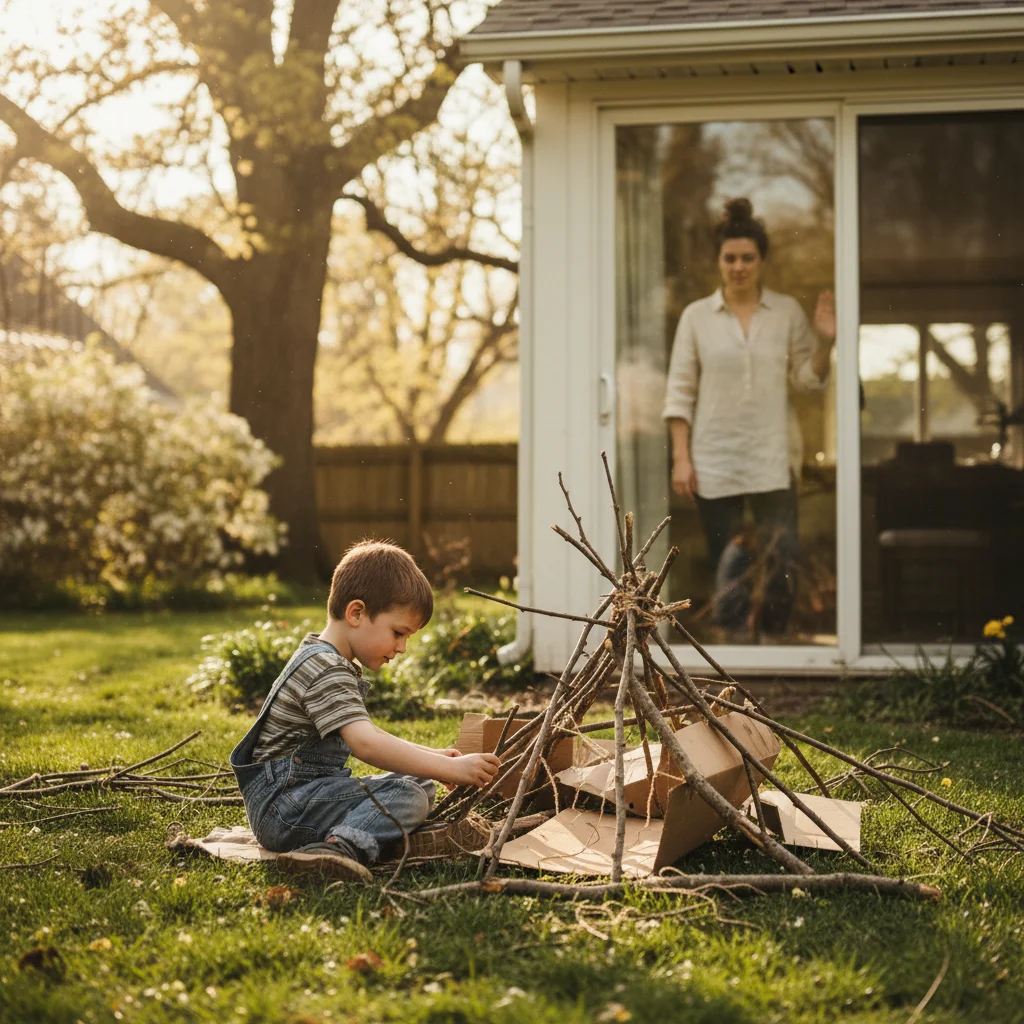
Every Saturday morning for two years, I had a plan for Oliver. A color-coded one. Breakfast at 8, outdoor time at 9, structured play at 10, lunch at 11:30 — you know the drill. I told myself it was for him. Honestly, it was for me. Because an unscheduled ADHD kid and an unscheduled ADHD mom is a recipe for a meltdown before noon.
Then last spring, when Oliver was 8, I ran out of plan. I was sick. The schedule fell apart. And I watched what happened when I just... let him go.
What I saw that weekend quietly rearranged everything I thought I knew about ADHD kids and unstructured time.
What actually happened when there was no plan
Hour one was chaos. Classic, expected chaos. Oliver spun through the house like a pinball — kitchen, living room, his room, back to the kitchen. He asked me what to do approximately eleven times in forty minutes.
I kept saying: "It's a free morning. Whatever you want."
He did not know what to do with that.
This is the part nobody tells you: ADHD kids who've lived inside a tight structure often lose their "boredom navigation" skills entirely. When there's no external prompt — no adult saying "now it's time for X" — their brain has to generate its own dopamine-seeking direction. And that takes practice they haven't gotten.
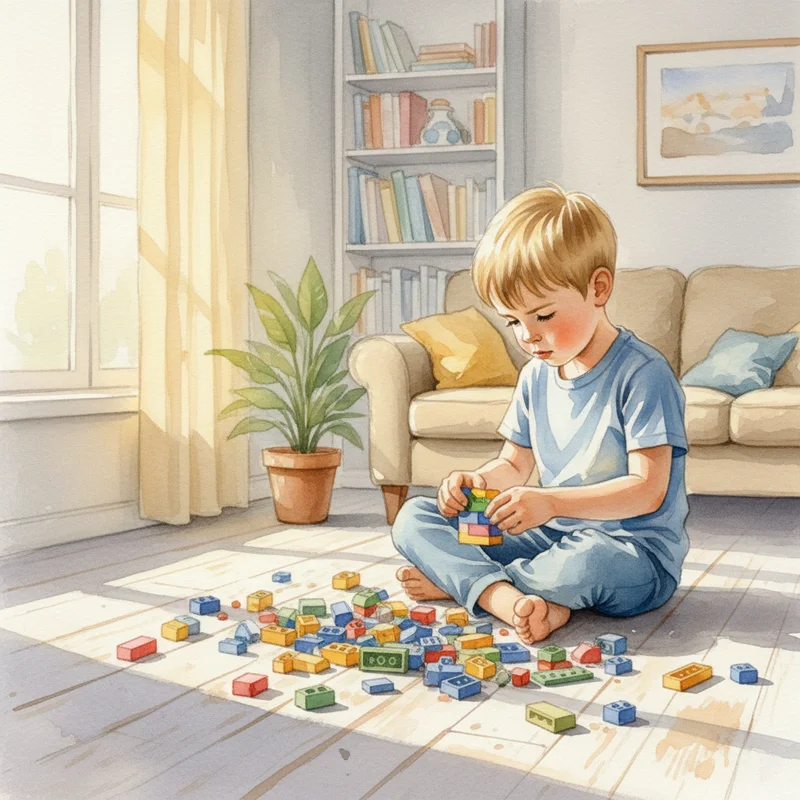
Around hour two, something shifted. He dragged out a bin of Legos he hadn't touched in months, sat down on the floor, and disappeared into them for 90 minutes straight. No prompting. No redirection. Total absorption.
I almost interrupted him to stick to the schedule. I'm so glad I didn't.
The meltdown I expected — and the one I didn't
By early afternoon, I was bracing for the crash. Unstructured time + ADHD + a tired kid usually adds up to a meltdown that looks nothing like what you'd expect.
The crash I expected — from overstimulation and no external regulation — never came.
The meltdown I didn't see coming happened at 2 PM when I announced we needed to leave for a birthday party. Transition. That was the trigger. Not the unstructured time itself — but the abrupt end of it.
I've written before about how ADHD kids can't handle sudden changes in plans — and this was a textbook example. He'd finally found his groove, and I yanked him out of it with zero warning.
The lesson wasn't "don't give him free time." The lesson was: free time needs a soft ending, not an abrupt one. A 10-minute heads-up. A transition ritual. Something to bridge the gap between his world and mine.
What his choices told me about what his brain actually needs
Over the rest of that weekend, I kept a mental note of what Oliver chose when nothing was imposed.
He built with Legos. He drew elaborate maps of imaginary places. He set up an "obstacle course" in the backyard using every cushion we own. He did not, notably, gravitate toward the TV on his own — he only asked for screens when he was bored and didn't know what else to do.
That last part matters. Screen time and ADHD unstructured time aren't the same thing, even though they look the same from across the room. One is a passive dopamine drip. The other is genuine self-direction.
When Oliver is truly free — not bored, but genuinely free — he seeks out high-input, self-paced, creative activities. Heavy play. Building. Physical challenges he sets for himself.
The screen only appears when he can't find the bridge to that kind of activity on his own. Which is an executive function problem, not a laziness problem. Understanding that distinction changed how I parent the "I'm bored" moments entirely. (More on that in a minute.)
If you're watching your child collapse into screens every weekend, it might be worth asking whether the issue is the screen — or whether their brain is struggling to self-generate direction. ADHD kids aren't lazy. They're understimulated in a way that makes self-starting incredibly hard.
How I rebuilt our weekend with just enough structure
I didn't throw the schedule out entirely. I compressed it.
What used to be a color-coded hour-by-hour plan became what I now call "anchor activities" — two or three fixed points in the day that the rest floats around.
Saturday morning anchor: one outdoor activity, chosen by Oliver on Friday night. He picks it, he owns it, he's bought in before Saturday even starts.
Midday anchor: lunch together, no screens, same time every week. This is the regulation reset — food, connection, predictability.
Afternoon: completely open. No plan. Whatever he finds.
This structure does two things. It gives his brain enough predictability to feel safe — which matters enormously for kids whose nervous systems are chronically dysregulated. And it gives him enough open space to practice self-direction without drowning in it.
The anchor activity method also eliminated most of our weekend transition meltdowns. When Oliver knows what's coming and had a hand in choosing it, the transition into it is dramatically smoother. The 30-second transition window still matters — I still give warnings — but the meltdowns went from five days a week to maybe one.
For routines and transitions specifically, I've also found that having an outside system helps — not just my reminders, but something that works on his brain's regulation directly. If you're in that boat, the ADHD supplements guide is a good starting point for understanding what options parents are actually using.
What I wish I'd known before I tried this
The experiment wasn't a cure. There are still weekends that blow up completely — usually when Oliver is already depleted from a hard school week. If your child is running on empty from ADHD burnout, unstructured time doesn't restore them. It just exposes how empty the tank already was.
Would I do it again? Yes. With these caveats:
- Start the transition out of free time 10-15 minutes early, not 2 minutes early.
- Watch what they choose — it tells you more about their sensory and dopamine needs than any assessment will.
- Screen time is not free time. It's avoidance. The distinction matters.
- Some kids need a "launch pad" — one activity already set up and waiting — before they can find their own direction. Oliver does better when I leave Legos out on the table Friday night.
The thing I most wish I'd known: my tight schedule wasn't helping Oliver regulate. It was helping me avoid the discomfort of watching him struggle to regulate. Those are two very different things.
Letting him struggle a little — with support nearby — is where the actual growth happened.
Parent Training — Limited Spots
Stop Managing the Schedule. Start Building the Brain.
If weekend chaos feels like a symptom of something deeper, this 9-module training helps you understand what's driving your child's dysregulation — and build routines that actually stick.
87 of 100 spots taken · 9 video modules · $9.99 trial
START YOUR $9.99 TRIAL →Is your child's weekend falling apart for a reason you haven't identified yet?
A free 2-minute assessment can help you understand what's driving the chaos — and what kind of support your child's brain actually needs.
TAKE THE FREE ASSESSMENT →

