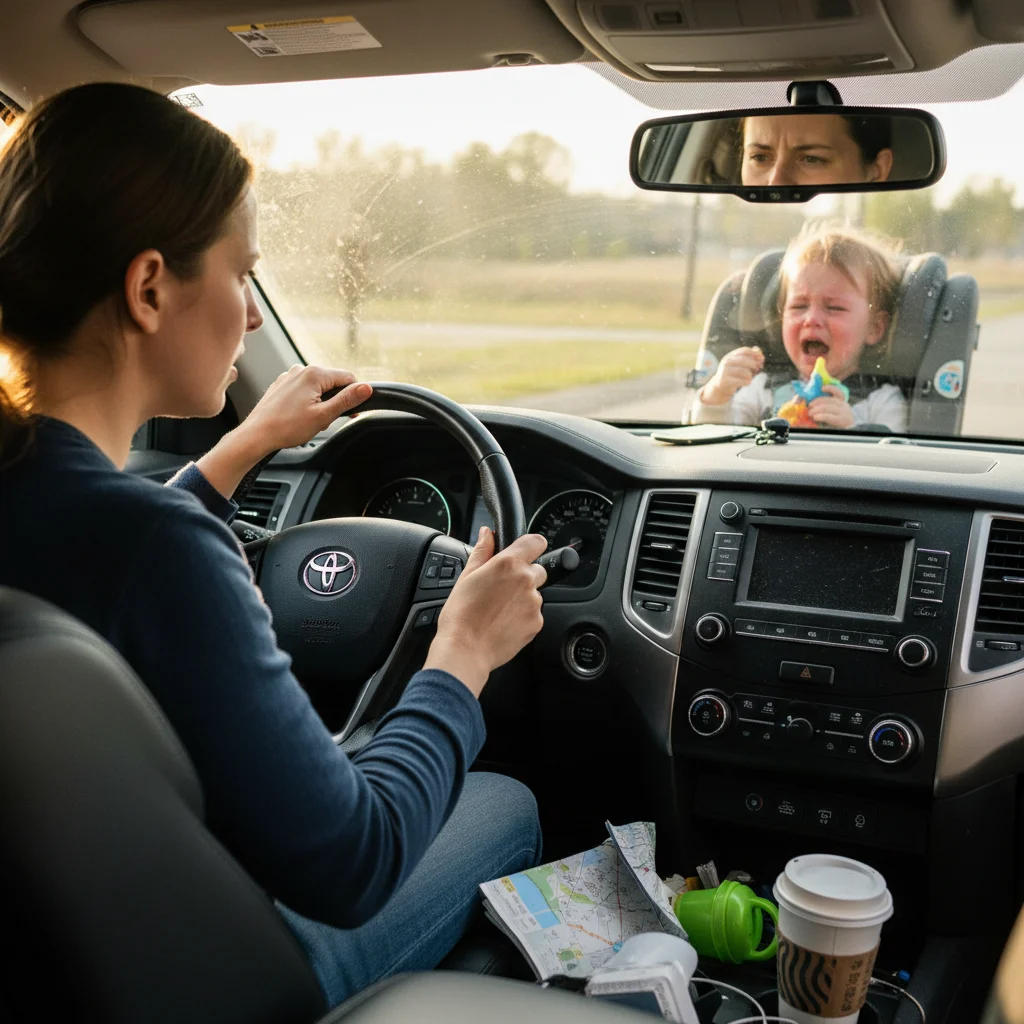
The car door slammed shut. We were fifteen minutes into our drive to my sister's house when my daughter exploded. Not a tantrum — exploded. She started hitting me from the backseat while I was doing 70 mph on the highway.
I pulled over, shaking. This wasn't defiance or bad behavior. This was something else entirely — something I didn't understand until I learned about the ADHD brain's relationship with confined spaces and sensory overload.
Why Confined Spaces Trigger ADHD Fight-or-Flight Responses
Your child's violent car episodes aren't behavioral problems. They're neurological responses to a perfect storm of sensory triggers that their ADHD brain can't filter or regulate.
When an ADHD brain gets overwhelmed, it activates the amygdala — the brain's alarm system. This triggers a flood of norepinephrine, putting your child into fight-or-flight mode. Except they can't flee — they're trapped in a car seat.
So they fight. Against you. Against the constraints. Against the overwhelming sensory input they can't escape.
This isn't bad behavior — it's brain chemistry responding to environmental triggers that neurotypical kids can easily ignore.
The Sensory Overload Cascade in Moving Vehicles
Cars are sensory nightmares for ADHD kids. Here's what's happening in their nervous system:
Visual bombardment: Objects whipping past windows create constant motion that the ADHD brain struggles to filter. Their visual processing system gets overwhelmed trying to track everything.
Auditory chaos: Engine noise, road sounds, music, conversation — all competing for attention. The ADHD brain can't prioritize which sounds to focus on, creating cognitive overload.
Temperature fluctuations: Air conditioning, sunlight through windows, body heat in confined spaces. These temperature changes trigger additional stress responses.
When these sensory inputs pile up faster than their brain can process them, the result is a meltdown that looks like violence but is actually a neurological crisis.
How Vestibular Processing Issues Amplify Car Ride Chaos
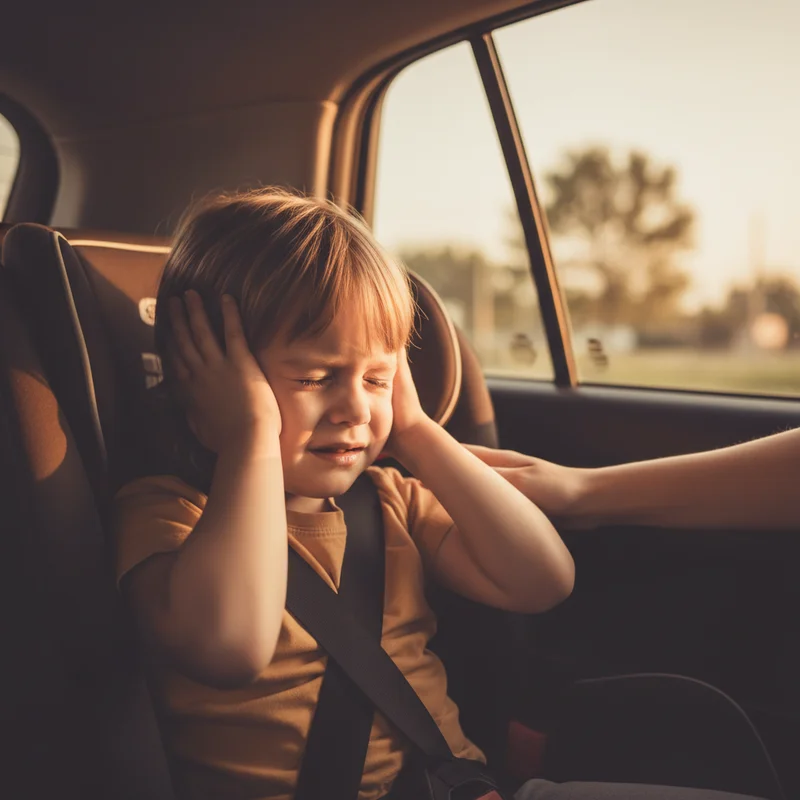
Most parents don't realize that ADHD often comes with vestibular processing challenges. The vestibular system — located in your inner ear — helps your brain understand movement and spatial orientation.
For ADHD kids, car movement can trigger vestibular dysfunction. Their brain gets conflicting signals: "I'm moving fast" from their inner ear, but "I'm sitting still" from their body position.
This sensory confusion overloads their system, often causing:
- Nausea and motion sickness
- Dizziness and disorientation
- Panic responses to turns and stops
- Need to grip, hit, or press against surfaces
When they can't resolve this vestibular conflict, their nervous system defaults to fight-or-flight — and violence becomes their brain's way of trying to regain control.
The Proprioceptive Need That Makes Sitting Still Torture
ADHD brains have an intense need for proprioceptive input — deep pressure and heavy work that helps them know where their body is in space. Car seats prevent this input.
Think about it: your child is strapped down, unable to move freely, getting no proprioceptive feedback from their environment. For an ADHD nervous system, this feels like sensory starvation.
The same proprioceptive need that makes sitting still at dinner impossible becomes amplified in cars because they literally can't move.
Their hitting, kicking, and thrashing isn't aggression — it's their nervous system desperately seeking the deep pressure input it needs to regulate.
"When ADHD kids get violent in cars, they're not trying to hurt you. They're trying to feel their body in space and calm their overwhelmed nervous system."
Immediate Safety Strategies for Violent Car Episodes
When your child becomes violent in the car, your first priority is safety. Here's what actually works:
Pull over immediately. Don't try to manage the meltdown while driving. Find a safe place to stop.
Stay calm and quiet. Your child's nervous system is in crisis. Adding your stress or voice will escalate the situation. I learned this the hard way — silence is often the fastest way to help them regulate.
Offer deep pressure. If it's safe, let them push against the seat, squeeze their hands, or give themselves a tight hug. This provides the proprioceptive input their system is craving.
Control the sensory environment. Turn off music, lower windows for fresh air, block sun with visors. Reduce every possible trigger.
Don't reason or negotiate. Their prefrontal cortex — the thinking brain — is offline during these episodes. Save explanations for later.
Pre-emptive Solutions That Work With ADHD Brain Chemistry
The key is preventing the sensory overload cascade before it starts. Here's what's worked for my family:
Prime their nervous system before getting in the car. Five minutes of heavy work — wall pushes, jumping jacks, or carrying something heavy — gives their proprioceptive system what it needs upfront.
Create a sensory toolkit for the car:
- Weighted lap pad for deep pressure
- Noise-canceling headphones
- Sunglasses to reduce visual overload
- Fidget toy that provides resistance
Plan shorter trips initially. Build their tolerance gradually. A successful 10-minute car ride is better than a traumatic 30-minute one.
Consider timing. ADHD brains have natural rhythm patterns. If your child is most regulated in the morning, schedule important car trips then.
Address the underlying brain chemistry. These meltdowns often indicate that your child's nervous system is chronically dysregulated. Supporting the four key neurotransmitter pathways — dopamine, serotonin, GABA, and norepinephrine — can reduce the frequency and intensity of these episodes.
When to Consider This a Sign for Additional Support
If car violence is becoming a regular pattern, it's often a sign that your child's nervous system needs more comprehensive support.
Consider professional help when:
- Car episodes happen more than once a week
- The violence is escalating in intensity
- Your child can't calm down within 20 minutes of stopping
- You're avoiding necessary trips because of car behavior
An occupational therapist who specializes in sensory processing can help identify specific triggers and create a regulation plan. They can also assess whether your child would benefit from a different car seat setup or positioning.
If your child is already on medication but still having these episodes, it might indicate that their current treatment isn't addressing all four neurotransmitter pathways involved in regulation.
The 2019 study by Baziar and colleagues in the Journal of Child and Adolescent Psychopharmacology found that supporting multiple brain pathways simultaneously — rather than just one — led to better overall regulation and fewer crisis episodes.
Remember: your child isn't choosing to be violent in the car. Their nervous system is overwhelmed, and they need your help learning how to regulate it. With the right support and strategies, car rides can become peaceful again.
Parent Training — Limited Spots
Tired of Walking on Eggshells Around Meltdowns?
Licensed therapist Anneliese teaches a step-by-step framework for managing ADHD meltdowns, building connection, and ending the daily battles. 9 video modules parents are calling life-changing.
87 of 100 spots taken · 9 video modules · $9.99 trial
START YOUR $9.99 TRIAL →Is your child's nervous system chronically overwhelmed?
Take our free 2-minute assessment to discover which of the four key brain pathways might need support in your child.
TAKE THE FREE ASSESSMENT →

