
The word "no" hits your ADHD child like a physical blow. Their face twists, fists clench, and suddenly you're dodging thrown objects or being hit yourself. You brace for impact every time you need to deny a request, wondering how such a simple word can trigger such explosive violence.
This isn't defiance or bad behavior—it's your child's brain experiencing what researchers call a dopamine crash. And once you understand the neurological mechanism behind it, everything changes about how you approach these moments.
Why the ADHD Brain Perceives 'No' as a Threat
ADHD brains run on dopamine like cars run on gas. When your child anticipates something they want—screen time, a snack, a toy—their dopamine levels spike in anticipation. That's normal. But here's where ADHD makes it complicated: their baseline dopamine is already lower than neurotypical brains.
When you say "no," you're not just denying their request. You're triggering a neurochemical crash that feels physically painful to their brain. The dopamine they were anticipating doesn't just disappear—it plummets below their already-low baseline, creating what feels like withdrawal.
This is why your child might react to "no more video games" the same way someone might react to being physically injured. To their brain, it is injury.
The Four-Pathway Meltdown That Follows
When that dopamine crash hits, it doesn't happen in isolation. It triggers a cascade across all four major neurotransmitter pathways in your child's brain:
Dopamine pathway: The initial crash leaves them unable to find motivation or see any positive future outcome. Everything feels hopeless.
Serotonin pathway: Mood regulation goes offline. They can't modulate their emotional response or think rationally about the situation.
GABA pathway: Their brain's natural calming system shuts down. They physically cannot self-soothe or regulate their arousal level.
Norepinephrine pathway: Fight-or-flight kicks in at full intensity. Their brain perceives your "no" as a genuine threat requiring immediate defensive action.
This is why ADHD isn't bad behavior—it's brain chemistry operating exactly as it's designed to, just with different baseline levels than neurotypical brains.
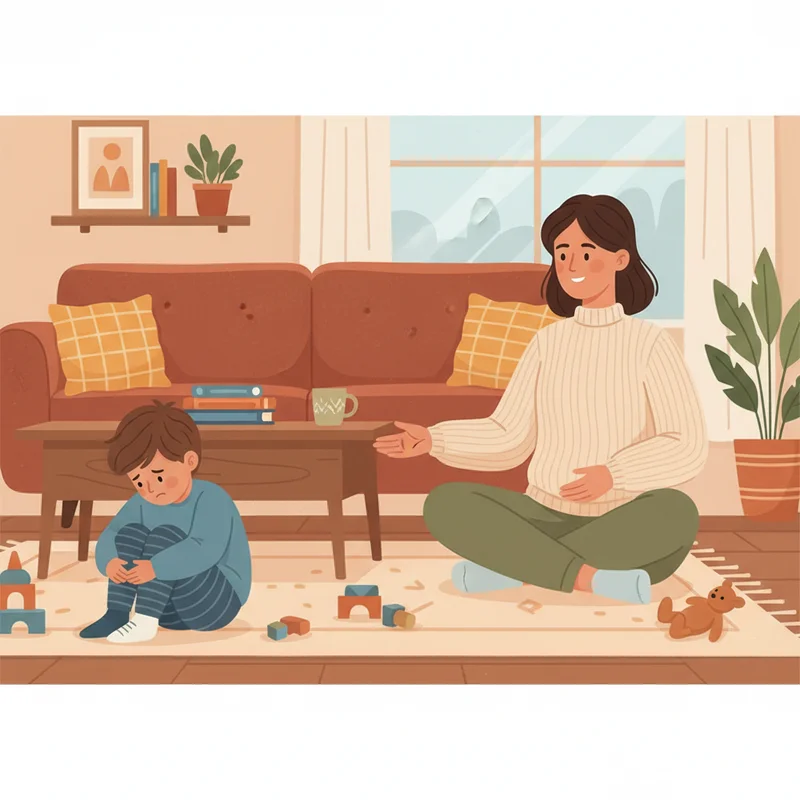
Rejection Sensitivity Dysphoria: The Hidden Amplifier
Many ADHD children also experience rejection sensitivity dysphoria (RSD)—an extreme emotional reaction to perceived rejection or criticism. When you say "no," their brain doesn't just register disappointment. It interprets your refusal as evidence that you don't love them, that they're fundamentally flawed, or that they're in genuine danger of abandonment.
This amplifies the dopamine crash exponentially. Now they're not just dealing with neurochemical withdrawal—they're fighting for their emotional survival. The violence isn't directed at you personally; it's their brain's desperate attempt to fight off what feels like a life-threatening rejection.
Understanding this doesn't excuse the behavior, but it explains why traditional consequences often backfire. You can't punish a brain out of a neurochemical crisis.
The Saffron Research That Changes the Game
Here's where the science gets hopeful. A 2019 clinical study published in the Journal of Child and Adolescent Psychopharmacology found that saffron extract worked on all four neurotransmitter pathways simultaneously—dopamine, serotonin, GABA, and norepinephrine. The research showed saffron was comparable in effectiveness to methylphenidate (Ritalin) for ADHD symptoms, but without the side effects.
What makes this relevant to violent reactions to "no" is that saffron appears to stabilize baseline dopamine levels and support the brain's natural ability to regulate emotional responses across all four pathways. When these systems are better supported, children show improved frustration tolerance and emotional regulation.
This is different from single-pathway supplements like magnesium, which alone won't fix your child's meltdowns because it only addresses the GABA system. Violence in response to "no" requires support for all four neurotransmitter pathways simultaneously.
Strategies That Work Before the Explosion Happens
While you're addressing the underlying brain chemistry, these practical strategies can help prevent violent reactions:
- The "dopamine bridge": Before saying no, offer a specific alternative that provides dopamine. "No more iPad right now, but yes to picking the movie we watch after dinner."
- Delay the crash: "I need to think about that request. Let's talk about it in five minutes." This prevents the immediate anticipatory spike and crash.
- Validate the neurochemical experience: "I can see your brain is having a really hard time with this news. That makes sense."
- Provide GABA support in the moment: Deep pressure hugs, weighted blankets, or deep pressure therapy techniques can help engage their calming system.
Remember, these strategies work best when the underlying brain chemistry is supported. Punishment doesn't work for ADHD kids because you're trying to reason with a brain in neurochemical crisis.
When to Seek Additional Professional Support
If your child's violent reactions to "no" include genuine aggression toward siblings, if you're afraid for your safety or theirs, or if your ADHD child hits you regularly, it's time for professional intervention.
A pediatric psychiatrist familiar with ADHD can help assess whether additional support is needed beyond natural interventions. Sometimes the brain chemistry imbalance is severe enough to require multiple approaches working together.
You're not failing as a parent if you need professional help. You're being a good parent by recognizing when your child's brain needs more support than you can provide alone.
Parent Training — Limited Spots
Tired of Walking on Eggshells Around Meltdowns?
Licensed therapist Anneliese teaches a step-by-step framework for managing ADHD meltdowns, building connection, and ending the daily battles. 9 video modules parents are calling life-changing.
87 of 100 spots taken · 9 video modules · $9.99 trial
START YOUR $9.99 TRIAL →Is your child's brain chemistry causing explosive reactions to "no"?
Take our free assessment to understand what's happening in your child's brain and get personalized recommendations for natural support.
TAKE THE FREE ASSESSMENT →
