
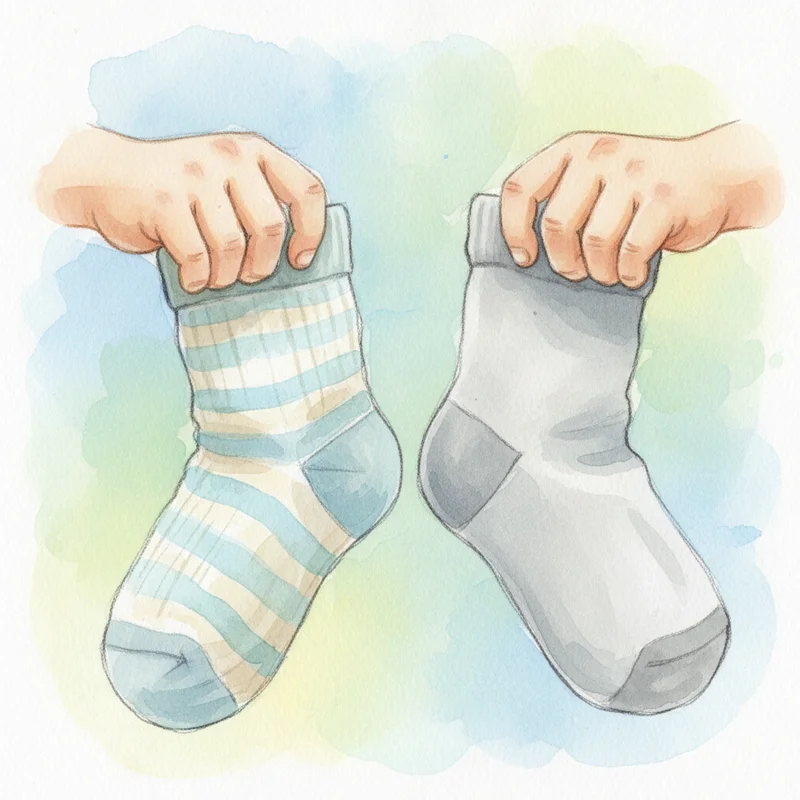
It was 7:23 AM on a Tuesday when my 8-year-old son Jake threw his sneaker at the wall with such force it left a dent. The crime? I'd given him striped socks instead of solid ones.
What followed wasn't just a tantrum — it was full-blown violence. Kicking, screaming, throwing anything within reach. All because of socks. If you're reading this wondering why your ADHD child goes from zero to volcanic over something as simple as clothing texture, you're not alone — and more importantly, you're not failing as a parent.
What I learned that morning changed everything about how I understand my son's brain. This wasn't about being "difficult" or "spoiled." This was neurology in action.
Why I Initially Blamed It on 'Being Difficult'
For months, I chalked up Jake's clothing battles to typical kid stubbornness. He'd refuse certain shirts, have meltdowns over jeans, and yes — violent outbursts over the "wrong" socks.
Everyone had opinions. "He's just testing boundaries." "You're being too permissive." "Kids need to learn they can't always get their way."
I tried everything the parenting books suggested. Consequences, rewards, "natural consequences." Nothing worked. In fact, the harder I pushed, the more explosive his reactions became. I was starting to think I was raising a child who simply couldn't handle not getting his way.
But here's what I wish someone had told me earlier: ADHD isn't bad behavior — it's brain chemistry, and sensory processing issues are often the hidden trigger behind what looks like defiance.
The Sensory Processing Connection I Never Understood
After that particularly brutal sock incident, I finally reached out to Jake's occupational therapist. What she explained blew my mind.
"His nervous system is processing that sock texture as if it's sandpaper on open wounds," she said. "The violent reaction isn't behavioral — it's neurological self-protection."
Children with ADHD often have sensory processing differences that make certain textures, sounds, or sensations feel genuinely painful or overwhelming — not just uncomfortable.
Suddenly, everything clicked. Jake wasn't being dramatic about the striped socks. His brain was literally interpreting the texture as a threat. The violence was his fight-or-flight response kicking in.
How Texture Sensitivity Triggers the ADHD Fight-or-Flight Response
Here's the science that changed how I parent: ADHD brains have differences in how they process sensory information, particularly through the tactile system.
When Jake put on those striped socks, his nervous system didn't just notice the texture — it perceived it as a threat. This triggered his sympathetic nervous system (fight-or-flight mode), flooding his body with stress hormones.
The result? His rational, thinking brain went offline. The emotional, reactive brain took over. That's why reasoning with him in that moment was impossible — he was literally in survival mode.
This connects directly to the four brain pathways that are often imbalanced in ADHD:
- GABA pathway — Can't self-soothe when overstimulated
- Serotonin pathway — Mood regulation crashes under sensory stress
- Dopamine pathway — Can't access logical thinking during overwhelm
- Norepinephrine pathway — Stress response goes into overdrive
Understanding this helped me realize that his sensory reactions weren't defiance — they were neurological overload.
The Neurochemical Cascade That Turns Discomfort Into Rage
The OT explained what happens in Jake's brain when he encounters problematic textures:
Step 1: Sensory receptors in his skin detect the texture and send signals to his brain.
Step 2: His sensory processing system misinterprets this as threatening input.
Step 3: The amygdala (alarm system) triggers fight-or-flight.
Step 4: Stress hormones flood his system — cortisol, adrenaline, norepinephrine.
Step 5: The prefrontal cortex (logical thinking) goes offline.
Step 6: He's now operating from pure emotion and instinct.
This isn't a choice. It's not manipulation. It's his nervous system doing exactly what it's designed to do when it perceives danger — even if that "danger" is just sock texture.
What I Learned About Proprioceptive Needs and Morning Routines
The breakthrough came when the OT introduced me to proprioception — our body's sense of where we are in space. Many ADHD kids have proprioceptive needs that must be met before they can handle other sensory input.
We started incorporating "heavy work" into Jake's morning routine before he even attempted getting dressed:
- 10 jumping jacks
- Push-ups against the wall
- Carrying his heavy backpack around the house
- Deep pressure hugs
This proprioceptive input helped regulate his nervous system, making him better able to tolerate clothing textures. It was like giving his sensory system the input it craved first, so it could handle other sensations more calmly.
Just like kids who struggle with getting dressed, Jake needed his sensory system prepared before tackling clothing challenges.
The Sock Solutions That Eliminated Our Morning Battles
Once I understood the neurological basis, I stopped fighting the sock sensitivity and started working with it:
Seamless socks only. We found brands with flat toe seams that didn't create pressure points.
Same texture, multiple pairs. When we found socks that worked, I bought 20 identical pairs.
Let him pick the night before. Choice gave him control when his nervous system was calmer.
Backup plan in his backpack. Tolerable socks stayed in his school bag in case morning choices didn't work.
The violence stopped almost immediately. Not because his sensitivity disappeared, but because we stopped triggering his fight-or-flight response every morning.
How Addressing Sensory Needs Improved His Overall ADHD Symptoms
Here's what surprised me most: when we addressed Jake's sensory processing needs, his other ADHD symptoms improved too.
Less sensory overwhelm meant his nervous system spent less time in fight-or-flight mode. This allowed his other brain pathways to function better. His focus improved. His emotional regulation got stronger. Even his hyperactivity decreased.
It made me realize how interconnected everything is in the ADHD brain. When kids throw things during overwhelm, it's often the same proprioceptive seeking behavior we saw with the sock sensitivity.
Supporting the sensory system doesn't just solve sensory problems — it supports the whole child's ability to function and learn.
The morning that started with violence over striped socks taught me that sometimes the solution isn't changing the child's behavior — it's understanding what their behavior is trying to tell us about their neurological needs.
Your child's sensory reactions aren't defiance. They're communication. And once you understand the language, everything changes.
Parent Training — Limited Spots
Tired of Walking on Eggshells Around Meltdowns?
Licensed therapist Anneliese teaches a step-by-step framework for managing ADHD meltdowns, building connection, and ending the daily battles. 9 video modules parents are calling life-changing.
87 of 100 spots taken · 9 video modules · $9.99 trial
START YOUR $9.99 TRIAL →Is your child's behavior actually sensory overload in disguise?
Take our free assessment to discover the neurological patterns behind your child's daily struggles and get personalized strategies that actually work.
TAKE THE FREE ASSESSMENT →
