
It was the best Tuesday we'd had in months. Oliver got dressed without a fight, ate breakfast, made it to school on time. His teacher sent a smiley face in the afternoon check-in app. He did his homework without a single meltdown. We ate dinner together — as a family, at the table, like normal people.
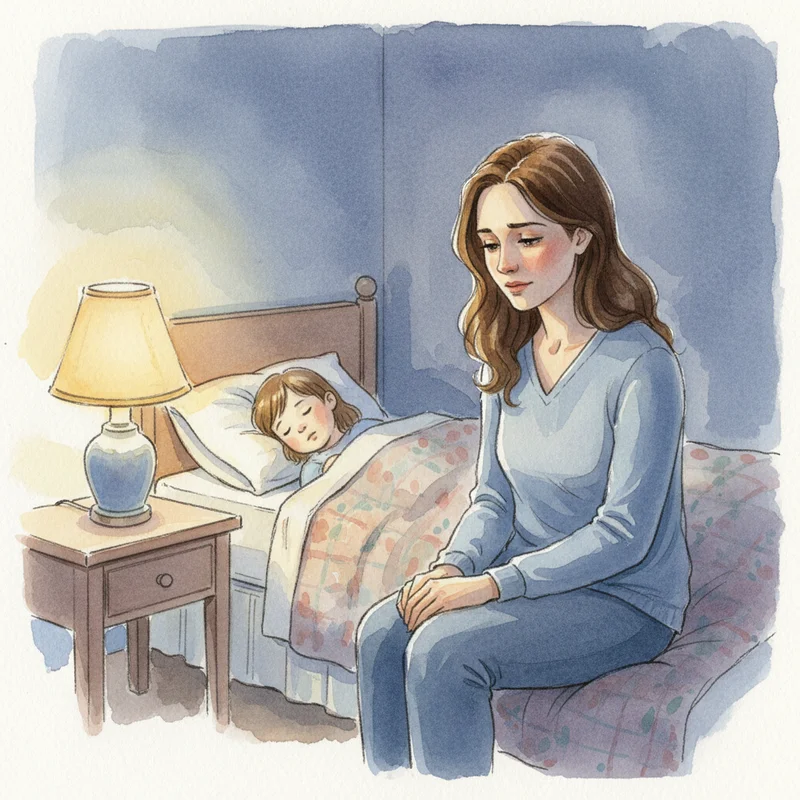
And then I sat in my car in the driveway at 8:45 PM and cried.
Not because anything went wrong. Because everything went right — and I had no idea what to do with that.
If you're reading this, I want you to know something first: you are not broken for feeling this way. The guilt you carry about your ADHD child's hard days is not evidence that you've failed. And the guilt you feel on the good ones? That's not evidence either. It's what happens when you've been in survival mode so long that peace starts to feel suspicious.
Why good days trigger ADHD parenting guilt — and why it's more common than you think
I've talked to hundreds of ADHD parents over the years, and this comes up constantly, especially among moms whose kids are on medication.
On a good day, your brain doesn't say great, enjoy this. It says: wait — why was today different? Was yesterday my fault?
That's the comparison trap, and it's brutal. Because if he can do it today, the dark thought goes, then maybe all those terrible mornings were about something I was doing — or not doing.
They weren't. ADHD isn't bad behavior — it's brain chemistry, and brain chemistry fluctuates. A good day doesn't mean the hard days were preventable. It means his nervous system happened to be regulated today. Full stop.
But knowing that intellectually and feeling it are two very different things. Especially when you've been walking on eggshells for months.
The hypervigilance hangover — why your body can't relax even when things are calm
Here's what nobody tells you about ADHD parent burnout: your nervous system adapts.
After months of bracing for the phone call, the afternoon crash, the bedtime explosion — your body learns to stay on alert. It's not weakness. It's your threat-detection system doing exactly what it was designed to do.
So when Tuesday is actually fine, your body doesn't get the memo. You're still scanning for danger. Still waiting for the other shoe. The quiet feels less like relief and more like the eerie calm before a storm.
Therapists call this hypervigilance. I call it the price you pay for loving a child whose nervous system is unpredictable.
And it's exhausting in its own way — maybe more exhausting than the hard days, because at least on the hard days you know what you're dealing with.
What I learned about grief — and the childhood I thought we'd lost
This part took me the longest to understand.
Good days used to make me grieve. Because a good day is a glimpse of the child Oliver could be — is, on good days — and that made me feel the weight of all the days he wasn't. All the birthday parties that ended in meltdowns. All the teacher calls. All the mornings I lost my patience before 8 AM.
I was grieving the childhood I expected him to have. The one I expected us to have.
That grief is real and it deserves space. ADHD parenting grief is something almost no one talks about, but it lives right underneath the guilt for most of us. You're not grieving your child — you love him fiercely. You're grieving a version of your life that didn't come to be.
The good days pry that door open. And standing in the doorway hurts.
But here's the reframe that finally helped me: good days aren't proof of what you lost. They're proof of what's still possible.
How to let a good day be just that — a script for interrupting the guilt spiral
When I notice the guilt spiral starting — when a good day is quietly becoming evidence against me — I use something I think of as the "Tuesday Rule."
It goes like this:
- Name it out loud. Even just to yourself: "I'm doing the thing where I turn a good day into a bad day." Naming it interrupts the automatic loop.
- Give the good day its own category. Don't compare it to yesterday. Don't use it to reinterpret last week. Tuesday is Tuesday. It lives alone.
- Let your body catch up. Your nervous system is still on high alert. That's okay. You don't have to force yourself to feel relaxed — just notice that the threat isn't here right now.
- Write down one specific thing that went well. Not a general "it was a good day." Something concrete: "He said please at dinner without being reminded." Specific details anchor you in the actual reality of today, rather than the spiral in your head.
None of this is magic. But it's helped me stop punishing myself for days that deserve to be celebrated.
If you're also navigating the guilt that comes from feeling like you're just surviving instead of connecting with your child, you're not alone. That's one of the quieter, harder parts of this that rarely gets named.
And if the guilt is showing up alongside full ADHD parent burnout — where even the good days feel like too much — please take that seriously. You cannot pour from an empty cup, and your child needs you regulated more than he needs you perfect.
The goal was never to have more good days. The goal was to stop being afraid of them.
When Oliver has a good day now, I try to just be in it with him. I try to let him see me smile — really smile, not the tense, braced kind. Because he's watching how I respond to good things just as closely as he watches how I respond to hard ones.
He deserves to see me let Tuesday be Tuesday.
So do you.
Parent Training — Limited Spots
When you're exhausted from just surviving — learn to actually connect again
The Unbreakable ADHD course helps burned-out parents rebuild the tools, rhythms, and emotional resilience that make good days possible — and help you actually enjoy them.
87 of 100 spots taken · 9 video modules · $9.99 trial
START YOUR $9.99 TRIAL →Is your child's brain getting the support it needs on the hard days AND the good ones?
If you're wondering whether your child's brain chemistry is playing a bigger role in the inconsistency you're seeing, this free 2-minute assessment was built for parents exactly like you.
TAKE THE FREE ASSESSMENT →

