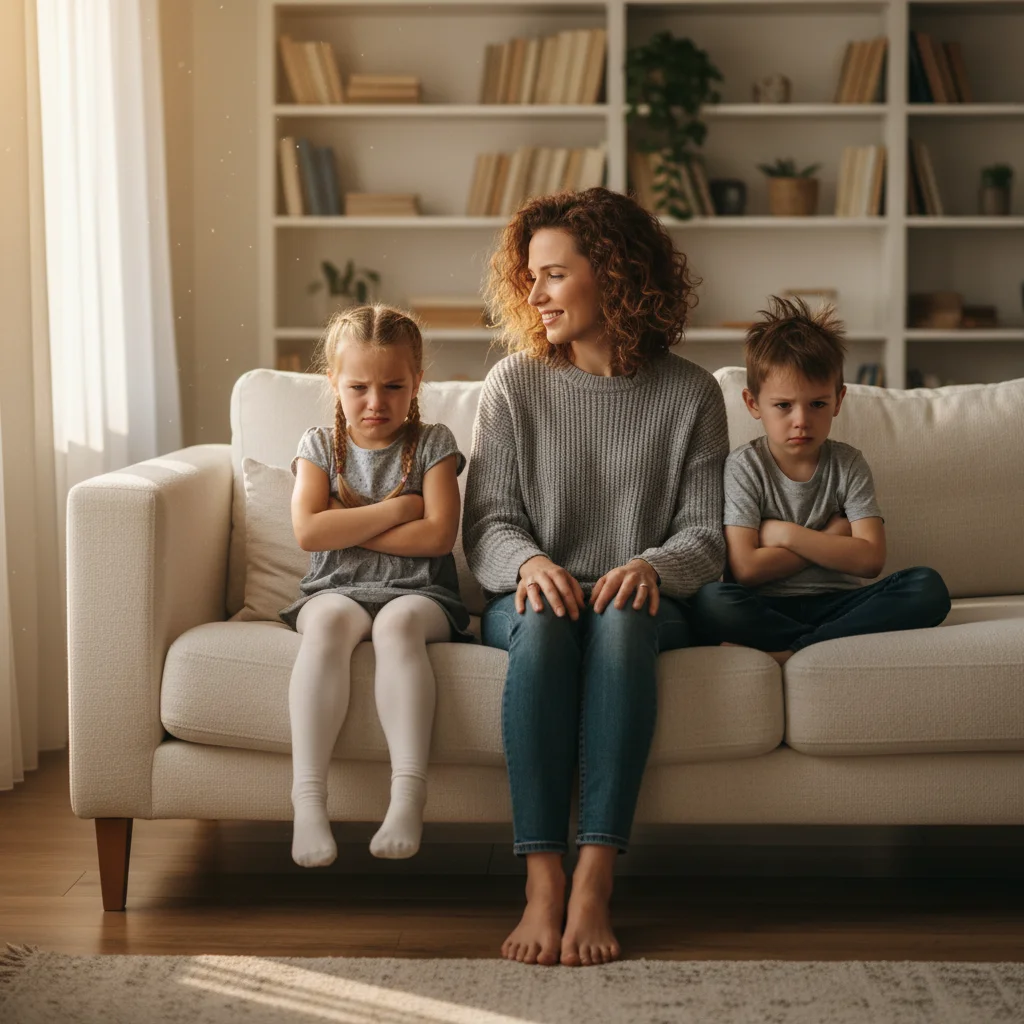
7:32 AM. My 8-year-old ADHD daughter Emma had already started three fights with her 6-year-old sister before breakfast was even on the table.
The toothbrush. The pink cup. Who got to pet the dog first. Everything became a battle zone.
I was exhausted, feeling like the world's worst mom, convinced I was raising a future sociopath. But Emma's sibling aggression wasn't a parenting failure or a character flaw — it was her ADHD brain doing exactly what it's wired to do.
The Daily Explosion That Was Tearing Our Family Apart
For eighteen months, Emma treated her younger sister Maya like a competitor for everything. Maya would walk into a room, and Emma would immediately start conflict over something — anything.
"She's touching my stuff!" "She looked at me wrong!" "She's breathing too loud!"
The fights escalated fast. Screaming, hitting, throwing toys. Maya started flinching when Emma entered rooms. I found myself constantly helicopter parenting to prevent the next explosion.
Family dinners became war zones. Car rides were torture. I dreaded weekends because it meant more time for them to be together.
Then my pediatric OT background kicked in, and I started digging into the neuroscience of what was actually happening in Emma's brain.
Why ADHD Brains See Siblings as Competition for Resources
Here's what I discovered: Emma's aggression toward Maya wasn't behavioral — it was neurological.
ADHD brains have chronically low dopamine levels. Dopamine isn't just about reward and motivation — it's also about resource allocation and threat assessment.
When Emma's brain detected Maya getting attention, affection, or even just existing in "her" space, it triggered an ancient survival response: protect your resources at all costs.
Her prefrontal cortex (the rational thinking part) couldn't override this primitive response because ADHD isn't bad behavior — it's brain chemistry.
"ADHD children often perceive their siblings as direct competitors for the dopamine-rich experiences they desperately need — parental attention, praise, novelty, and stimulation."
The Dopamine Scarcity That Fuels Sibling Aggression
Think of dopamine like fuel in your car's tank. Neurotypical brains have a full tank and efficient engines. ADHD brains have quarter-tanks and engines that burn fuel twice as fast.
When Maya got a hug from Dad or praise for cleaning her room, Emma's brain didn't think, "Good for Maya." It thought, "She got MY dopamine."
This explains why the fights were worse when:
- Maya received praise or attention
- Emma was hungry or tired (even lower dopamine)
- There was unstructured time (no external dopamine sources)
- Emma felt criticized or corrected earlier in the day
The aggression wasn't malicious. It was Emma's brain in survival mode, desperately trying to secure the neurochemical resources it needed to function.
How I Accidentally Made the Fighting Worse with 'Fairness'
My natural response was to enforce fairness. Equal praise. Equal attention. Taking turns with everything.
This backfired spectacularly because it confirmed Emma's brain's fear: resources were limited. Every interaction became a zero-sum game.
I also made the classic mistake of punishing Emma for the fights, which depleted her already-low dopamine even further. Punishment doesn't work for ADHD kids because you can't punish a neurological deficit.
The more I tried to make things "fair," the more Emma's brain perceived scarcity.
The One Change That Stopped 90% of Our Sibling Battles
The breakthrough came when I stopped trying to manage the fights and started feeding Emma's dopamine-starved brain proactively.
Individual dopamine deposits became my new strategy.
Every morning, Emma got 15 minutes of pure, unshared attention doing something that lit up her reward pathways — building with LEGOs, dancing to music, or helping me cook.
No phones. No Maya. Just Emma and something that made her brain happy.
I also implemented "dopamine preloading" before high-risk situations. Before Maya got home from preschool, Emma and I would do jumping jacks or she'd help me with a "special job" like organizing the junk drawer.
The change was immediate. When Emma's dopamine tank was fuller, Maya stopped being a threat to her resources.
When to Worry vs. When It's Just ADHD Brain Chemistry
Sibling rivalry becomes concerning when it includes:
- Intentional harm or violence
- Targeting vulnerable moments (when sibling is hurt or upset)
- Lack of remorse or empathy afterward
- Aggression toward other children outside the family
But if your ADHD child fights with siblings over resources, attention, or territory — and shows genuine remorse afterward — that's brain chemistry, not a character flaw.
Emma would always feel terrible after hurting Maya. She'd say, "I don't know why I did that" or "My brain made me mad." That remorse told me her emotional regulation pathways were intact but overwhelmed.
How Supplements Helped Balance the Emotional Dysregulation
Behavioral strategies helped enormously, but Emma's emotional volatility was still intense. Her ADHD brain needed support across multiple neurotransmitter pathways — not just dopamine.
Research on saffron caught my attention because it's the only natural supplement that works on all four key pathways: dopamine, serotonin, GABA, and norepinephrine.
Unlike magnesium, which only addresses one pathway, or omega-3s that provide general brain support, saffron research suggests it may help regulate the same neurochemical imbalances that medications target.
The 2019 clinical study showing saffron comparable to methylphenidate made me curious enough to try it alongside our behavioral changes.
Emma's emotional regulation improved noticeably within two weeks. The explosive anger mellowed into manageable frustration. She could catch herself before escalating.
Our New Family Rhythm That Actually Works
Eighteen months later, Emma and Maya are actually friends. They still have normal sibling moments, but the daily warfare stopped.
Our routine now includes:
- Morning dopamine deposit: 15 minutes of Emma's choice activity
- Preemptive regulation: Physical movement before Maya gets attention
- Individual praise: Specific recognition that doesn't create competition
- Collaborative projects: Shared goals that boost both kids' dopamine
I stopped managing fairness and started managing brain chemistry. Instead of equal attention, Emma gets the type of attention her ADHD brain needs — novelty, physical activity, and individual connection.
Maya gets her needs met too, just differently. Her neurotypical brain doesn't need the same intensity of dopamine stimulation.
The best part? Emma now advocates for Maya when other kids are mean to her at the playground. When your ADHD child's brain isn't in constant survival mode, their natural empathy emerges.
If you're living through daily sibling battles with your ADHD child, know that it's not your parenting and it's not their character. It's neuroscience — and neuroscience has solutions.
Parent Training — Limited Spots
Helping Your ADHD Child Build Real Connections
Social skills, self-esteem, and emotional regulation — the Unbreakable ADHD program covers the strategies that help ADHD kids thrive. 9 video modules from licensed therapist Anneliese.
87 of 100 spots taken · 9 video modules · $9.99 trial
START YOUR $9.99 TRIAL →Is your ADHD child's sibling rivalry actually brain chemistry?
Take our 2-minute assessment to understand what's happening in your child's brain and get personalized strategies for your family.
TAKE THE FREE ASSESSMENT →

