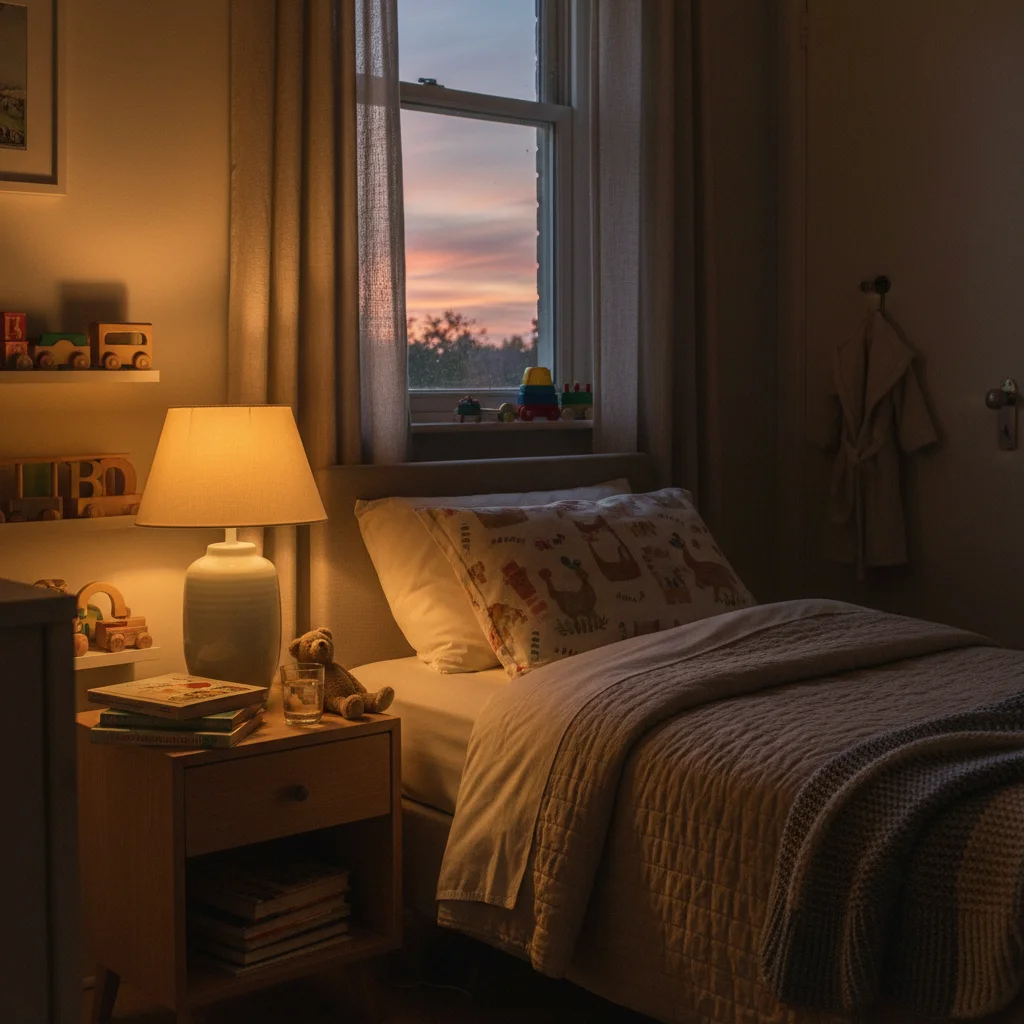
When my son's ADHD medication started wearing off around 6 PM, bedtime became our daily nightmare. He'd lie there for two hours, brain spinning like a hamster wheel, while I tried everything from weighted blankets to white noise machines.
Sound familiar? You're not alone in this struggle. Sleep issues affect up to 70% of ADHD children, and it's not because they're being defiant — their brains literally can't shut down the same way neurotypical kids' brains do.
After months of 10 PM bedtimes turning into midnight meltdowns, I decided to test the two supplements everyone keeps recommending: L-theanine and melatonin. Here's what 30 days of real-world testing taught me about ADHD sleep support.
Why We Needed Something Beyond Melatonin
I'd already tried melatonin on and off for six months with mixed results. Sure, it helped him fall asleep faster some nights, but by 3 AM he was wide awake, and mornings were brutal — groggy, cranky, impossible to wake up.
That's when I learned something crucial: melatonin only regulates sleep timing, not sleep quality. For ADHD brains that struggle with both falling asleep AND staying asleep, you need something that addresses the underlying hyperarousal.
L-theanine kept coming up in my research because it works on the GABA pathway — the brain's "brake pedal" that helps kids wind down naturally. Unlike melatonin, which is a hormone that says "it's time to sleep," L-theanine helps calm the nervous system that's keeping them wired.
Weeks 1-10: Testing L-Theanine for Bedtime Routine
I started with 100mg of L-theanine about 45 minutes before bedtime, mixed into a small cup of chamomile tea (his idea — he wanted it to feel like a "special bedtime drink").
Week 1-2: Subtle but noticeable. He wasn't bouncing off the walls during story time, and seemed more receptive to the bedtime routine instead of fighting every step.
Week 3-5: This is where I saw the real difference. He'd actually stay in bed after lights out instead of popping up fifteen times for water, bathroom trips, or "one more hug." The mental chatter seemed quieter.
Week 6-10: Consistent improvements in falling asleep (30-45 minutes instead of 90+ minutes), but he was still waking up around 2-3 AM and struggling to get back to sleep. Morning mood was much better though — no more zombie child stumbling to breakfast.
The biggest win with L-theanine wasn't faster sleep — it was calmer bedtimes. No more battles, no more tears, just a kid who could actually wind down.
Weeks 11-20: Switching to Melatonin Protocol
After the L-theanine trial, I switched to a low-dose melatonin approach: 1mg about 30 minutes before bedtime (most parents dose too high and too late, which explains the morning grogginess).
Week 11-13: Sleep onset was faster than with L-theanine — usually asleep within 20-30 minutes. But the old problems returned: middle-of-the-night wakings and morning grogginess.
Week 14-17: I experimented with timing, giving melatonin 60-90 minutes before bedtime instead of 30 minutes. This helped with the morning grogginess but didn't solve the 3 AM wake-ups.
Week 18-20: The novelty wore off. He started building tolerance, needing longer to fall asleep again, plus the daytime mood swings returned — irritable, emotional, that familiar afternoon crash extending into evening.

Weeks 21-30: The Combination Approach That Worked
Here's what finally clicked: ADHD sleep issues aren't just about sleep timing (melatonin's job) OR calming hyperarousal (L-theanine's job). It's both, plus something else entirely.
I tried combining low-dose L-theanine (50mg) with very low-dose melatonin (0.5mg) about 60 minutes before bedtime. Better, but still not addressing the core issue.
The breakthrough came when I understood that ADHD sleep struggles involve four different brain pathways that need support:
- GABA — the brake pedal for hyperarousal
- Dopamine — helps the brain feel "satisfied" enough to rest
- Serotonin — regulates the sleep-wake cycle naturally
- Norepinephrine — needs to quiet down for deep sleep
L-theanine primarily works on GABA. Melatonin works outside these pathways entirely. No wonder we weren't getting complete results.
The GABA Pathway Connection to ADHD Sleep Struggles
Here's what I wish someone had explained from the beginning: ADHD isn't bad behavior — it's brain chemistry, and nowhere is this more obvious than at bedtime.
In neurotypical kids, GABA naturally increases as bedtime approaches, acting like a dimmer switch for brain activity. But ADHD brains struggle to produce and utilize GABA effectively, leaving them in a state of constant hyperarousal.
This is why behavioral strategies alone don't work. You can have the perfect bedtime routine, blackout curtains, and white noise, but if the GABA pathway isn't functioning properly, their nervous system simply can't downshift.
L-theanine helps support GABA activity, which is why it worked better for bedtime behavior and staying in bed. But supporting just one pathway left gaps that showed up as middle-of-the-night wakings and incomplete rest cycles.
Side Effects and Morning Grogginess Comparison
L-theanine side effects: Practically none. No morning grogginess, no mood changes, no tolerance buildup. The only "side effect" was better daytime focus — turns out supporting the GABA pathway helps with more than just sleep.
Melatonin side effects: Morning grogginess was the biggest issue, even at low doses. Also noticed increased emotional sensitivity and what I can only describe as "fake tired" — his body felt sleepy but his brain was still racing.
The timing issue with melatonin is crucial: give it too late and you get morning grogginess, give it too early and it wears off before they actually fall asleep. L-theanine was much more forgiving.
Combination approach: The low doses of each seemed to minimize side effects while maximizing benefits, but it still felt like we were patching holes instead of addressing the root issue.
Why Saffron Became Our Long-Term Sleep Support Solution
Three months into this experiment, I discovered research on saffron for ADHD that changed everything. A 2019 clinical study showed saffron working on all four neurotransmitter pathways that affect both ADHD symptoms AND sleep quality.
Unlike L-theanine (primarily GABA) or melatonin (hormone regulation), saffron research suggests it may support dopamine, serotonin, GABA, and norepinephrine pathways simultaneously. This explained why single-ingredient approaches only gave us partial results.
The same study that showed saffron comparable to methylphenidate for daytime ADHD symptoms also noted improvements in sleep quality — not just sleep timing, but deeper, more restorative sleep cycles.
After six months of testing various combinations, we found that comprehensive pathway support addressed both the bedtime struggles AND the 3 AM wakings that had been plaguing us for years.
My Honest Recommendation for Other ADHD Parents
If you're choosing between L-theanine vs melatonin for ADHD sleep, here's my take after 30 days of real-world testing:
Start with L-theanine if your child's main issue is bedtime resistance and hyperarousal. It's gentler, has fewer side effects, and addresses the underlying nervous system hyperactivity that makes bedtime a battle.
Consider melatonin if sleep timing is the primary issue and your child can wind down but just can't fall asleep. Keep doses low (0.5-1mg) and time it 60-90 minutes before desired sleep time.
But honestly? Neither approach gave us the complete results we needed because single-pathway solutions aren't enough for complex ADHD brains.
The real breakthrough came when we addressed all four neurotransmitter pathways simultaneously. Better sleep, calmer bedtimes, AND improved daytime focus — because it turns out these systems are all connected.
Your child's sleep struggles aren't your fault, and they're not behavioral defiance. They're neurological differences that need the right kind of support — support that works with their brain chemistry instead of against it.
Is your ADHD child struggling with sleep issues too?
Take our free assessment to see which neurotransmitter pathways might need support for both better sleep and daytime focus.
TAKE THE FREE ASSESSMENT →

