
March 15th, 2023. I remember the exact date because it was when my ADHD son went from manageable to completely off the rails — seemingly overnight.
One day he was his usual energetic but focused self. The next morning, he was bouncing off walls, melting down over nothing, and couldn't sit still for five seconds. The trees had started blooming, and suddenly I was dealing with a child I didn't recognize.
If your ADHD child's symptoms explode every spring, you're not imagining it. And it's not your fault. There's a very real neurological reason why seasonal allergies make ADHD symptoms dramatically worse — and understanding it changes everything.
The Histamine-Brain Chemistry Connection Research Reveals
Here's what I wish someone had told me sooner: histamine isn't just about sneezing and watery eyes. It's a neurotransmitter that directly affects the same brain pathways already struggling in ADHD kids.
When your child's immune system goes into overdrive fighting pollen, it floods their system with histamine. But here's the kicker — histamine crosses the blood-brain barrier and starts wreaking havoc on dopamine, serotonin, GABA, and norepinephrine pathways.
The research on this is eye-opening. Studies show histamine acts as an excitatory neurotransmitter in the brain, increasing arousal and decreasing the ability to focus. For a child whose brain already struggles with attention regulation, it's like throwing gasoline on a fire.
"It wasn't behavioral. It wasn't defiance. His brain was literally hijacked by his own immune response to spring pollen."
How Seasonal Allergies Disrupt Dopamine and Serotonin Pathways
Let me break down what's actually happening in your child's brain when spring allergies hit. It's not just about the physical discomfort — though sensory processing issues from congestion and itchy eyes definitely make things worse.
Excess histamine interferes with dopamine production and uptake. Dopamine is your child's focus and motivation chemical — the one that's already running low in ADHD brains. When histamine blocks dopamine receptors, concentration becomes nearly impossible.
But it doesn't stop there. Histamine also triggers cortisol release, which suppresses serotonin. Less serotonin means worse mood regulation and impulse control. Suddenly, your child can't handle frustration, transitions become battles, and everything feels like a crisis.
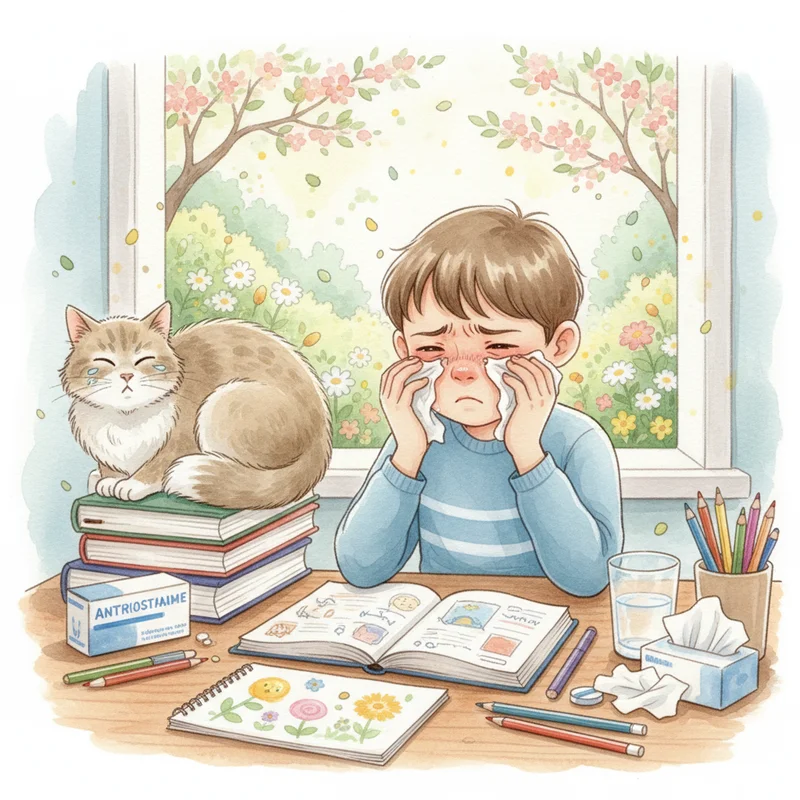
Why Traditional Allergy Medications Make ADHD Symptoms Worse
Here's where most parents (including me) make a critical mistake. We reach for Benadryl or Claritin, thinking we're solving the problem. But many traditional antihistamines can actually worsen ADHD symptoms.
First-generation antihistamines like Benadryl cross the blood-brain barrier and have sedating effects that can make focus and attention even worse. Your child might seem calmer, but their cognitive function takes a hit.
Even non-drowsy options can be problematic. Some newer antihistamines affect neurotransmitter balance in ways that compound ADHD challenges. I learned this the hard way when my son's afternoon crashes became unbearable after starting daily Claritin.
The inflammation cascade doesn't stop with histamine either. Allergic reactions trigger cytokine release, creating brain inflammation that affects executive function, working memory, and emotional regulation — exactly the areas where ADHD kids already struggle.
Creating a Spring Protocol That Addresses Both Allergic Reactions and ADHD Symptoms
After three springs of watching my son suffer, I finally figured out a protocol that addresses both the allergies AND the ADHD symptom explosion. It's not about choosing between managing allergies or managing ADHD — you need to support both simultaneously.
Natural antihistamine support became our game-changer. Quercetin, a natural flavonoid, acts as a mast cell stabilizer without the cognitive side effects of pharmaceutical antihistamines. We started giving it two weeks before pollen season and maintained it throughout spring.
But the real breakthrough came when I discovered saffron's dual action. Research suggests saffron has both antihistamine properties AND supports the same four neurotransmitter pathways affected by ADHD. A 2019 clinical study showed saffron was comparable to methylphenidate for ADHD symptoms — and it turns out it may also help modulate histamine response.
We also added omega-3s for their anti-inflammatory effects and made sure his room had a HEPA filter. But honestly, nothing made as dramatic a difference as addressing the brain chemistry piece with natural compounds that work on multiple pathways.
Is your child's spring behavior making you question everything?
Take our free 2-minute assessment to discover if histamine disruption might be affecting your child's ADHD symptoms — and what you can do about it.
TAKE THE FREE ASSESSMENT →

