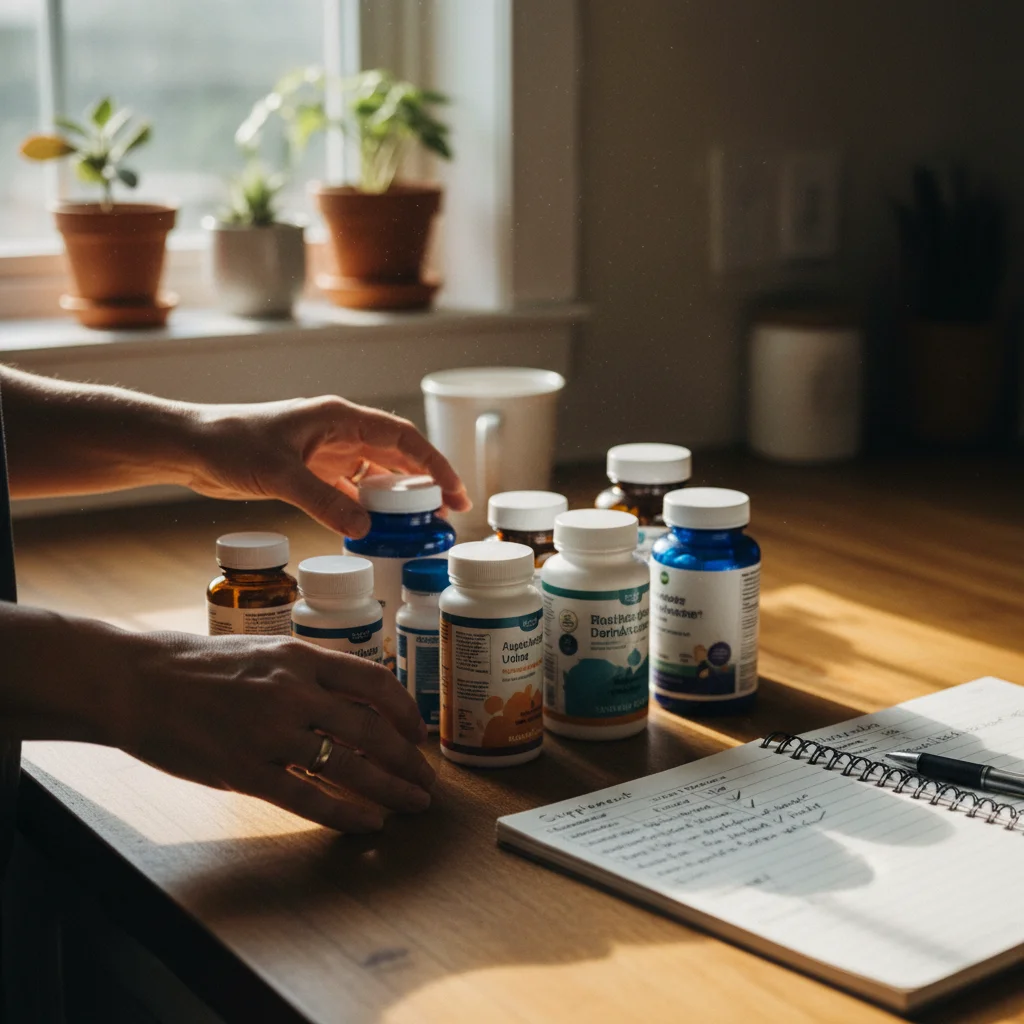
My 7-year-old son Max turns into a different kid the second he walks through our front door after school.
Not the sweet, focused child his teacher sees. The hyperactive whirlwind who bounces off walls, can't sit still for dinner, and melts down over the tiniest things until bedtime.
This isn't a parenting problem. It's your child's brain desperately trying to regulate after holding it together all day. And after spending $400+ testing every "calming" supplement on the market, I finally found what actually works.
Why I Needed Something for Max's After-School Hyperactivity Spiral
Every afternoon, like clockwork, Max would explode through our door like a pinball. Throwing his backpack across the room. Racing up and down the hallway. Unable to sit still long enough to eat a snack.
His teacher kept saying he was "such a calm, focused student" at school. But by 3 PM, his brain was fried from working overtime to regulate his ADHD symptoms all day.
I knew this wasn't bad behavior — it was brain chemistry. His hyperactivity was a sign that his neurotransmitters were completely out of whack after hours of suppressing his ADHD symptoms.
I needed something natural to help him decompress and self-regulate. So I decided to test every calming supplement the ADHD mom groups were raving about.
The 4 Calming ADHD Supplements I Tested
Here's exactly what I tried, in order, over 8 weeks:
- L-theanine: 100mg daily, supposed to promote calm focus
- Magnesium glycinate: 200mg before dinner, for relaxation and sleep
- Passionflower: Kid-friendly tincture, traditional calming herb
- Saffron: 15mg extract, the one nobody talks about
I gave each supplement 2 full weeks to work, tracking Max's afternoon hyperactivity, dinner behavior, and bedtime routine every single day.

Week 1-2: L-Theanine Results (Spoiler: Made Him More Wired)
L-theanine was supposed to be the "calm focus" miracle. Every supplement site promises it works on GABA receptors to reduce anxiety without drowsiness.
The reality? Max got MORE hyperactive.
Day 3, he was literally running laps around our dining room table during homework time. Day 7, he had his first meltdown in weeks over putting on his shoes.
Here's what I learned: L-theanine primarily targets just one neurotransmitter pathway (GABA). For kids with ADHD, that's like trying to fix a car with four flat tires by only inflating one.
Max's hyperactivity isn't just about anxiety. It's about dysregulated dopamine (can't focus), serotonin (mood swings), and norepinephrine (energy crashes) too.
Week 3-4: Magnesium Glycinate Trial
Next up was magnesium — the supplement every ADHD parent swears by. I chose glycinate because it's supposed to be the most calming form.
Good news: Max started falling asleep faster and sleeping more deeply.
Bad news: His afternoon hyperactivity didn't change at all. He was still bouncing off walls from 3-6 PM, just sleeping better afterward.
Again, single-pathway support. Magnesium primarily works on GABA receptors, which helps with sleep and general calm. But it doesn't touch the dopamine dysregulation driving his hyperactivity.
Week 5-6: The Passionflower Experiment
Passionflower was my "traditional herb" attempt. It's been used for centuries for nervous energy and restlessness, so surely it would help Max's after-school chaos.
Results? Absolutely nothing.
No change in hyperactivity. No improvement in focus. No calming effects whatsoever. It was like giving him flavored water.
Passionflower works primarily as a mild GABA enhancer, but it's nowhere near potent enough to address the neurochemical storm happening in an ADHD brain after school.
Week 7-8: Saffron — The Game-Changer Nobody Talks About
By week 7, I was ready to give up. Then I stumbled across research about saffron for ADHD symptoms.
Not just any research — a 2019 clinical trial published in the Journal of Child and Adolescent Psychopharmacology showing saffron extract was as effective as methylphenidate (Ritalin) for ADHD symptoms.
Day 3 on saffron, something shifted. Max walked in from school, dropped his backpack normally, and asked for his snack instead of ricocheting around the kitchen.
Day 10, he sat through an entire dinner without getting up once.
Day 14, his teacher mentioned he seemed "even more focused than usual" at school.
Here's why saffron worked when everything else failed: it supports all four neurotransmitter pathways that get dysregulated in ADHD brains.
Why Saffron Targets All 4 Neurotransmitter Pathways
Every other supplement I tried only worked on one pathway. Saffron is different.
Research shows saffron compounds support:
- Dopamine: Better focus and motivation (why Max could sit through homework)
- Serotonin: Mood regulation and impulse control (fewer meltdowns over small things)
- GABA: Natural calm without sedation (less hyperactivity)
- Norepinephrine: Steady energy levels (no afternoon crashes)
This is exactly what Max's brain needed after holding it together all day at school. Not just one piece of the puzzle, but comprehensive support for all the systems that get overwhelmed.
The Dosing Mistakes I Made (And How to Avoid Them)
Here's what I wish I'd known before starting this experiment:
Start lower than recommended. I began with adult doses for everything except saffron. Most ADHD kids are more sensitive to supplements than typical children.
Give it 7-10 days minimum. I was ready to quit L-theanine on day 2, but some parents see benefits take a week to appear.
Track specific behaviors, not general "improvement." Instead of "is he calmer," I tracked: sits through dinner (yes/no), homework without getting up (yes/no), bedtime routine under 30 minutes (yes/no).
Consider timing. Afternoon supplements work best given 30-60 minutes before the typical hyperactivity window starts.
Is your child struggling with afternoon hyperactivity too?
Take our free assessment to discover which brain pathways might need support for your child's specific ADHD symptoms.
TAKE THE FREE ASSESSMENT →Bottom Line: What I'd Tell Another Parent Starting This Journey
After 8 weeks and $400+ in supplements, here's my honest advice:
Most "calming" supplements for ADHD kids only address part of the problem. Single-ingredient supplements work on one neurotransmitter pathway, but ADHD affects multiple brain systems simultaneously.
Look for solutions that support comprehensive neurotransmitter balance, not just one piece. And give anything you try at least 10-14 days to work — some benefits take time to build up.
Most importantly, remember that your child's afternoon hyperactivity isn't defiance or poor parenting. Their brain is doing exactly what ADHD brains do after a day of intense regulation efforts.
You're not failing them by seeking natural support. You're being the advocate they need.


