It was June 12th when Oliver first threw his backpack across the kitchen and screamed, "I HATE summer!" I thought I'd misheard him. What kid hates summer vacation?
By day three of summer break, I understood. Without the rigid structure of school, my ADHD son was falling apart. The sleeping until 11 AM, the endless "I'm bored" complaints, the massive meltdowns over the tiniest changes in plans. It wasn't the freedom I'd expected — it was chaos.
If your ADHD child is struggling with summer break, you're not failing as a parent. Their brain literally depends on external structure to function, and when school ends, that scaffolding disappears overnight.
Why Summer Break Feels Like Chaos for ADHD Families
During the school year, your child's day is mapped out minute by minute. Bell schedules, transitions cued by teachers, predictable routines that their ADHD brain can follow without having to create structure internally.
Then summer hits, and suddenly they're expected to self-regulate through 12 hours of unstructured time. For an ADHD brain that struggles with working memory and executive function, it's like asking someone to navigate without a GPS.
In our house, the first week of summer looked like this: Oliver woke up at different times each day, spent hours in pajamas scrolling on his tablet, and had massive meltdowns over simple decisions like what to eat for lunch. Any change in plans — even good ones — triggered explosive reactions.
The constant "What are we doing today?" questions started at 7 AM and continued until bedtime. It wasn't curiosity — it was anxiety. His brain needed to know the plan to function.
The Neuroscience Behind Structure Dependency
ADHD brains have weaker executive function networks. During the school year, teachers provide the external structure that compensates for this internal deficit. When that external structure disappears, the ADHD brain goes into crisis mode.
Think of it like this: if you usually wear glasses and someone suddenly takes them away, everything becomes blurry and overwhelming. That's what unstructured time feels like for an ADHD child.
The dopamine system also gets disrupted. School provides built-in rewards and feedback loops throughout the day. Summer's open-ended time offers fewer natural dopamine hits, leaving ADHD kids feeling understimulated and seeking stimulation through behavior that looks problematic to us.
Signs Your ADHD Child Is Struggling With Unstructured Time
The signs aren't always obvious. Here's what I noticed with Oliver that summer:
- Sleep disruption: Staying up later, waking up later, or both
- Increased meltdowns: Especially over small decisions or transitions
- Constant stimulation-seeking: Screen time battles become more intense
- Emotional dysregulation: Everything feels like a bigger deal
- Sibling conflicts: Fighting increases dramatically
- Regression in skills: Things they could do during school year become difficult
The key insight: these aren't behavioral problems. They're neurological responses to structure collapse.
Creating Micro-Routines That Don't Feel Like School
After that disastrous first week, I realized Oliver needed structure, but not school-like rigidity. We created what I call "micro-routines" — small, predictable patterns that gave his brain something to follow without feeling restrictive.
Morning Anchor: We established one non-negotiable morning activity. For Oliver, it was making his bed and having breakfast at the kitchen table (not on the couch). That's it. Two predictable steps that anchored his morning.
The Three-Choice Rule: Instead of asking "What do you want to do today?" I offered three specific options. "Today we can go to the park, work on your Lego project, or bake cookies. What sounds good?" This gave him control without overwhelming his decision-making capacity.
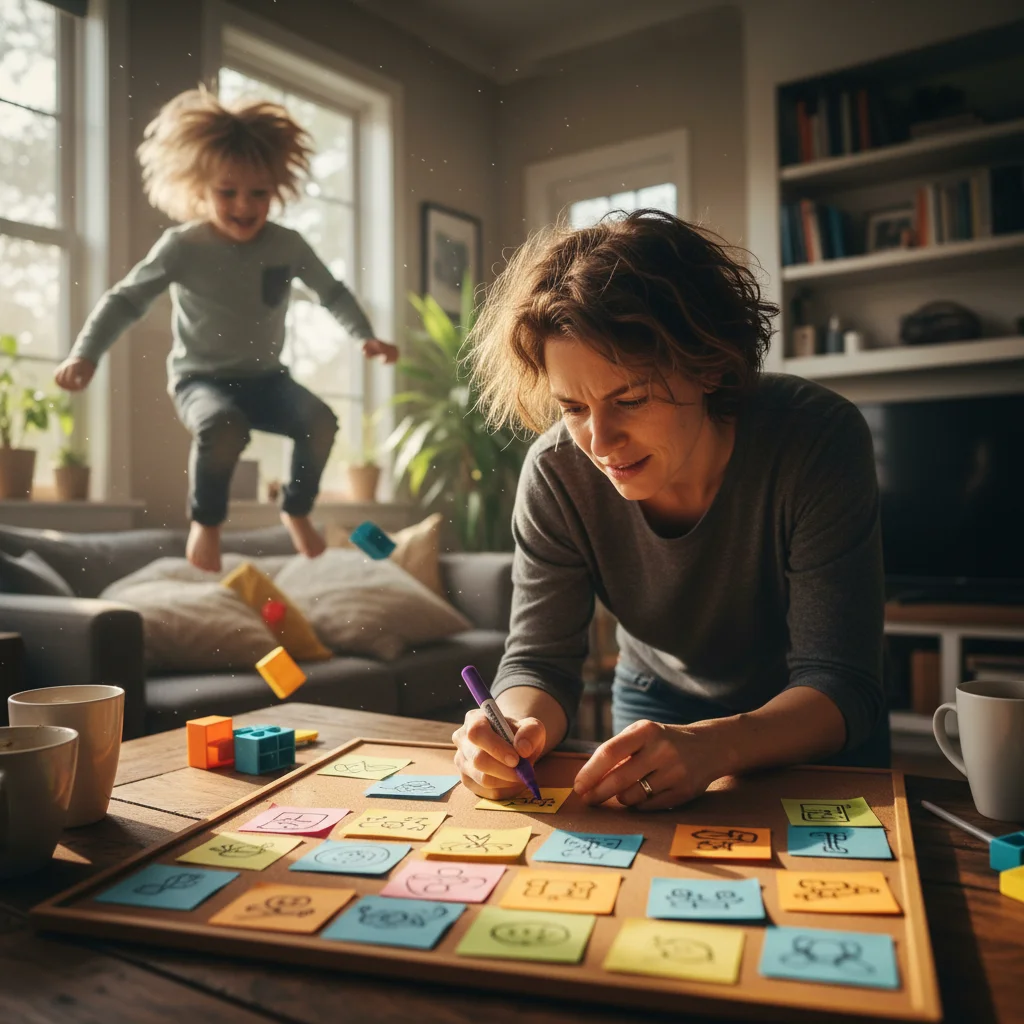
Visual Schedule (But Fun): I created a simple visual schedule using pictures instead of words. Morning routine, two activities, lunch, rest time, afternoon activity, dinner, bedtime routine. He could see the whole day without feeling trapped by it.
Parent Training — Limited Spots
Master Summer Structure Without the Battle
Learn the exact micro-routine framework that ended our summer chaos, plus 8 other proven strategies for ADHD families.
87 of 100 spots taken · 9 video modules · $9.99 trial
START YOUR $9.99 TRIAL →The Camp vs. Home Debate — What Actually Works
Every ADHD parent faces this decision: structured camps or unstructured home time? The answer depends on your child's specific needs.
Signs your child might thrive in day camps:
- They respond well to external structure and authority
- They enjoy group activities and peer interaction
- They have reasonable social skills and emotional regulation
- You have camps with ADHD-trained staff available
Signs home might be better:
- They get overwhelmed in groups or noisy environments
- They need frequent breaks and sensory regulation
- They're still working on basic social skills
- You can provide consistent structure at home
We tried both. Oliver attended a morning science camp three days a week, which gave him structure and social interaction, while keeping afternoons flexible for downtime and family activities.
Managing Sibling Conflicts When Everyone's Home
Summer sibling wars are brutal in ADHD families. When Oliver fought with his sister every day that first summer, I discovered the fights weren't about toys or territory — they were about dysregulation.
The Regulation Reset: Before addressing the conflict, I helped each child regulate. Deep breathing, sensory breaks, or physical movement. Once they were calmer, we could problem-solve.
Separate Spaces Strategy: Each child got a designated quiet space in the house where they could retreat when feeling overwhelmed. No questions asked, no time limits.
Structured Together Time: Instead of hoping they'd play nicely, I scheduled specific activities they could do together successfully — cooking, building projects, or short family games.
Preserving Your Sanity During Long Summer Days
That first summer nearly broke me. I felt like a full-time camp counselor, entertainment director, and referee all rolled into one. Here's what saved my sanity:
Quiet Time Is Non-Negotiable: From 1-3 PM, everyone in our house had quiet time in their rooms. Not necessarily napping, but quiet activities. This gave me two hours to recharge and gave Oliver's overstimulated brain a break.
Lower Your Expectations: Perfect Pinterest summer activities aren't the goal. Keeping your ADHD child regulated and engaged is success.
Build in Support: I arranged playdates, grandparent visits, and traded childcare with other ADHD parents. You can't be "on" 24/7 without burning out.
The goal isn't to replicate school structure at home. It's to create enough predictability that your child's brain can relax and actually enjoy summer.
Building Bridge Routines for Back-to-School Success
Two weeks before school started, we began transitioning back to school routines gradually. This "bridge period" made the return to structure much smoother.
We shifted bedtime 15 minutes earlier every few days, reintroduced morning routines, and practiced school-day schedules for short periods. By the time school started, Oliver's brain was ready for the structure instead of shocked by it.
The most important lesson from that summer: ADHD isn't bad behavior — it's brain chemistry that needs support. When we stopped fighting against Oliver's need for structure and started working with it, everything changed.
Summer break doesn't have to be a crisis. With the right micro-routines and realistic expectations, it can actually be a time for your ADHD child to thrive in a different way than during the school year.
Is your child struggling with summer structure?
Take our 2-minute assessment to discover specific strategies based on your child's unique ADHD patterns and summer challenges.
TAKE THE FREE ASSESSMENT →

