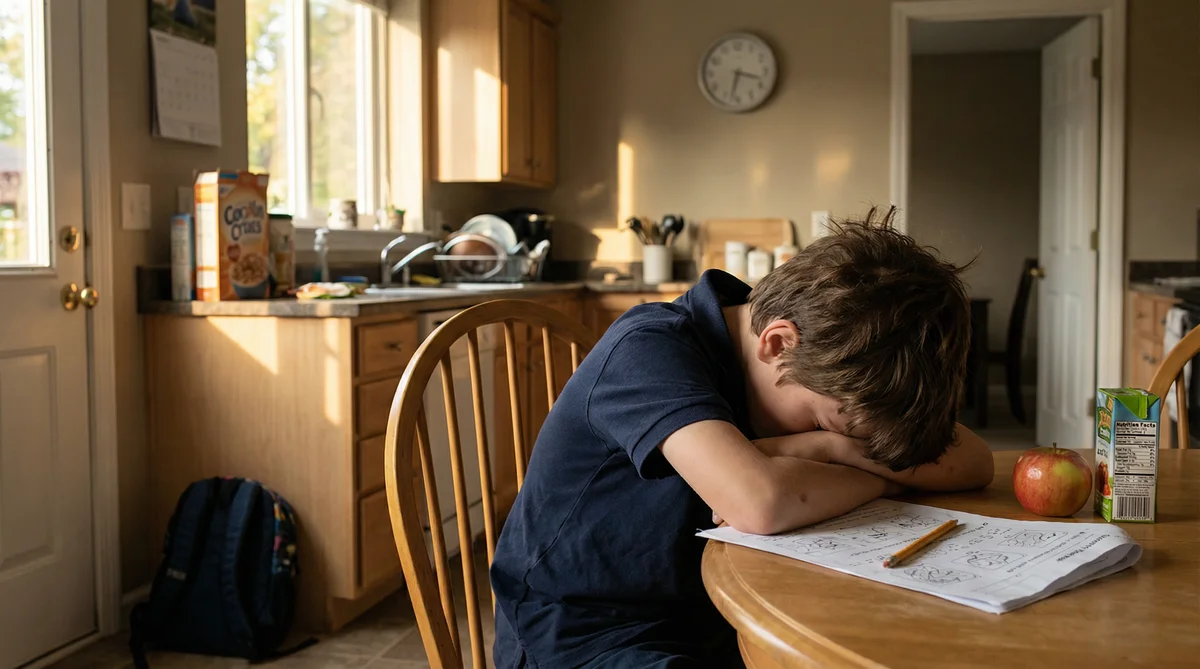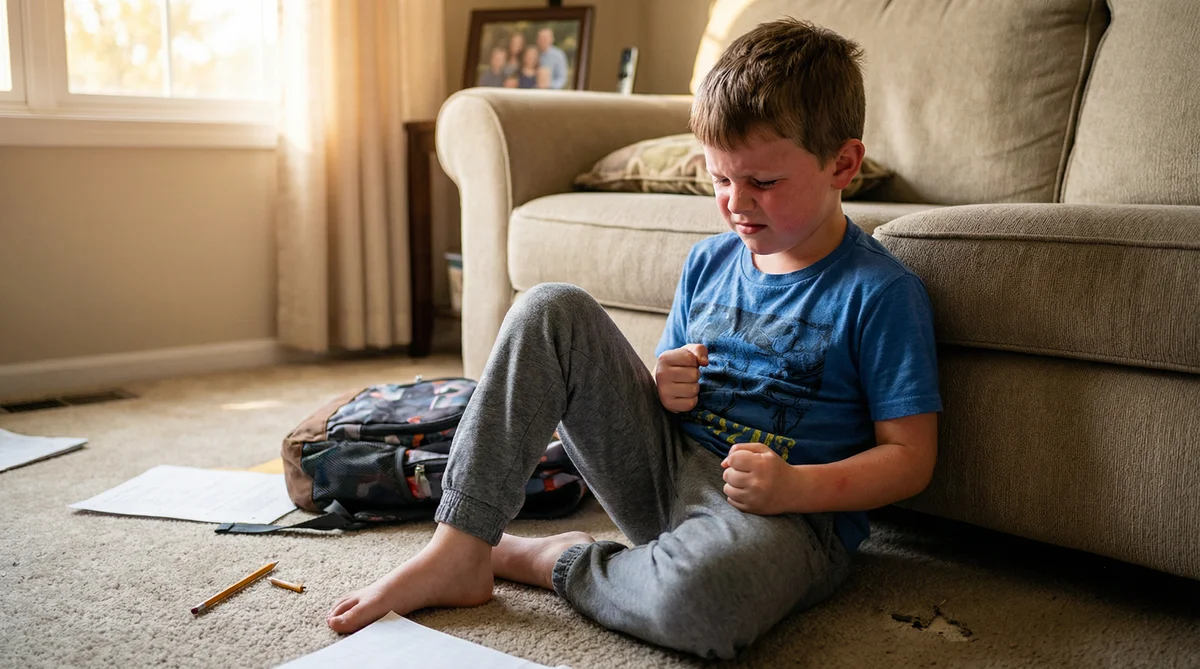
I'm going to say something that some doctors might push back on, but that parents in every ADHD support group I've read already know:
Vyvanse rage is real.
It's not in your head. It's not "just the ADHD." It's not your child being dramatic. And you are not the only parent watching your previously sweet child turn into someone you don't recognize after starting stimulant medication.
I spent weeks reading through parent support groups, and the reports of medication-induced rage — particularly with Vyvanse, but also with Focalin and Qelbree — were so consistent, so detailed, and so heartbreaking that I knew I had to write about it.
What Parents Are Actually Reporting
Let me share what real parents said, because their words carry more weight than any clinical summary.
An 11-year-old boy. Petite, with a history of failure to thrive. His mom tried Vyvanse:
"It put him into a constant rage."
That's it. That's the whole experience. Constant rage. Not occasional irritability. Not mild frustration. Constant rage in a child who was already struggling. His mom is now paralyzed by fear of trying another medication, especially worrying about appetite and weight loss on top of the anger.
Another mom — she also has ADHD, so she understands the condition from the inside — described her almost-8-year-old son's journey on Vyvanse 10mg:
"Today, he didn't want to take his meds because it makes everything worse."
The Vyvanse initially "helped A LOT." He wanted to take it. But the anger and aggression during the comedown became so bad that the child himself decided the trade-off wasn't worth it. Sleep difficulties worsened too. The family is now looking for alternatives.
Then there's the parent who switched her child from Evekeo to Vyvanse:
"We ended up having to take him to the hospital."
The switch to Vyvanse was "not a good experience." It was bad enough to require hospitalization. After nearly a month of tapering, they went back to Evekeo and added Risperidone. The parent now credits therapy for coping skills as making a "night and day difference."
It's Not Just Vyvanse
While Vyvanse was the most frequently mentioned stimulant when it came to rage, it wasn't the only one. Parents reported similar issues across multiple medications:
Focalin XR — One parent described her child as having "no behavioral issues before medication" and being a "loving child who listened well at home." After starting Focalin XR 10mg, the child developed extreme hyperactivity, defiance, emotional dysregulation, and physical aggression toward his sibling. The medication helped at school, but destroyed evenings at home.
Qelbree — When that same parent's doctor switched her son from Focalin to Qelbree 100mg, she described it as:
"10x worse. Constant anger, yelling, crying, and a complete personality change after only seven days."
Adderall XR — While not as commonly associated with rage as Vyvanse or Focalin, parents reported evening dysregulation — "cranky and all over the place" — as the medication wore off, which often escalated into anger and conflict.
Why Stimulants Can Cause Rage
Understanding why this happens doesn't make it less scary, but it does help you make better decisions about what to do next.
Stimulant medications like Vyvanse (lisdexamfetamine) and Focalin (dexmethylphenidate) work primarily by increasing dopamine and norepinephrine in the brain. This is great for focus and attention. But here's what can go wrong:
Overstimulation of the dopamine system. Some children's brains are more sensitive to dopamine increases. Too much dopamine can push the brain into a hyperaroused state — think fight-or-flight mode — where every minor frustration feels like a major threat. The child isn't choosing to rage. Their brain is in survival mode.
Norepinephrine-driven irritability. Norepinephrine is the brain's "alertness" chemical. In the right amount, it helps with focus. Too much creates anxiety, irritability, and a hair-trigger temper. Children who are naturally anxious or who have comorbid anxiety are particularly vulnerable to this effect.
Serotonin depletion. Here's something most doctors won't explain: when you artificially boost dopamine, the brain can divert resources away from serotonin production. Serotonin is critical for mood regulation and impulse control. A child whose serotonin is depleted will have less ability to manage frustration, not more — even while their focus improves.
The rebound crash. As I detailed in The 4 PM Crash, when stimulant medication wears off, dopamine levels can temporarily drop below baseline. This creates a window of extreme emotional vulnerability where rage, aggression, and meltdowns are most likely to occur.
Unmasking underlying conditions. In some cases, stimulant medication can unmask or worsen co-occurring conditions like ODD (Oppositional Defiant Disorder) or anxiety that were being somewhat managed before medication changed the brain's chemical balance.
Is your child's medication only addressing part of the problem?
ADHD involves 4 brain pathways — dopamine, serotonin, GABA, and norepinephrine. Most stimulants target just 1-2. Take our free assessment to see which pathways might need more support.
TAKE THE FREE ASSESSMENT →The Medications That Actually Helped With Rage
Not every story in the support group was bleak. Some parents found solutions. Here's what worked:
Guanfacine (Intuniv) — This was the clear winner. Parent after parent described switching to or adding Guanfacine and seeing dramatic improvements. One mom whose child failed on both Focalin and Vyvanse wrote this about starting Guanfacine:
"It's like his body is out of the constant fight/flight mode!"
Within one week, she noticed better emotional regulation, less impulsivity, better thought processing and speaking, easier bedtime, and better listening. Guanfacine works differently than stimulants — it's an alpha-2 agonist that helps regulate the prefrontal cortex without directly boosting dopamine. This means it can help with emotional regulation without the risk of overstimulation.
Risperidone — For children with co-occurring ODD and aggression, Risperidone was a game-changer. One dad whose son has ADHD, Autism, and ODD described the result after three years of failed medications:
"Violence and aggression dropped to almost zero. Listening improved to approximately 90%. He is not 'zombie-like' or lethargic."
Both ABA therapy and school reported a complete turnaround. The only side effect was mild drowsiness for about an hour on some days. Risperidone is an antipsychotic, not a first-line ADHD medication, but for children where aggression is the primary concern, multiple parents spoke highly of it.
Quillivant XR — One parent whose child struggled with mood and appetite issues on Vyvanse switched to Quillivant XR and reported the child was "doing much better." Quillivant is a liquid methylphenidate that allows for more precise dosing — which matters when the difference between "focused" and "raging" might be just a few milligrams.
What to Do If Your Child Is Experiencing Medication Rage
Based on what parents in the group shared, and what I learned through Oliver's journey, here's a practical roadmap:
1. Document everything for 2 weeks. Before your next doctor appointment, keep a detailed log: What time does the rage start? How long does it last? What seems to trigger it? Is it during active medication hours or during the crash? Is it worse on weekdays vs. weekends? This data is invaluable.
2. Don't suffer in silence for months. Multiple parents in the group waited too long to report rage side effects, thinking they'd improve with time. One parent ended up in the hospital because of a medication switch gone wrong. If rage appears within the first week or two and doesn't improve, call your doctor. You don't need to wait for the scheduled follow-up.
3. Ask specifically about non-stimulant options. If your child has tried multiple stimulants with rage as a consistent side effect, their brain may be telling you something: it doesn't respond well to dopamine surges. Non-stimulants like Guanfacine work through different mechanisms and were consistently the most positive stories in the support group.
4. Consider GeneSight testing. One parent's psychiatrist ordered genetic testing to determine which medications the child's body would process best. This isn't available everywhere and isn't covered by all insurance, but it can reduce the trial-and-error period significantly.
5. Don't overlook the role of therapy. The parent whose child was hospitalized during a medication switch said therapy for coping skills made a "night and day difference." Medication manages brain chemistry; therapy gives your child tools to handle what the medication can't fix.
6. Support the pathways medication misses. If your child's stimulant is boosting dopamine and norepinephrine but leaving serotonin and GABA unsupported, that imbalance can contribute to rage. Natural approaches that support all four pathways can help smooth out the rough edges — whether your child stays on medication, switches, or transitions off it entirely.
The Hardest Part Nobody Talks About
I want to end with something that doesn't get said enough in these conversations.
When your child is raging — when they're screaming, throwing things, hitting their sibling, saying they hate you — you are also suffering. Your nervous system is in overdrive. Your guilt is eating you alive. You're wondering if you caused this by putting them on medication in the first place.
One parent captured this perfectly:
"Some days I really want to try another medication, but I am so worried about the side effects."
She also mentioned that her husband has "such little patience" with their child — a reminder that medication side effects don't just affect the child. They ripple through the entire family.
If you're in this place right now: your fear is valid. Your exhaustion is valid. And your desire to find something that helps your child without destroying your family is not too much to ask.
The medication merry-go-round is real. The rage is real. But solutions exist. Keep advocating. Keep documenting. Keep asking questions. Your child's brain is unique, and the right combination of support — whether that's a different medication, a non-stimulant, therapy, natural support, or all of the above — is out there.
Tired of trading focus for rage?
Many parents are finding that supporting all 4 ADHD brain pathways — not just dopamine — helps their child stay focused AND emotionally regulated. Take our free assessment to learn more.
TAKE THE FREE ASSESSMENT →