I watched my 8-year-old son approach his friend's mom at pickup, completely oblivious to her furrowed brow and tight-lipped expression. "Can Jake come over today?" he asked cheerfully. She'd clearly had a rough day, and her face showed it — but Tyler read her neutral tone as welcoming.
Five minutes later, Jake was making excuses about why he couldn't play. Tyler was crushed, confused, and once again feeling rejected by peers who seemed to speak a language he couldn't understand.
If your ADHD child struggles to read facial expressions and social cues, you're not imagining it — and it's not your parenting. This is a real neurological difference that affects how ADHD brains process social information.
Why ADHD Brains Struggle With Social Reading
ADHD children don't lack empathy or social desire — their brains simply process facial expressions differently. The same attention and executive function challenges that affect focus also impact social perception.
Here's what happens: while neurotypical children automatically scan faces for emotional cues, ADHD children often miss these subtle signals. They might notice the mouth but miss the eyebrows, or catch the words but miss the tone.
"It's like trying to read a book while someone keeps flipping the pages — they're getting fragments of the social story, not the complete picture."
This isn't about intelligence or caring. It's about brain wiring. The same dopamine pathways that control sustained attention also help us focus on and interpret social signals.
The 'Thinking Face' vs 'Angry Face' Crisis
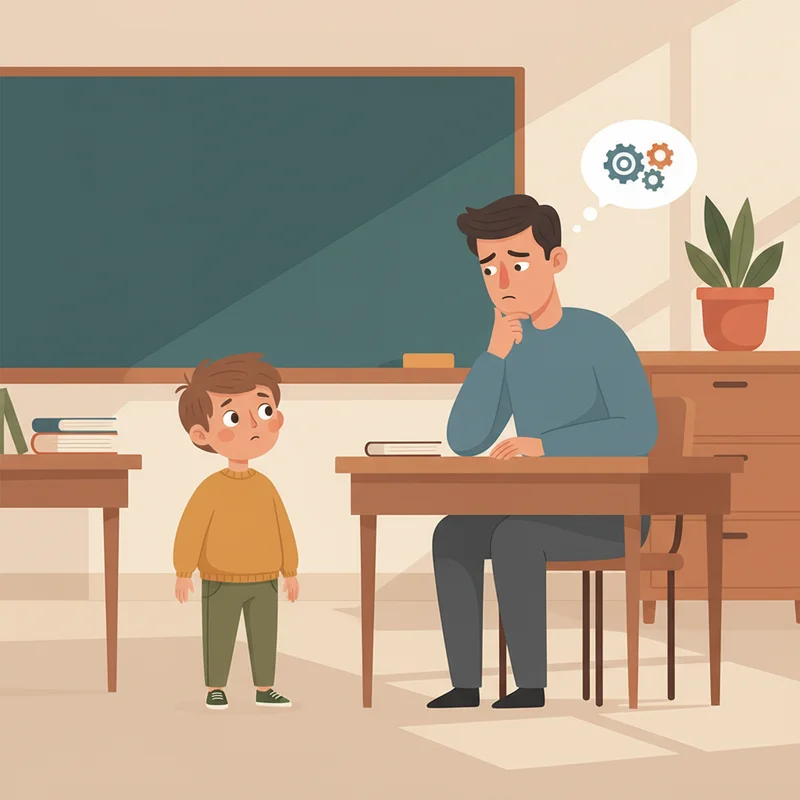
One breakthrough moment came during a parent conference when Tyler's teacher mentioned he'd been asking "Are you mad at me?" multiple times throughout the day. She was baffled — she'd been in a perfectly fine mood.
That's when I realized: Tyler was reading her "concentrating while teaching" face as anger. Her slightly furrowed brow meant focus to her, but looked like disapproval to him.
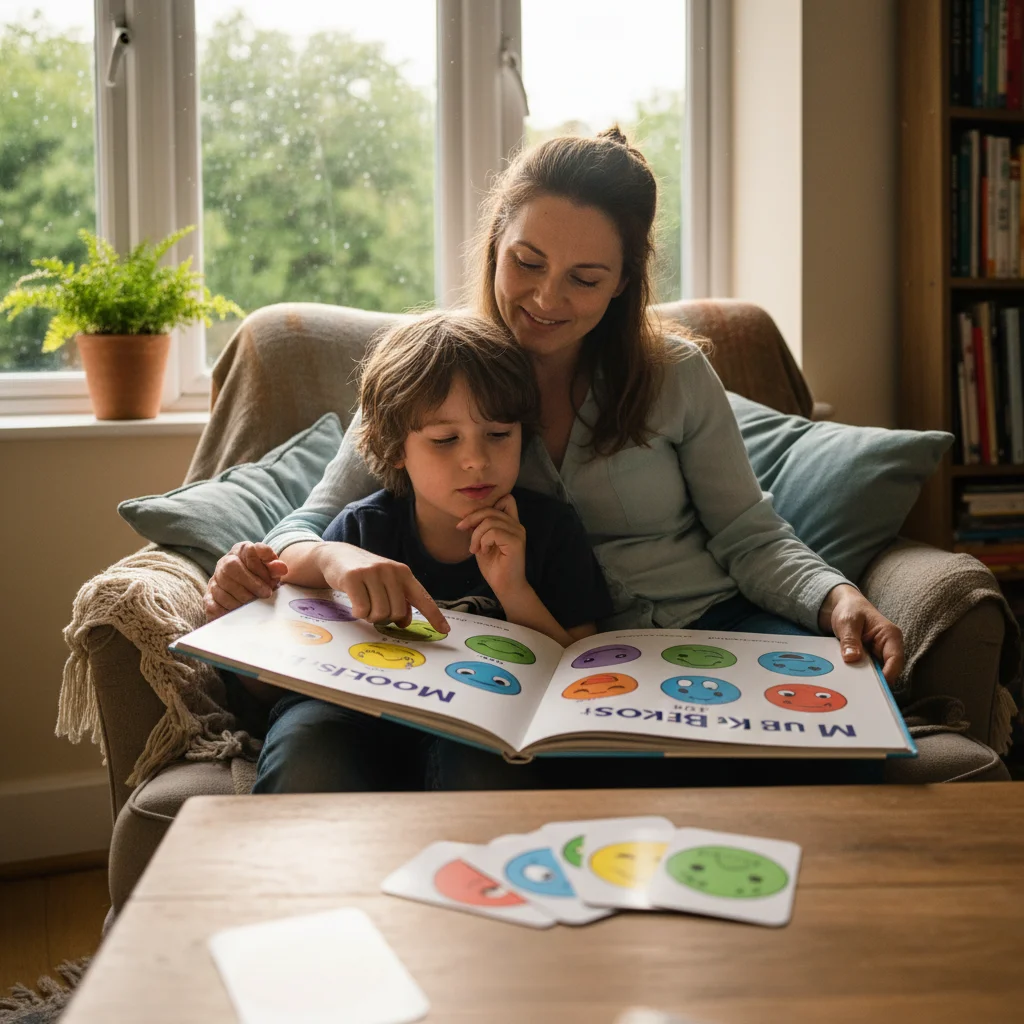
We started practicing what I called "face detective" games. I'd show him photos and we'd decode: "See how her eyebrows are just slightly down, but her mouth isn't tight? That's thinking, not mad."
The difference this made was immediate. Instead of assuming every adult expression meant he was in trouble, Tyler learned to ask: "Are you thinking about something?"
When Social Misreading Triggers Rejection Sensitive Dysphoria
For ADHD children, misreading facial expressions isn't just awkward — it's emotionally devastating. Each misinterpreted neutral face becomes evidence that "everyone hates me."
This connects directly to rejection sensitive dysphoria, where ADHD brains interpret even neutral social signals as rejection. When your child can't accurately read expressions, every interaction becomes a potential source of perceived rejection.
The cycle looks like this: misread neutral expression → assume anger/rejection → act defensively or withdraw → create actual social friction → confirm belief that "people don't like me."
The 4-Pathway Brain Chemistry Behind Social Processing
Social expression reading involves all four major neurotransmitter pathways — the same ones affected in ADHD:
- Dopamine: Helps us focus attention on facial details long enough to process them
- Serotonin: Regulates emotional interpretation of what we see
- GABA: Calms anxiety so we can accurately assess rather than assume threat
- Norepinephrine: Controls the alertness needed for rapid social scanning
When these pathways are imbalanced — as they are in ADHD — children struggle to both notice and correctly interpret social cues. It's not that they don't care about social connection; their brains literally aren't getting the complete information they need to navigate social situations successfully.
Teaching Facial Expression Literacy at Home
The good news? Social expression reading can be taught. Here's what worked for us:
- Start with your own face: Narrate your expressions throughout the day. "I'm making my thinking face because I'm trying to remember where I put my keys."
- Practice with photos: Use family pictures or magazine photos to decode expressions together.
- Create a feelings chart: Visual guides showing the difference between similar expressions like "tired" vs "sad" or "concentrating" vs "angry."
- Role-play scenarios: Practice reading expressions in context — what does a "tired mom" face look like vs an "upset about behavior" face?
The key is making it fun and pressure-free. This is skill-building, not criticism of their current abilities.
How Natural Brain Support Helped Social Confidence
While teaching social skills was crucial, I also realized Tyler's brain needed better support for the attention and emotional regulation required for social processing.
Research suggests that when all four neurotransmitter pathways are properly supported, ADHD children show improvements in social awareness and emotional regulation. A 2019 clinical study found that saffron, which works on all four pathways, showed comparable benefits to medication for ADHD symptoms — including the executive function skills needed for social processing.
Once Tyler's brain chemistry was better balanced, the social skills teaching became much more effective. It was like trying to teach someone to drive — much easier when the car engine is running properly.
When to Seek Additional Support
While many ADHD children improve with brain support and home practice, some need additional help. Consider professional support if your child:
- Shows no improvement after 3-4 months of consistent practice
- Has significant anxiety around social interactions
- Is losing friendships or being excluded regularly
- Shows signs of depression related to social struggles
An occupational therapist specializing in social skills or a social skills group can provide additional strategies and peer practice opportunities.
Remember: your ADHD child wants to connect socially just as much as any child. With the right brain support and skill-building, they can learn to read the social world more accurately and build the friendships they crave.
Is your ADHD child struggling with social challenges?
Social misreading often stems from the same brain chemistry imbalances that affect focus and emotional regulation. Our free assessment can help you understand what's happening in your child's brain.
TAKE THE FREE ASSESSMENT →
