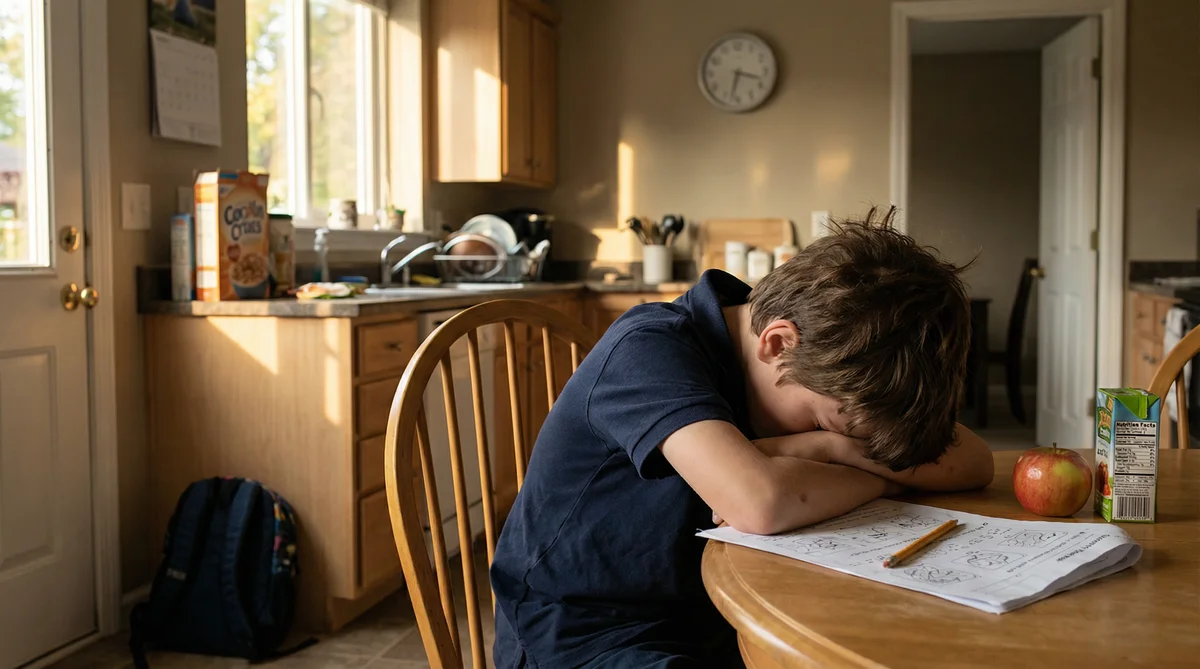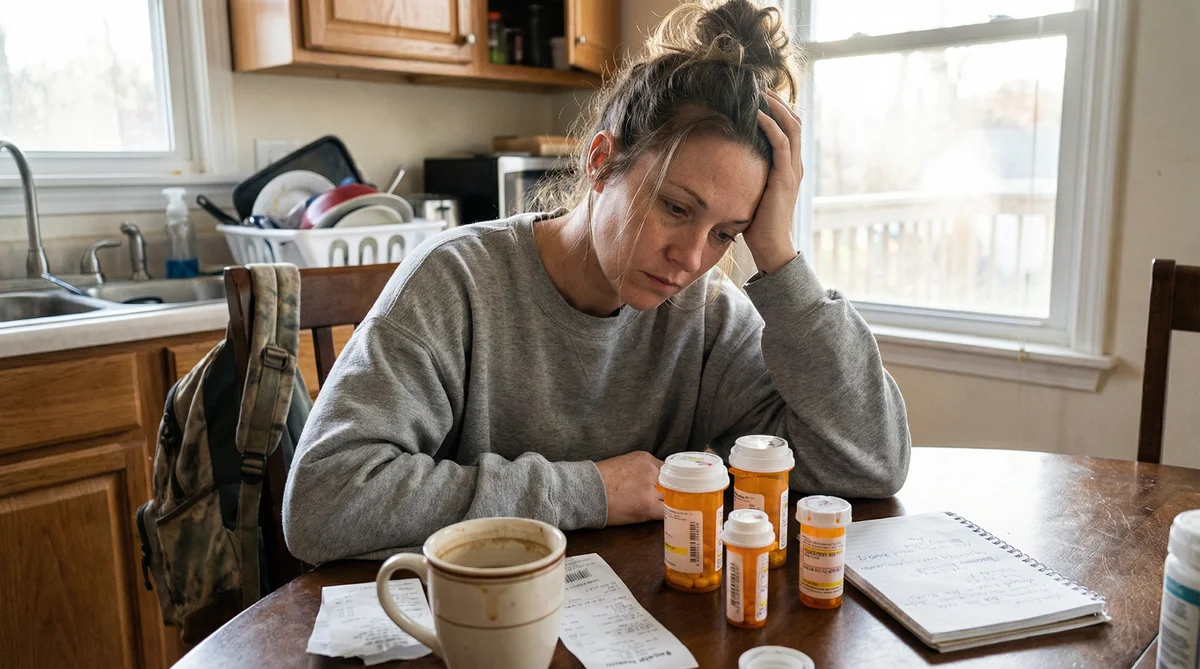
I spent three weeks reading through an ADHD parents support group on Facebook. Not casually scrolling — actually reading. Every post. Every comment. Every desperate 2 AM message from a mom who just watched her child throw a chair because his medication wore off.
What I found wasn't surprising. It was heartbreaking. And it was familiar.
Because the story is almost always the same. A parent gets the diagnosis. The doctor recommends medication. The parent agrees — hopeful, terrified, or both. And then begins what nearly every parent in that group called the same thing: the medication merry-go-round.
I'm sharing what these parents said — in their own words — because if you're in the middle of this right now, you need to know you're not alone. And if you're about to start, you deserve to know what's actually coming.
The Pattern Nobody Warns You About
Here's what struck me most: almost no one found the right medication on the first try. The average parent in this group tried 2-3 medications before finding something that worked. Some spent 3+ years searching.
One dad put it plainly:
"We have finally found a medication that works! After 3 years of trying 4 different medications, all with side effects that have made him worse, we gave up."
His son has ADHD, Autism, and ODD. After three years and four failed medications from his PCP, his psychologist suggested Risperidone. The results were dramatic — violence and aggression dropped to "almost zero," listening improved to about 90%. But it took three years to get there.
Another mom described her 5-year-old's journey through Focalin, then Vyvanse, before finally finding success with Guanfacine — a non-stimulant most parents had never heard of. Her words after the switch:
"It's like his body is out of the constant fight/flight mode!"
The pattern is consistent: start with a stimulant, deal with side effects, switch to another stimulant, deal with different side effects, eventually try a non-stimulant or combination approach, and — if you're lucky — find something that works without creating new problems.
The Side Effects Nobody Prepares You For
Doctors will mention appetite suppression and sleep issues. What they often don't prepare you for is the personality changes.
One mom described what happened after her almost-8-year-old started Focalin XR:
"His whole personality is like a 180 since starting medication."
Her son had no behavioral issues before medication. He was described as a loving child who listened well at home. The Focalin dramatically improved his focus at school but caused extreme hyperactivity, defiance, emotional dysregulation, and even physical aggression toward his sibling once it wore off. When the doctor switched him to Qelbree, she said it was "10x worse" — constant anger, yelling, crying, and a complete personality change after only seven days.
Here's what the parents in this group reported most frequently:
- Anger, rage, and aggression — mentioned in 5+ posts, especially with Vyvanse, Focalin, and Qelbree
- Emotional dysregulation and mood swings — reported across nearly every stimulant medication
- The evening "crash" — when medication wears off and behavior gets worse than baseline
- Appetite suppression — particularly with Vyvanse, leading to weight and nutrition concerns
- Sleep disturbances — trouble falling asleep, restless nights, early waking
- "Zombie" effect — children appearing flat, emotionless, or detached
The side effect that came up the most? Rage. Not irritability — full-blown rage that parents didn't recognize in their children. I wrote a deeper dive on this specific issue in Vyvanse Rage Is Real.
The Crash That's Destroying Family Evenings
If I had to pick the single biggest theme from every post I read, it would be the medication crash. That window — usually between 3 PM and 6 PM — when the stimulant wears off and your child becomes someone you don't recognize.
One mom captured it perfectly:
"Today, he didn't want to take his meds because it makes everything worse. Which is a complete 180 from when he first started taking it, where he wanted to take it because it made him feel better."
Her almost-8-year-old son was on Vyvanse 10mg. It initially "helped A LOT" — he wanted to take it. But the anger and aggression during the comedown became unbearable. The child now refuses his own medication.
Think about that for a moment. A 7-year-old who initially felt so much better on medication that he asked to take it — and now refuses it because the crash is that bad.
Another parent described switching from Evekeo to Vyvanse: "We ended up having to take him to the hospital." After nearly a month of tapering, they returned to the original medication and added Risperidone. The parent credits therapy for coping skills as making a "night and day difference."
Parent Training — Limited Spots
Want a Step-by-Step Plan for Your ADHD Child?
The Unbreakable ADHD program gives parents a complete framework for managing meltdowns, building routines, and connecting with their ADHD child. 9 video modules by licensed therapist Anneliese.
87 of 100 spots taken · 9 video modules · $9.99 trial
START YOUR $9.99 TRIAL →Wondering if your child's brain needs more than one pathway of support?
Most ADHD medications target just 1-2 of the 4 brain pathways involved in attention, mood, and impulse control. Take our free 2-minute assessment to see which pathways might need additional support.
TAKE THE FREE ASSESSMENT →The Medications Parents Talked About Most
Across 15 detailed posts, these are the medications that came up again and again — and what parents actually said about each one:
Vyvanse — The most discussed medication by far. Parents consistently described it as "life-changing" for school focus, but frequently reported rage, anger on the comedown, appetite suppression, mood changes, and anxiety. Multiple parents switched away due to side effects. One parent's child was hospitalized during a medication switch involving Vyvanse.
Focalin / Focalin XR — Improved focus at school but caused emotional dysregulation, sadness, extreme hyperactivity at home, and defiance in some children. One parent described it as working initially, then causing severe emotional issues.
Guanfacine (Intuniv) — The standout positive story across the entire group. Parents consistently reported better emotional regulation, less impulsivity, improved sleep, better listening. Psychiatrists recommended it as a first-line non-stimulant. One parent reported paradoxical wakefulness as the only negative.
Adderall XR — Reported to wear off too early, causing evening dysregulation and loss of focus during the second half of the school day.
Risperidone — Highly effective for children with co-occurring ODD and aggression. One parent described a "180 turnaround." Concerns about weight gain, but parents overall spoke positively when used for the right situation.
Qelbree — One parent described it as "10x worse" than Focalin, with severe anger, yelling, crying, and personality changes.
What the "Anti-Meds" Mom Taught Me
One post stopped me in my tracks. A self-described "anti-meds" mom who tried supplements for months before accepting that her 7-year-old needed medication. She wrote:
"I don't want my kid to turn into a 'zombie'/lose his personality. I'm terrified meds are going to make him depressed, suicidal, etc."
Her psychiatrist recommended starting with Guanfacine (a non-stimulant), with Strattera as a backup, and ordered GeneSight genetic testing to determine which medications her child's body would process best.
She also shared her psychiatrist's comprehensive ADHD medication list, which organized options into categories most parents never see: stimulants (Ritalin, Adderall, Focalin, Vyvanse), non-stimulants (Qelbree, Strattera), off-label options (Wellbutrin), and alpha-2 agonists (Clonidine, Guanfacine).
What struck me wasn't the list — it was the fear. This mom had done everything "right." She'd tried the natural route first. She'd researched. She was informed. And she was still terrified. I wrote about this specific emotional journey in I Was Terrified to Medicate My ADHD Child.
The Supplement Question That Won't Go Away
One of the most engaged posts in the entire group — 47 reactions, 152 comments — was about magnesium. Not medication. A mom shared that magnesium puts her son to sleep within 10 minutes and wanted to know if he could take it during the day too.
Another parent was actively exploring L-Methylfolate and B12 alongside her son's prescription Guanfacine and Focalin. That post got 53 comments and 10 reactions.
The pattern was clear: parents aren't choosing between medication and natural support. They're looking for both.
They're using magnesium for sleep because the stimulant keeps their child awake. They're adding supplements for mood because the medication only targets focus. They're searching for something — anything — that can smooth out the rough edges that medication alone can't reach.
This makes sense when you understand the brain chemistry. Most ADHD medications primarily target dopamine and norepinephrine — two of the four neurotransmitter pathways involved in ADHD. But serotonin (mood, impulse control) and GABA (calming, anxiety regulation) often go unsupported. I dove deeper into this gap in When ADHD Medication Isn't Enough.
What I Wish Someone Had Told Oliver's Mom (Me)
Reading through these posts was like reading my own journal from two years ago. The same fears. The same middle-of-the-night Google searches. The same gut-wrenching question: Am I making this better or worse?
Here's what I wish someone had told me — and what I think every parent starting this journey deserves to know:
The first medication probably won't be the one. That's not failure. That's how this works. The ADHD brain is complex, and finding the right medication (or combination) takes time and patience.
The crash is real, and it's not your child's fault. When the medication wears off and your sweet kid turns into someone you don't recognize — that's brain chemistry, not behavior. Ask your doctor about extended-release formulations, booster doses, or non-stimulant add-ons like Guanfacine.
Medication alone might not be enough. Not because your child is "too far gone" — but because ADHD involves multiple brain pathways, and most medications only target one or two of them. Therapy, nutritional support, sleep optimization, and yes, targeted supplements can fill gaps that medication can't.
Your fear doesn't make you a bad parent. Every single parent in that group was scared. The ones who medicated were scared. The ones who didn't medicate were scared. Fear means you care. Channel it into research, not guilt.
Other parents are the best resource you never knew you had. The collective wisdom in that Facebook group — from parents who've been through 3+ years of medication trials — is something no doctor's office visit can replicate. Find your people. Ask the hard questions. Share what works.
The goal isn't to find a perfect solution. It's to find the right combination of support that lets your child be themselves — focused, regulated, and happy — without trading one set of problems for another.
If you're in the middle of the merry-go-round right now, hang on. It does get better. Not because you find the magic pill — but because you learn what your child's brain actually needs, and you stop settling for anything less.
Looking for support beyond medication?
Many parents in ADHD support groups are combining medication with natural approaches that target the brain pathways stimulants miss. Take our free assessment to see what might help your child.
TAKE THE FREE ASSESSMENT →